
REVIEW · TOKYO
Tsukiji: Outer Market Walking Tour & Sake Tasting Experience
Come hungry and curious. This three-hour Tsukiji experience combines temple customs, market food, and a generous sake tasting in one tidy afternoon. I especially like the way the tour moves from Hongwanji Temple to the Outer Market, then finishes in a private sake salon with bottles from breweries across Japan.
I also like the freedom built into the market walk. Your guide can point out local specialties and good places to eat, but you pay separately for anything you buy, so you can choose based on your appetite. The main drawback is timing: Tsukiji can get crowded, some shops close on Wednesdays, and the entire Outer Market is closed on Sundays and national holidays.
Key points at a glance
- Start with temple etiquette: Learn how to pray at Tsukiji Hongwanji Temple before entering the market.
- Shop and snack at your own pace: Market food is not included, but your guide can help you choose what to try.
- Taste across Japan: The sake salon offers roughly 50 to 60 types, with unlimited samples included.
- Learn how sake changes: Try different styles and temperatures while a sake specialist explains production and flavor.
- Family-friendly format: Children receive soft drinks or tea and snacks while adults taste sake.
- Plan around market hours: Sundays, national holidays, and some Wednesdays are poor choices for this tour because shops may be shut.
Why this Tsukiji tour works so well
Tsukiji is easy to visit on your own, but it is not always easy to understand. The Outer Market is a maze of narrow lanes, food counters, specialty shops, and small storefronts. A guide gives you a sense of what matters, what is worth tasting, and how locals use the market.
That guidance is the biggest reason to book. Kumi, Kyoko, Sarah, Yuki, Hatsumi, Sally, and other guides have helped visitors make sense of the area, with particular praise for their friendly manner and ability to adjust the walk to the group. Some guides have written down extra places to visit later, which is useful if Tsukiji becomes one of your favorite Tokyo stops.
The tour also avoids putting all its value into a single meal. You can buy only what interests you at the market, then spend the included tasting time learning about sake. At $70 per person, that is a fair deal if you plan to sample several foods and make good use of the unlimited sake. It is less attractive if you do not drink alcohol or would rather sit down for one large included meal.
More Sushi and Sake Tours in Tokyo:
- Ramen and Sushi Cooking Class with Sake Pairing Set in Tokyo
★ 5.0 · 291 reviews - Sake Omakase in Tokyo: Guided Tasting by Certified Sommeliers
★ 5.0 · 239 reviews - Tokyo: Sushi and Ramen Cooking Class with Sake Pairing Set
★ 5.0 · 81 reviews
Meeting at Tsukiji Hongwanji Temple
The tour begins at the main entrance gate of Tsukiji Hongwanji Temple. This is a practical meeting point because it is easy to identify and puts you right beside the market district.
Before walking into the food lanes, your guide explains how to pray at the temple. That may sound like a small opening activity, but it gives the market visit a better sense of place. You are not simply arriving at a famous food stop. You first learn a little about how to behave at a Japanese Buddhist temple and take part in a local custom.
The temple itself also makes a useful contrast with the market. You begin in a calm religious setting, then move toward narrow streets filled with food smells, vendors, and shoppers. I like this opening because it adds a cultural layer without turning the tour into a long lecture.
Wear comfortable shoes. You will be on your feet for the walking portion, and the market lanes can feel tight when business is brisk. The tour operates rain or shine, so bring suitable clothing rather than hoping Tokyo provides perfect weather.
Finding the best bites in Tsukiji Outer Market
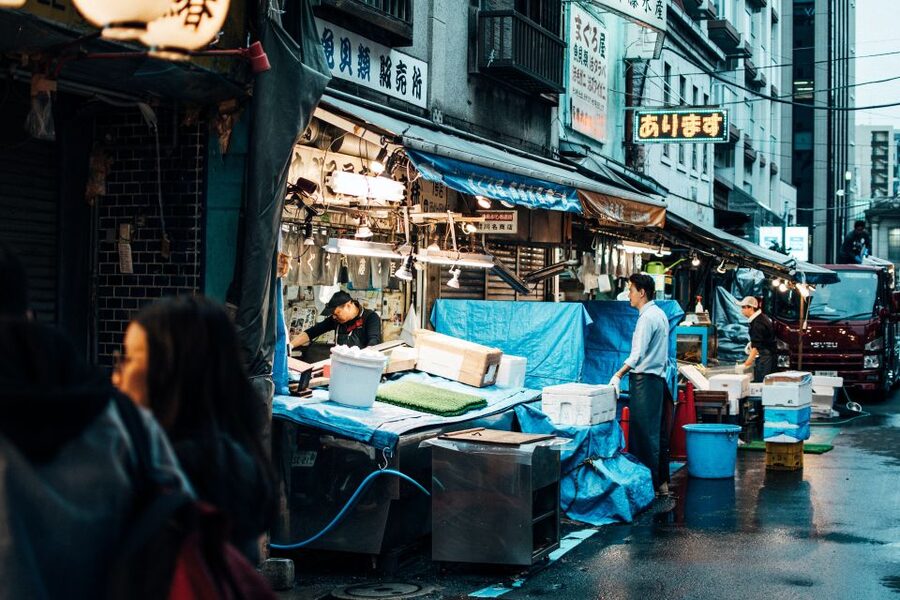
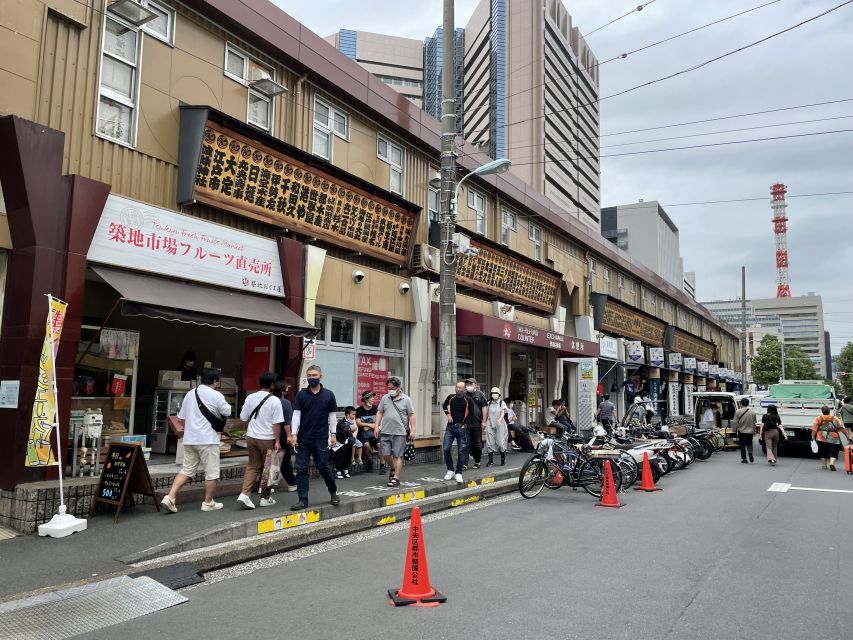
The market walk is guided rather than a fixed food crawl with every dish included. Your food guide takes you through interesting stores and points out local produce, prepared foods, seafood, sweets, and other specialties. You decide what to buy and pay for those items yourself.
That arrangement is useful for mixed groups. One person may want a substantial snack, while another may only want a small taste. Dietary preferences and hunger levels can also vary. Guides have helped people choose what they wanted and suggested places that are easy to miss without local help.
You might find yourself sampling foods such as seafood, wagyu beef, local sweets, or other market specialties. One itinerary account also mentioned whale meat, but availability can change, and no food item should be treated as guaranteed. The sensible plan is to ask your guide what is fresh and available that day.
Do not think of the Outer Market as one giant food hall. It is a collection of shops and stalls, each with its own focus. Some places are best for a quick bite, while others sell ingredients to take away. Your guide can help you avoid spending your limited time wandering past closed doors or choosing a food simply because it is easy to spot.
The tour does not include market food. That is an important cost detail. If you want to try several items, bring extra yen or a payment method accepted by the shops you visit. Your $70 covers the walk, guiding, unlimited sake tasting, and snacks at the salon, but not purchases in Tsukiji.
A sake salon with 50 to 60 bottles to explore
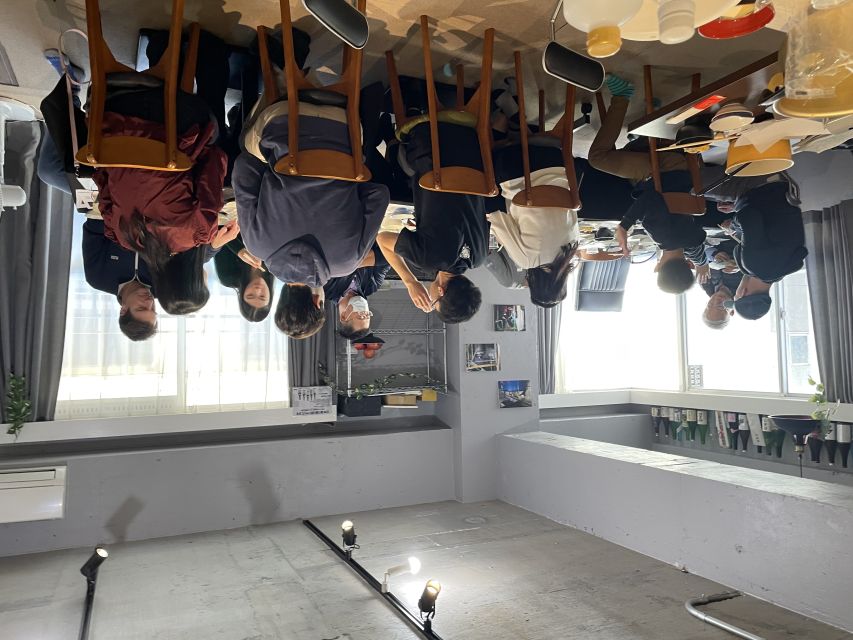
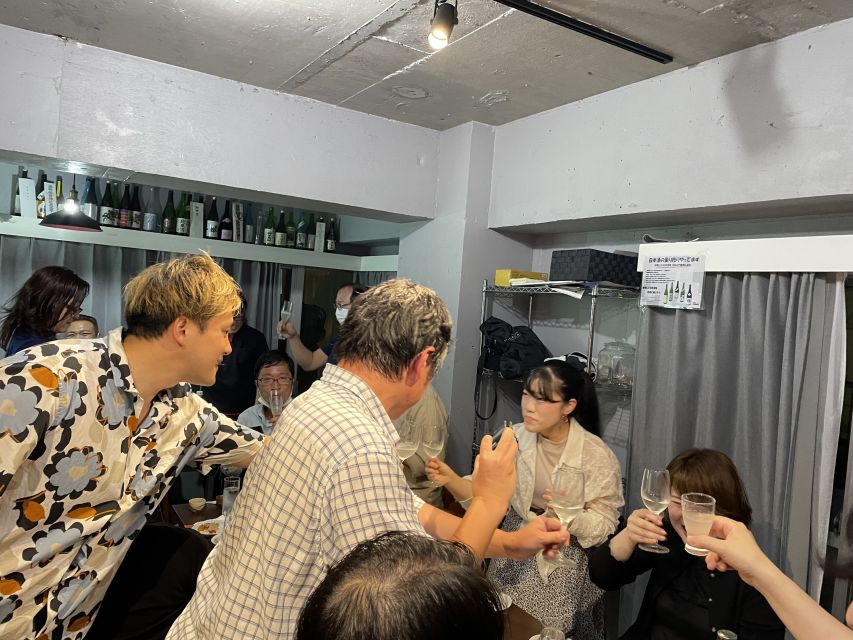
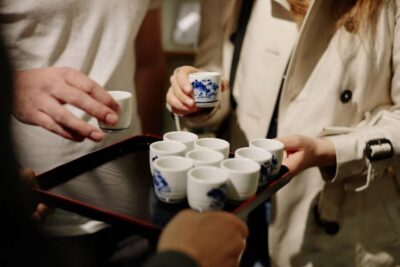
After the market, you walk to a private sake salon in Tsukiji. The tasting is the heart of the experience, and it is more generous than the usual one or two sample pours. Around 50 to 60 types may be available, representing breweries from different parts of Japan.
You will not necessarily taste every bottle. The practical benefit is choice. You can sample a wide range and compare styles until you find a flavor you prefer. People who thought they disliked sake have found that a different bottle changed their mind, which is exactly why guided tasting helps.
A sake specialist explains each bottle before you taste it. The discussion can cover the brewery, the drink’s background, the production process, and the story behind the label. You also learn why sake is not one uniform drink. Like beer or wine, it can vary widely in aroma, sweetness, dryness, weight, and finish.
The educational side is strong. If you are interested in brewing, the explanation of rice, fermentation, and production methods adds real value. You do not need prior sake knowledge, and you will have a better sense of what to look for by the end.
More Sake Tastings in Tokyo:
- Sake Tasting Masterclass in Shinjuku (8+ Varieties with a Pro)
★ 5.0 · 271 reviews - Tasting All Types of Sake with Sommelier
★ 5.0 · 151 reviews - Tokyo Wagyu & Sake Pairing Tasting Experience with Local Flavors
★ 5.0 · 108 reviews - Tsukiji: Unlimited Sake Tasting Experience
★ 4.9 · 67 reviews
Why the temperature tasting matters
One of the more useful parts of the tasting is trying sake at different temperatures. The flavor can change when the same type is served chilled, at room temperature, or warm. That gives you a simple way to understand why serving style matters.
The tasting is not just a race through a long row of bottles. Snacks are provided to support the tasting and help clear your palate. You can also return to the styles you like best after the presentation, within the limits of the session and available bottles.
Past sessions have varied in how many types people sampled. Some participants tried about 15 or 20, while particularly enthusiastic groups tasted considerably more. You should pace yourself. Unlimited samples are generous, but they are still alcohol, and the market walk comes first.
If you find a bottle you love, the salon may offer the chance to buy some afterward. Selection and prices can vary, so treat this as an optional extra rather than part of the tour itself.
What children can do during the sake tasting
This is not an adults-only sightseeing plan. Children can join the tour, and the salon provides soft drinks or tea and snacks for them.
That makes the experience workable for families who want to explore Tsukiji together. The temple and market are useful for everyone, while adults can enjoy the sake presentation at the end. Still, children may not find a long explanation of brewing very exciting, especially if the adults are tasting many samples.
I would choose this for a family that enjoys food markets and cultural activities, not for a family seeking nonstop entertainment. Parents should also remember that the market can be crowded and that the tour takes three hours.
Timing, closures, and the practical details
The experience lasts three hours and ends at the Tsukiji sake salon. Tsukiji Station and Shintomicho Station are only a few minutes away from the endpoint, so you can continue sightseeing without returning to the temple.
Choose your day carefully. The Outer Market is closed on Sundays and national holidays. Some shops also close on Wednesdays. Since the market walk is half of the experience, booking on a day with limited openings can weaken the tour considerably.
The tour runs in wet weather as well as dry weather. Comfortable shoes are the main item to bring, along with a passport or identification card. A copy of your ID is accepted according to the tour information.
The activity is not suitable for pregnant women or wheelchair users. The market lanes and walking route can be difficult for wheelchair access, and the alcohol tasting makes the tour unsuitable during pregnancy.
The tour is offered in English or Japanese. If you need English guidance, confirm that option when booking. Several guides, including Kumi, Kyoko, Sarah, Yuki, and others, have led the experience, and the quality of communication matters when you are learning food terms and sake vocabulary.
Is $70 a good value?
For three hours, $70 is reasonable if you plan to eat at the market and take full advantage of the tasting. The price includes the walking tour, snacks, unlimited sake samples, and the time of a food and sake guide. A similar tasting on your own could become expensive quickly, especially if you want to compare premium bottles.
The value is strongest for first-time visitors to Tokyo. You get an introduction to temple manners, a guided look at one of the city’s best-known food districts, and a structured sake lesson. You also leave with suggestions for returning to Tsukiji on your own.
The price is not as attractive if you expect a fully included food tour. Market purchases are extra, and the tasting is mainly the included food and drink component. Think of the tour as a guided introduction plus a serious sake session, not as an all-you-can-eat afternoon.
You can cancel up to 24 hours before the start for a full refund, and reserve now while paying later. Those terms are useful if your Tokyo schedule is still shifting.
Who should book this experience?
I would choose this tour if you are visiting Tsukiji for the first time, enjoy trying unfamiliar food, or want to understand sake beyond the basic restaurant pour. It also suits couples, small groups, and families with older children who can handle a walking tour.
It is especially good for people who like to ask questions. The guides can explain what you are seeing at the market, while the sake specialist can help you compare bottles and serving temperatures. If you already know your favorite sake style, the wide selection may still give you a chance to find something unusual.
I would skip it if you dislike alcohol, need a wheelchair-accessible route, or want a quiet sit-down meal with all food included. I would also avoid Sundays, national holidays, and questionable Wednesdays when too many market shops may be closed.
Should you book the Tsukiji and sake tasting tour?
Book it if you want food culture rather than a simple sightseeing walk. The temple opening gives the afternoon a cultural start, the market guide helps you make sense of Tsukiji, and the sake salon offers enough choice to make the tasting feel substantial.
Bring comfortable shoes, budget extra for market food, and leave room in your schedule after the tour. You may find a bottle you want to buy, a market shop you want to revisit, or simply a new appreciation for how much variety can fit under the word sake.
FAQ
Where does the Tsukiji tour begin?
Meet your guide in front of the main entrance gate of Tsukiji Hongwanji Temple.
How long does the experience last?
The tour lasts three hours and ends at the Tsukiji sake salon.
Is food included in the price?
Snacks during the sake tasting are included, but food purchased at Tsukiji Outer Market is not included.
How many types of sake can I try?
The salon offers around 50 to 60 different types of sake, with unlimited tastings included during the session.
Can children join the tour?
Yes. Children can join, and soft drinks or tea and snacks are provided for them during the sake tasting.
Is the tour available in English?
Yes. The tour is offered in English and Japanese.
More Sake Walking Tours in Tokyo
- Kyoto Sake Brewery & Tasting Walking Tour
★ 5.0 · 623 reviews - Kyoto: Gion Geisha District & Sake-in-Hand Walking Tour
★ 5.0 · 37 reviews - Nagano Sake Tasting Walking Tour
★ 5.0 · 32 reviews - Nagano Sake Tasting Walking Tour
★ 5.0 · 17 reviews
More Market Visits in Tokyo
- Tsukiji Market Eating Tour, Authentic Sushi & Sake Comparison
★ 5.0 · 52 reviews - Osaka: Cooking Class & Sake Tasting with Local Market Visit
★ 4.8 · 31 reviews - Private Nishiki Market Food & Sake Tour by Young Local Guides
★ 5.0 · 12 reviews - Nishiki Market, Private Sushi class & Sake Tasting in Townhouse
★ 5.0 · 6 reviews
Just added around Tokyo
- Tokyo Sake Tasting Tour with a Sake Expert★ 5.0 · 7 reviews
- Wagyu BBQ & Sukiyaki with Sake Pairing Experience near Ginza★ 5.0 · 2 reviews
- Sake Tasting and Cherry Blossom Fun in Tokyo!★ 5.0 · 4 reviews
- Private Sake Tasting at 300 Years Old Sake Brewery in Tokyo★ 5.0 · 3 reviews
- Tokyo: Serene Sakura & Sake: An Exclusive Brewery Pairing Lunch★ 5.0 · 2 reviews
- Nagano: Snow Monkey and Zenkoji Temple Free Sake Taste Day Tour★ 4.5 · 8 reviews
- Sake Pairing Workshop with Japanese Food in Shinjuku★ 5.0 · 5 reviews
- Cherry blossom & Japanese Sake Tasting in Shinjuku★ 5.0 · 4 reviews
Sushi & Sake Tours, compared.
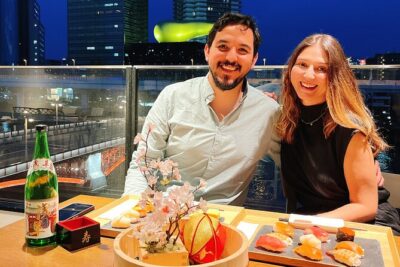
Ramen and Sushi Cooking Class with Sake Pairing Set in Tokyo
Read our review →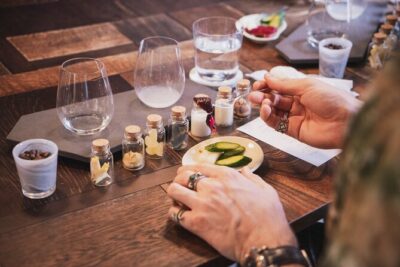
Sake Omakase in Tokyo: Guided Tasting by Certified Sommeliers
Read our review →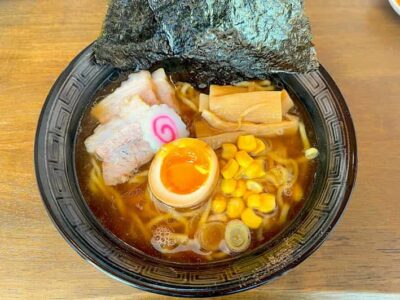
Sushi and Ramen Cooking Class with Sake Pairing Set
Read our review →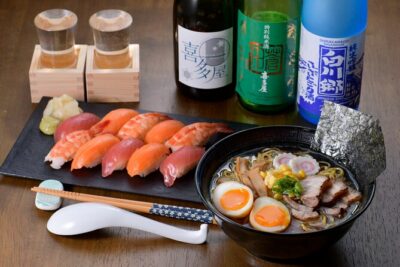
Cozy Tokyo Class: Ramen, Sushi, Sake Pairing & Cultural Exchange
Read our review →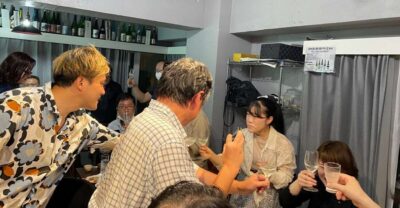
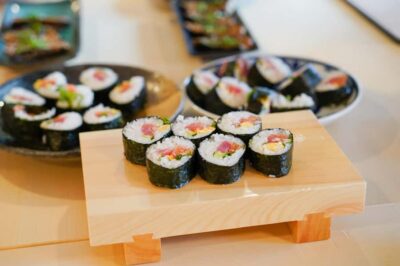
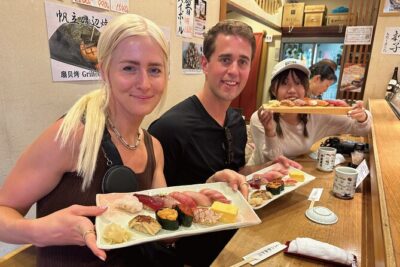
Tsukiji Market Eating Tour, Authentic Sushi & Sake Comparison
Read our review →Browse the lists this tour appears in