
REVIEW · TOKYO
Ramen and Sushi Cooking Class with Sake Pairing Set in Tokyo
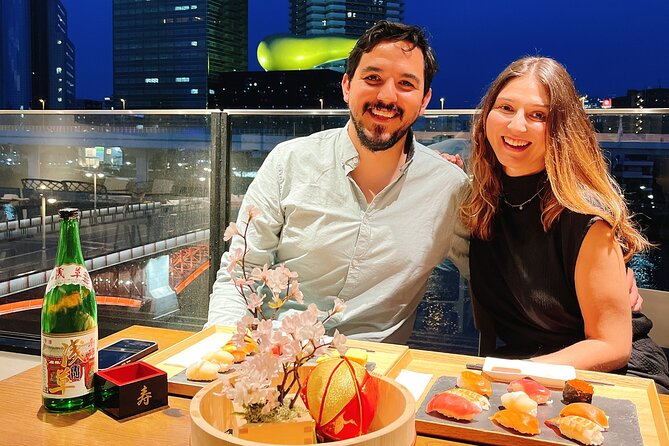
Good food makes Tokyo easier to understand. This small-group class brings sushi, ramen, and sake together in a relaxed three-hour session, with hands-on instruction and plenty to eat. I like the maximum group size of eight, which gives you a better chance to ask questions, and I like the way the class connects recipes with Japanese food customs. The main consideration is that ramen appears to be less hands-on than sushi, so anyone seeking three hours of constant cooking may find the balance uneven.
You meet at HAUS Tsukishima in Chuo City, near public transportation, and return to the same place at the end. The price is $79.59 per person, including ingredients, the meal, an English-speaking instructor, and all drinks. That is a fair price for a meal, a sake tasting, and practical instruction in one sitting, though hotel transfers are not included.
Key points to know before booking
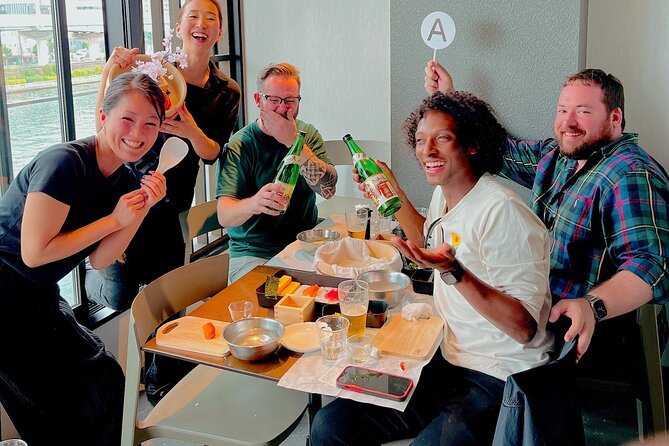
- Small classes of up to eight people: You get more direct help than in a large demonstration-style class.
- Sushi is the most hands-on section: You practice shaping and preparing your own pieces, with close instruction.
- Ramen includes broth, pork belly, and customization: The cooking is partly prepared for you, but you still learn how the bowl comes together.
- Sake is served with the food: The drinks are selected to pair with the dishes rather than added as an afterthought.
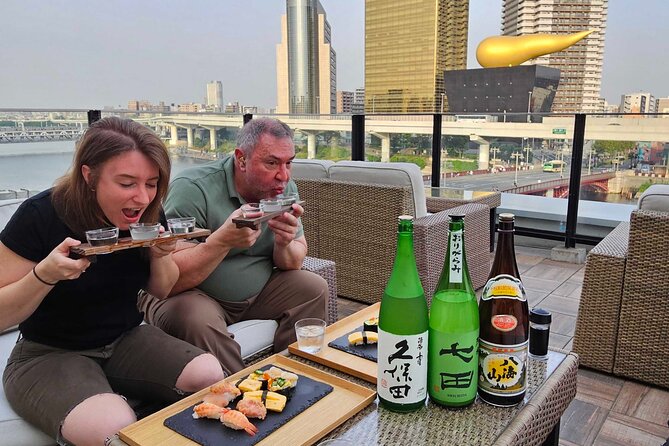
- The setting may include river views: Several accounts describe a pleasant view from the class space, adding a calm backdrop to the meal.
- Three hours gives you time to eat and learn: You are not rushed through a quick demonstration and exit.
Arriving at HAUS Tsukishima in Chuo City
The meeting point is Japan, 104-0051 Tokyo, Chuo City, Tsukuda, 2-chome 13-5, HAUS Tsukishima. The activity begins and ends here, so you do not need to arrange a second pickup point after the meal.
The class is near public transportation, but hotel pickup and drop-off are not provided. I would allow enough time to find the building, especially if you are navigating Tokyo with a full day already behind you. Your mobile ticket is useful for getting through the meeting process without printing anything.
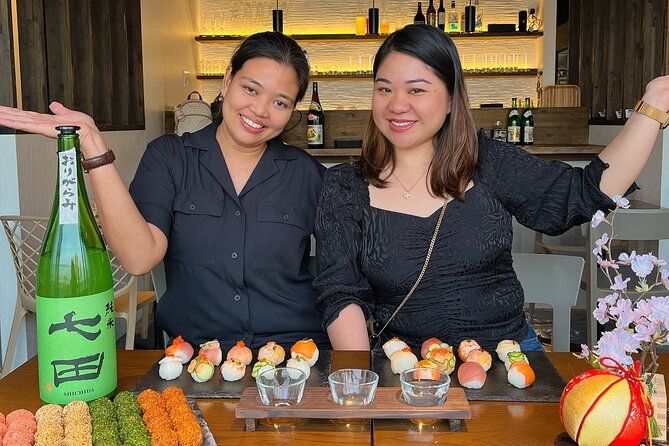
The small setting matters. With no more than eight people, the instructor can watch your knife work, rice shaping, and sushi rolling more closely. That makes a real difference for beginners. Sushi can look simple until the rice sticks to your hands or the roll loses its shape, and personal correction is much more useful than watching a guide do everything from across a crowded room.
The teaching team has included instructors named Sato, Ryushi, Alex, Taka, and Kaori. The exact person leading your session can vary, but the teaching style described across the experience is warm, polite, and informal. You can expect an atmosphere built around participation rather than culinary pressure.
More Sushi and Sake Tours in Tokyo:
- Sake Omakase in Tokyo: Guided Tasting by Certified Sommeliers
★ 5.0 · 239 reviews - Tsukiji: Outer Market Walking Tour & Sake Tasting Experience
★ 4.9 · 81 reviews - Tokyo: Sushi and Ramen Cooking Class with Sake Pairing Set
★ 5.0 · 81 reviews
Making sushi with close, practical guidance
Sushi is the part of the class where you do the most direct work. You prepare and shape your own sushi, then eat what you have made. For many people, that simple connection between making and eating is the best reason to book the class.
The instruction is designed for people who may have tried sushi at home and failed to get the technique right. You may already know the broad steps from online videos, but the small corrections are harder to see on a screen. A class leader can show you how to handle the rice, how to form the pieces, and how to keep the process tidy.
The class also treats sushi as more than a set of assembly instructions. You hear stories and facts about the food, including cultural background and details about how sushi developed as part of Japanese dining. A light quiz about sushi and ramen has also been part of the session, which gives the teaching a playful edge without turning the class into a lecture.
I especially like that you are not simply handed a prepared plate at the end. You get the satisfaction, and sometimes the comic imperfections, of eating your own work. Your first pieces may not look like those from a sushi counter. That is part of the value. You leave with techniques you can try again, not just photographs of a meal.
One practical point: the class uses quality ingredients, but the supplied details do not specify every fish, filling, or sushi style. If you have a strict dietary need, contact the provider before booking rather than assuming substitutions are available.
Building ramen around savory broth
The ramen section gives you a different lesson. Instead of focusing mainly on shaping and presentation, you learn how the broth supports the whole bowl. The class describes brewing a savory ramen broth from scratch, while the finished meal has also included pork belly.
This is where the session becomes useful for home cooks. Ramen is often treated as a quick packet meal, but the broth, seasoning, toppings, and noodles all affect the final result. The class gives you a clearer sense of how these parts work together and lets you customize the bowl to your taste.
The ramen work is not quite as hands-on as the sushi preparation. Some of the process is handled or prepared in advance, so you should not expect to spend the entire ramen portion stirring a pot from the first ingredient to the last. That is a limitation if you want a full professional kitchen simulation, but it also keeps the class manageable within three hours.
The trade-off is sensible. You get to understand the broth and assemble a satisfying bowl without spending most of the session waiting for stock to develop. The pork belly has been singled out as a particularly enjoyable part of the meal, and you are unlikely to leave hungry.
I would pay attention when the instructor explains seasoning and balance. Those lessons are easier to use at home than a long list of hard-to-find ingredients. You may not reproduce the exact bowl, but you should gain a better feel for why ramen tastes full, salty, sweet, or savory.
Sake selected to match the meal
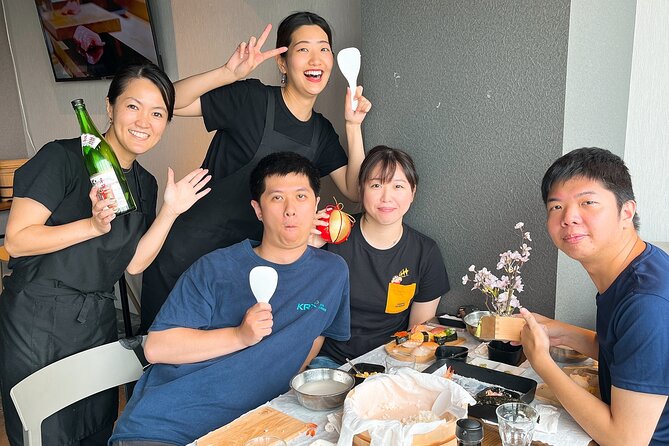
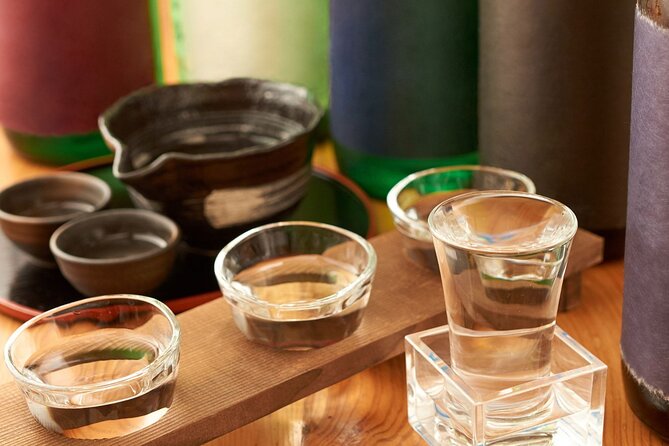
Sake is included, and it is paired with the food rather than treated as a separate tasting with no connection to lunch or dinner. This makes the drink portion especially useful if you are still learning the basics of Japanese sake.
You can try several choices, and the sake has been described as smooth and high quality. The class leaders explain how the drinks fit with sushi and ramen, giving you a simple way to notice how a beverage changes the food beside it.
The format is casual. You are not expected to arrive with advanced knowledge of sake. You can listen, taste, and decide what you like. That is the right approach for a short cooking class, especially when the main focus remains the food.
All drinks are included, but the supplied details do not specify the number of pours or the exact sake labels. If you are planning to drink, keep the rest of your day simple and make sure you can get back to your accommodation safely using Tokyo public transportation.
More Sake and Food Pairings in Tokyo:
- Wagyu & Sake Pairing in Shinjuku – Steak, Shabu-Shabu & More
★ 5.0 · 112 reviews - Tokyo Wagyu & Sake Pairing Tasting Experience with Local Flavors
★ 5.0 · 108 reviews - Cozy Tokyo Class: Ramen, Sushi, Sake Pairing & Cultural Exchange
★ 5.0 · 74 reviews - Wagyu Beef and Sake Pairing Foodie Tour in Tokyo
★ 5.0 · 71 reviews
A relaxed room with a view
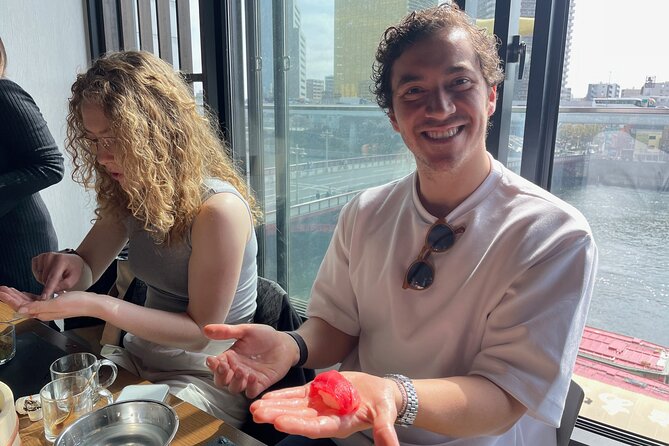
The atmosphere is one of the strongest parts of the experience. The class has been described as friendly, comfortable, and easy to follow, with instructors who make people feel at ease quickly. You get a social activity without the forced energy that can make some group classes tiring.
Several accounts also describe a river view from the setting. A view does not change the cooking itself, but it gives the three-hour session a pleasant sense of place. You are not just working at a kitchen counter with no connection to Tokyo outside the room.
The setting also suits couples, siblings, and small groups of friends. One particularly small class had only a few participants, allowing very close instruction. Group size can vary up to the stated limit of eight, so you should not assume every session will have the minimum number.
The instructors appear to bring humor into the lesson. That helps when a sushi roll goes crooked or a first attempt feels awkward. You are there to learn, but also to enjoy yourself, and the class seems to understand both goals.
What the three hours are really worth
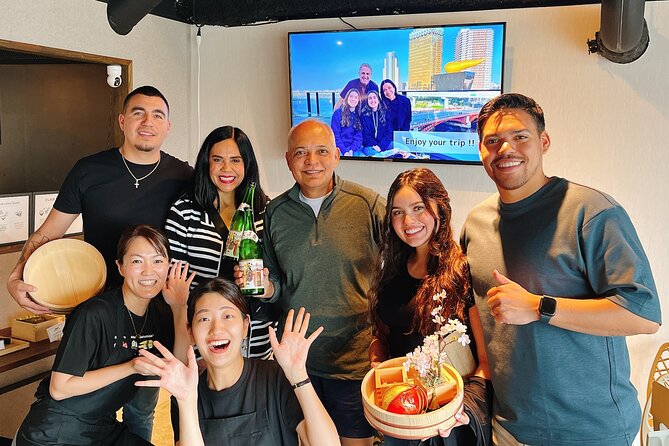
At $79.59, the price is not just paying for a recipe lesson. It covers the instructor, ingredients, the food you prepare, sake and other drinks, and roughly three hours of guided time. In central Tokyo, that can be good value if you want a meal and a cultural activity in one booking.
The strongest value comes from the small-group format. A cheaper class with twenty or thirty people might show you the same broad steps, but you would get less personal correction. Here, the maximum of eight gives the instructor room to help with sushi technique and answer questions.
The meal itself also matters. You are not leaving after preparing one small dish. You make sushi, take part in the ramen preparation, taste sake, and sit down to eat. The food has been described as plentiful, with pork belly ramen and fresh sushi forming a substantial meal.
Still, price-sensitive visitors should note what is not included. There is no hotel transfer, and the class does not promise a professional certificate or a take-home ingredient kit. Its value is in the instruction, food, drinks, and social setting.
If your main goal is to learn restaurant-level ramen from start to finish, you may want a more specialized ramen workshop. If you want a friendly introduction to several Japanese staples in one afternoon, the price is easier to justify.
Who should book this class
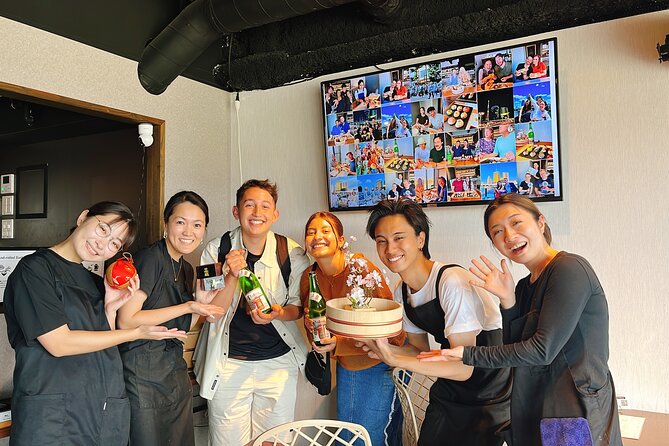
This experience fits first-time visitors who want a clear connection to Japanese food culture without committing to a formal fine-dining event. You do not need previous cooking experience, and the relaxed instruction should help if you are nervous about making sushi.
It also suits couples and families with older children, assuming everyone is comfortable with a cooking activity and the included drinks. The small group makes conversation easy, while the quiz and cultural explanations keep the class from feeling like a basic recipe demonstration.
Food-focused visitors will appreciate the chance to taste several sake choices with the meal. You will also get useful ideas for making sushi and ramen at home, especially if online instructions have left you unsure about rice handling or broth balance.
I would be more cautious if you have major dietary restrictions, dislike group activities, or want a completely hands-off food tour. The class is built around participation, and the supplied information does not confirm a vegetarian, vegan, seafood-free, or alcohol-free version.
Booking details and cancellation advice
You receive confirmation at booking, and a mobile ticket is accepted. Service animals are allowed, and the meeting point is near public transportation.
Free cancellation applies if you cancel at least 24 hours before the local start time. Within 24 hours, you do not receive a refund, and changes during that period are not accepted. Give yourself extra time for Tokyo traffic, station transfers, and locating HAUS Tsukishima.
Should you book the ramen and sushi class?
I would book this class if you want personal instruction, a full meal, and a friendly introduction to Japanese cooking in one compact experience. The best features are the eight-person limit, the chance to make your own sushi, the savory ramen lesson, and the sake pairing.
I would skip it only if you need a fully hands-on ramen workshop, have dietary requirements that have not been confirmed, or prefer exploring restaurants independently. For everyone else, $79.59 is a reasonable Tokyo price for three hours of food, teaching, drinks, and good company, with enough practical detail to keep using the lessons after you return home.
FAQ
How long does the cooking class last?
The class lasts approximately three hours.
Where does the experience begin and end?
It begins at HAUS Tsukishima, Japan, 104-0051 Tokyo, Chuo City, Tsukuda, 2-chome 13-5. The activity ends back at the same meeting point.
What is included in the price?
The price includes an English-speaking instructor, cooking-class ingredients, the meal, and all drinks, including the sake served with the food.
How many people can join the class?
The maximum group size is eight people.
Is hotel pickup and drop-off included?
No. Hotel pickup and drop-off are not included, so you must make your own way to and from the meeting point.
Can I cancel for a full refund?
Yes, if you cancel at least 24 hours before the experience start time. Cancellations made less than 24 hours before the start time are not refunded, and changes during that period are not accepted.
More Cooking Classes with Sake in Tokyo
- Tokyo: Sushi Cooking Class with Sake Tasting
★ 4.8 · 55 reviews - Tokyo Sushi Making Class : Sake Ceremony & Matcha Experience
★ 5.0 · 44 reviews - Japanese Sake Tasting & Wagyu Sukiyaki Cooking Class in Tokyo
★ 5.0 · 10 reviews - Beauty Vegan Dessert Cooking Class + Sake Kasu Hand Mask Trial!
★ 5.0 · 3 reviews
Just added around Tokyo
- Wagyu BBQ & Sukiyaki with Sake Pairing Experience near Ginza★ 5.0 · 2 reviews
- Tokyo Sake Tasting Tour with a Sake Expert★ 5.0 · 7 reviews
- Sake Tasting and Cherry Blossom Fun in Tokyo!★ 5.0 · 4 reviews
- Private Sake Tasting at 300 Years Old Sake Brewery in Tokyo★ 5.0 · 3 reviews
- Tokyo: Serene Sakura & Sake: An Exclusive Brewery Pairing Lunch★ 5.0 · 2 reviews
- Nagano: Snow Monkey and Zenkoji Temple Free Sake Taste Day Tour★ 4.5 · 8 reviews
- Sake Pairing Workshop with Japanese Food in Shinjuku★ 5.0 · 5 reviews
- Cherry blossom & Japanese Sake Tasting in Shinjuku★ 5.0 · 4 reviews
Sake Cooking Classes, compared.
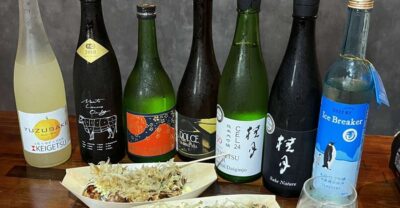
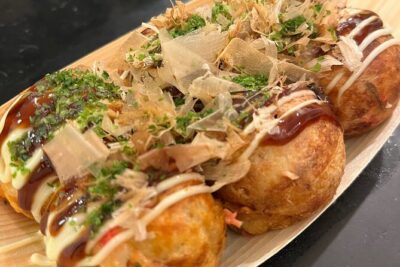
Osaka Sake Tasting & Takoyaki Cooking Experience
Read our review →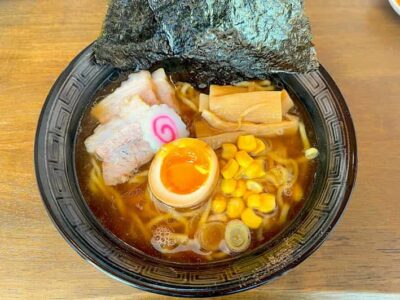
Sushi and Ramen Cooking Class with Sake Pairing Set
Read our review →
Osaka Cooking Class and Sake Tasting with Local Supermarket Visit
Read our review →
Tokyo Sushi Making Class : Sake Ceremony & Matcha Experience
Read our review →
Cooking Class & Sake Tasting with Local Market Visit
Read our review →
Japanese Sake Tasting & Wagyu Sukiyaki Cooking Class in Tokyo
Read our review →Browse the lists this tour appears in