
REVIEW · TOKYO
Tokyo: Sushi Cooking Class with Sake Tasting
Fresh sushi starts at the supermarket. This four-hour Tokyo cooking class combines a guided food shop with hands-on Japanese home cooking, making it a fine pick if you want more than a restaurant meal. I like the small group of up to seven and the chance to taste four kinds of sake with your own lunch. I also like that beginners and children can take part, with a kids playroom available.
The main consideration is timing. You must arrive promptly at Iriya Station, and parts of the route are not suitable for wheelchairs or strollers. The class costs $112 per person, which is fair if you value instruction, lunch, sake, recipes, and a local guide, but less appealing if you only want a quick sushi lesson.
Key points at a glance
- A supermarket lesson before the cooking begins: Learn how Japanese shoppers choose fish, vegetables, seasonings, and other ingredients.
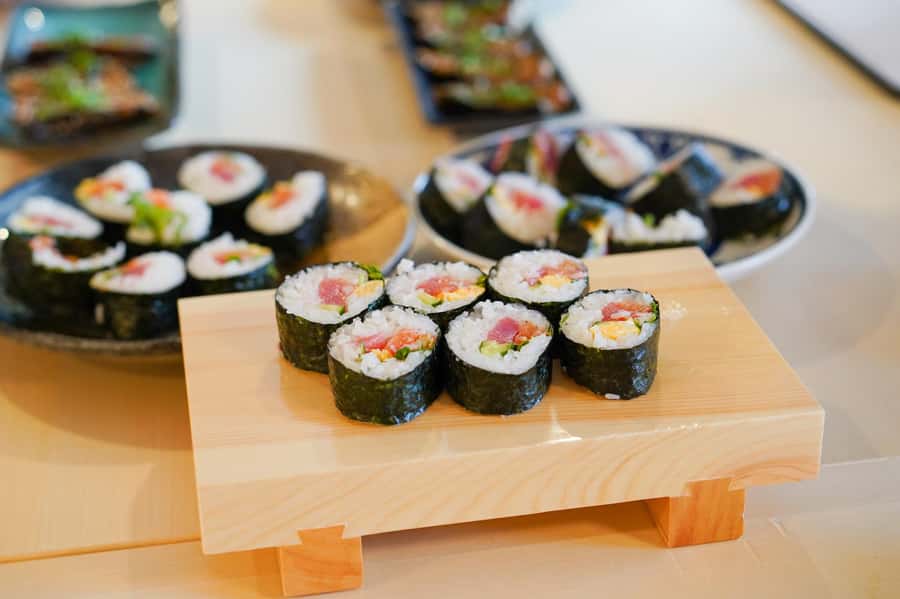
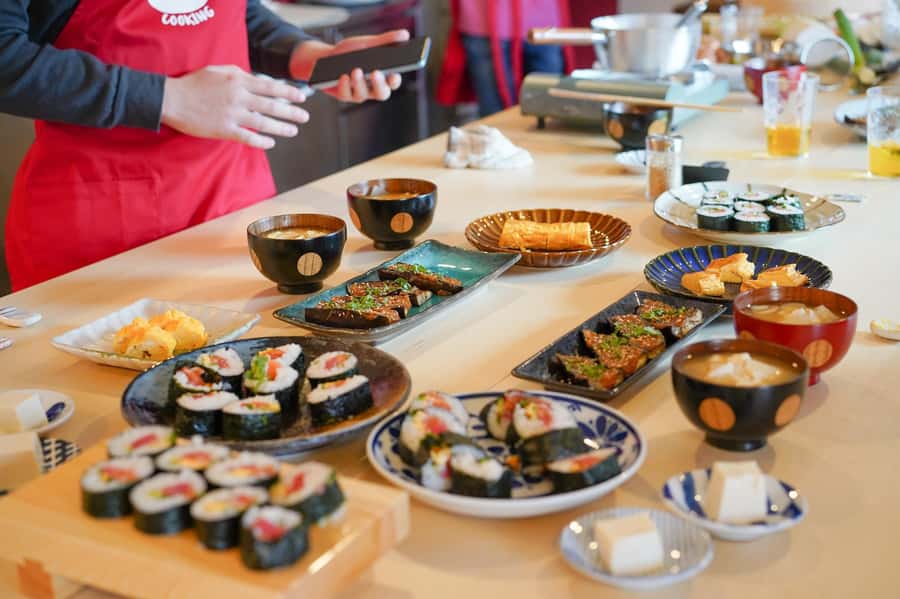
- More than sushi rolls: Prepare sushi rice, miso soup, eggplant dengaku, small dishes, and dashimaki tamago, a Japanese rolled omelet.
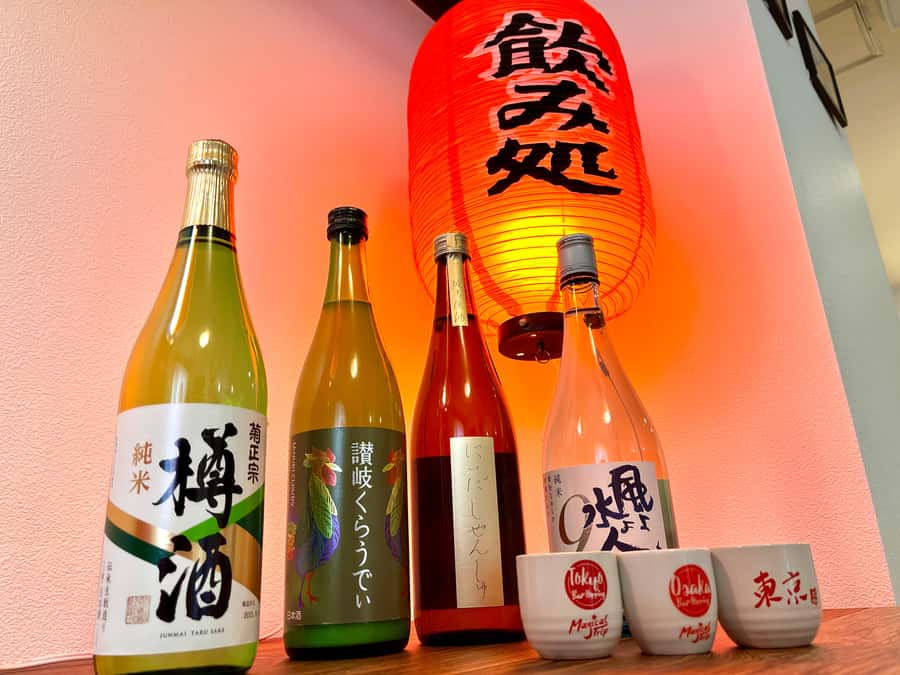
- Four sake pairings are included: Taste four varieties alongside sushi and traditional Japanese food.
- Small groups keep the class personal: The maximum group size is seven, allowing the guide to help with knife work and recipes.
- A useful family option: Children of all ages can join, and a playroom is available for little ones.
- A practical base in eastern Tokyo: The class takes place near Asakusa and Kappabashi, so you can continue with sightseeing or shopping afterward.
What this Tokyo cooking class really offers
This is not simply a sushi-making demonstration where you watch someone else do the work. You shop for ingredients, prepare several dishes, sit down for lunch, and receive recipes to use at home.
That sequence matters. Japanese food can look simple on the plate, but much of its character comes from small steps: seasoning rice with vinegar, preparing dashi, handling a Japanese knife properly, and balancing salty, sweet, savory, and fermented flavors. The class gives you a chance to see how those steps fit together.
The English-speaking guides are central to the experience. The instructors include Tiger, Suzy, Takahito, Mahori, Fuji, Taka, Mihori, and Sho. The strongest praise centers on their patience, friendly manner, and clear explanations. That is especially important in a cooking class, where a rushed instruction can leave you holding a knife or rolling an omelet with no idea what went wrong.
More Sushi and Sake Tours in Tokyo:
- Ramen and Sushi Cooking Class with Sake Pairing Set in Tokyo
★ 5.0 · 291 reviews - Sake Omakase in Tokyo: Guided Tasting by Certified Sommeliers
★ 5.0 · 239 reviews - Tsukiji: Outer Market Walking Tour & Sake Tasting Experience
★ 4.9 · 81 reviews
Meeting your guide at Iriya Station
The meeting point is in front of the FamilyMart next to the Gindako takoyaki shop at Exit 2 of Iriya Station. This detail matters because there are two FamilyMart stores at the station. Look for the one beside Gindako and Doutor Coffee.
I would give yourself extra time to find the correct exit and shop. The class starts on time, and late arrivals cannot join, reschedule, or receive a refund if they miss the group. Once everyone is together, the activity ends back at the same meeting point, which makes the start and finish easy to plan around.
Iriya also places you in a useful part of Tokyo for a day of local food and traditional sights. After the class, you can head toward Asakusa or spend time around Kappabashi, the shopping district known for restaurant equipment and kitchen supplies.
The supermarket stop is part of the lesson
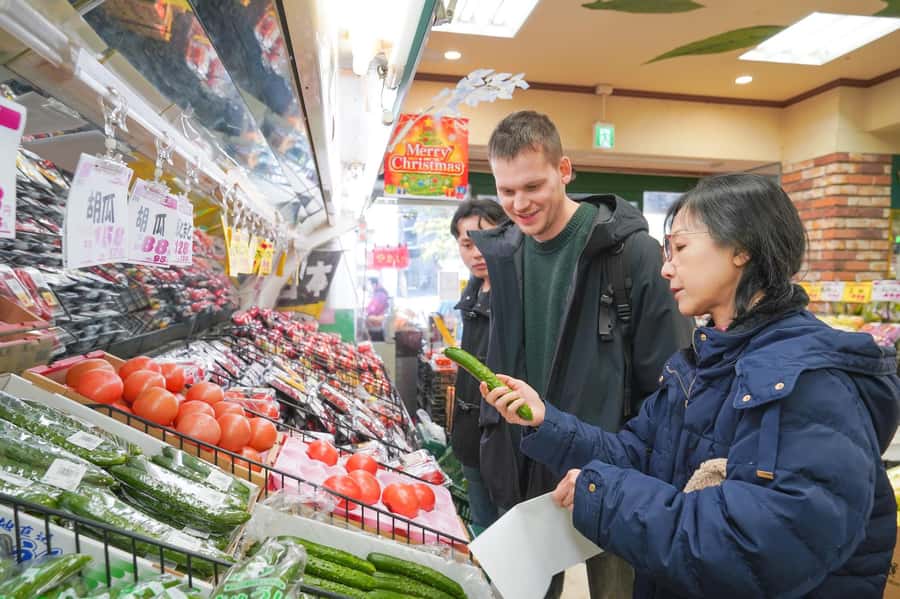
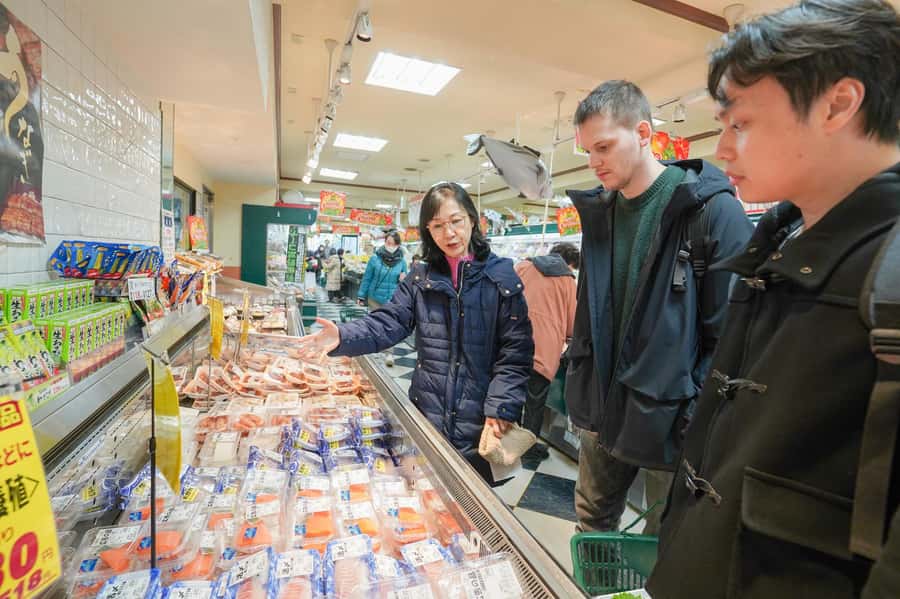
The opening market visit is one of the most useful parts of the morning. Japanese supermarkets offer far more than a quick stop for groceries, and the guide explains how to choose fresh ingredients and identify unfamiliar seasonings.
You may see meats, fish, vegetables, sauces, and other products that are hard to understand when you are shopping alone. Instead of treating the supermarket as a place to collect supplies, the class turns it into a lesson in Japanese food culture.
This also gives the cooking a practical foundation. You see the ingredients before they are prepared, learn what the guide considers fresh, and gain some confidence for your own future shopping. Mihori received particular praise for making the market visit enlightening and for answering questions during the cooking that followed.
The market portion does require some walking and attention. It is not a quiet introduction before the main event. You are gathering the actual ingredients for lunch, so stay with the group and be prepared to move at a steady pace.
Inside the professional kitchen studio
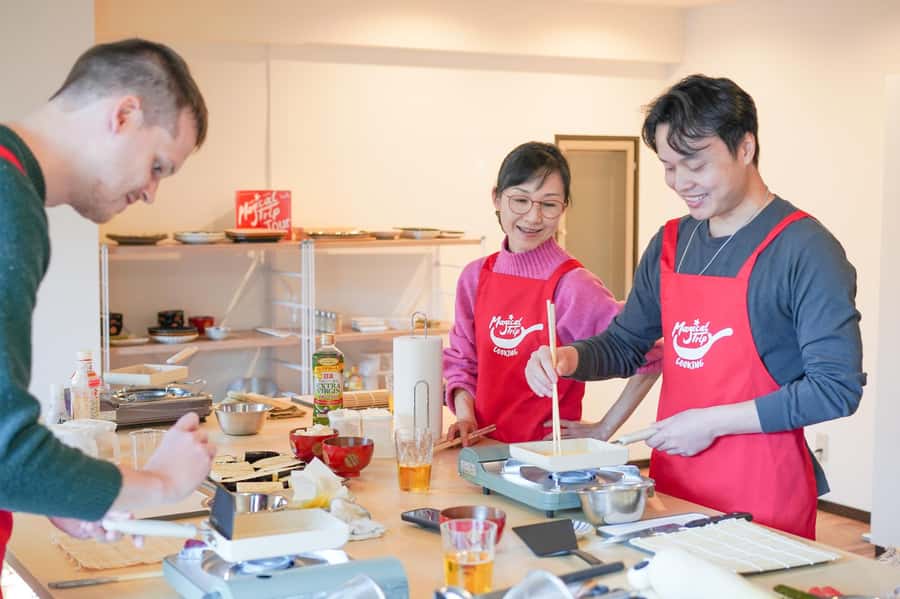
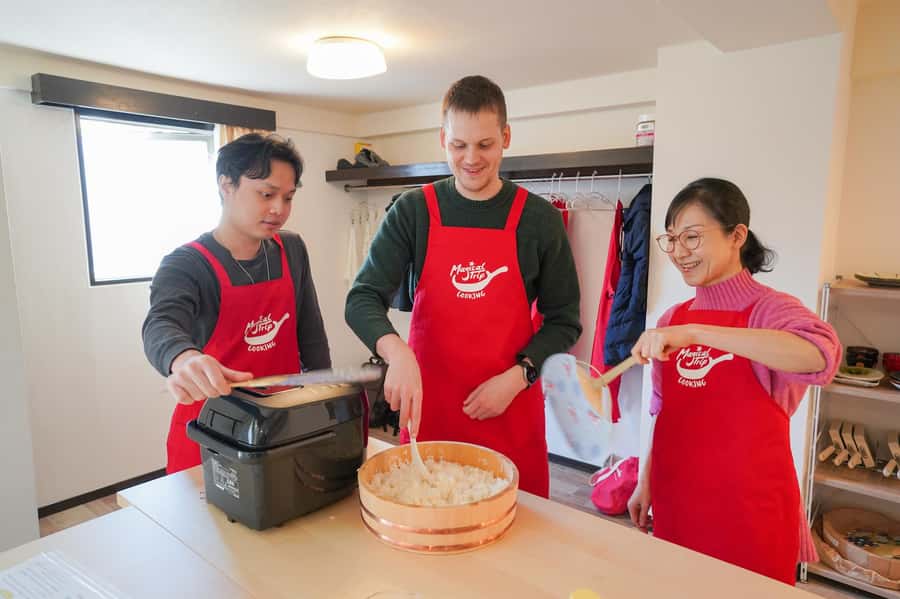
After shopping, you move to a professional kitchen studio for the main class. The instruction begins at ground level, including how to hold a kitchen knife correctly. That makes the class suitable for first-time cooks, not just people already comfortable preparing Japanese food.
You will work on sushi rice seasoned with vinegar and learn the basics of dashi, the stock used in miso soup and many Japanese dishes. These foundations are worth your attention. Sushi rice is not just ordinary rice with fish placed on top, and dashi gives Japanese soups and sauces much of their familiar savory flavor.
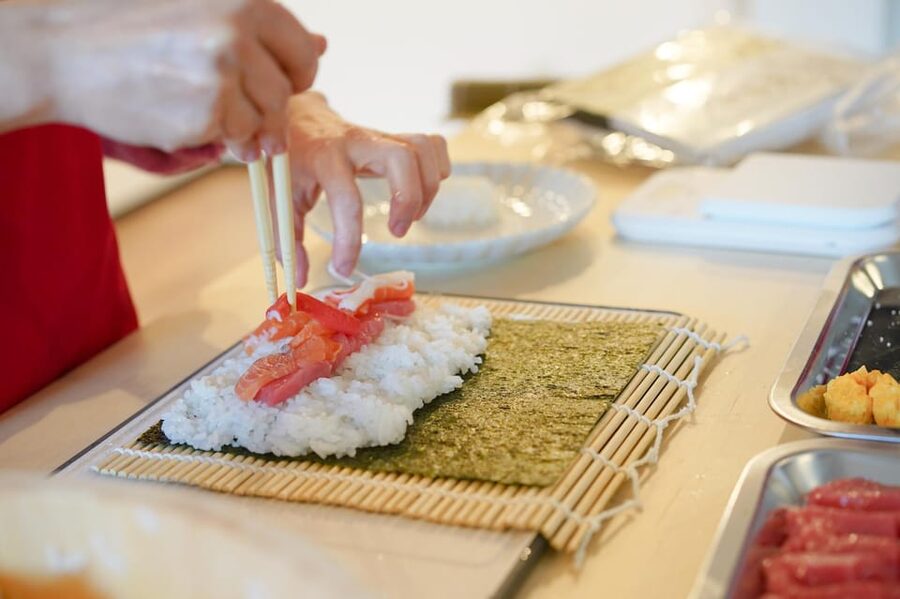
The class also covers sushi rolls, miso soup, eggplant dengaku, small dishes, and dashimaki tamago. Eggplant dengaku is eggplant prepared with a miso-based topping. Dashimaki tamago is a rolled Japanese omelet, and forming neat layers can take patience even with help.
The best part is that you make the food yourself. You are not only hearing a recipe explained, you are practicing the movements and seeing how the ingredients change as they cook. Guides such as Takahito and Fuji were praised for their patience, while Mahori was noted for making sure both adults and a young child could participate without feeling rushed.
More Cooking Classes with Sake in Tokyo:
- Tokyo: Sushi and Ramen Cooking Class with Sake Pairing Set
★ 5.0 · 81 reviews - Tokyo Sushi Making Class : Sake Ceremony & Matcha Experience
★ 5.0 · 44 reviews - Japanese Sake Tasting & Wagyu Sukiyaki Cooking Class in Tokyo
★ 5.0 · 10 reviews - Beauty Vegan Dessert Cooking Class + Sake Kasu Hand Mask Trial!
★ 5.0 · 3 reviews
Sushi, soup, and a proper sit-down lunch
The cooking leads to lunch, with the dishes you prepared forming the meal. That gives the class a satisfying rhythm: shop, prepare, cook, eat, and talk about the food.
I like this better than a class focused on one finished item. You get to compare several basic Japanese preparations, from vinegared rice to miso soup and rolled egg. The meal also helps you understand how these dishes work together as a home-style spread rather than as isolated recipes.
The final results will depend partly on your own cooking ability, but the instruction is designed to support beginners. The guides explain each step and help you correct mistakes. That said, this is still a participatory class, not a restaurant kitchen where someone else guarantees a perfect plate.
Tea is included, along with the lunch and ingredients. Photos are also taken during the activity, giving you a record of the class without asking you to stop cooking constantly for pictures.
Four sake tastings with Japanese food
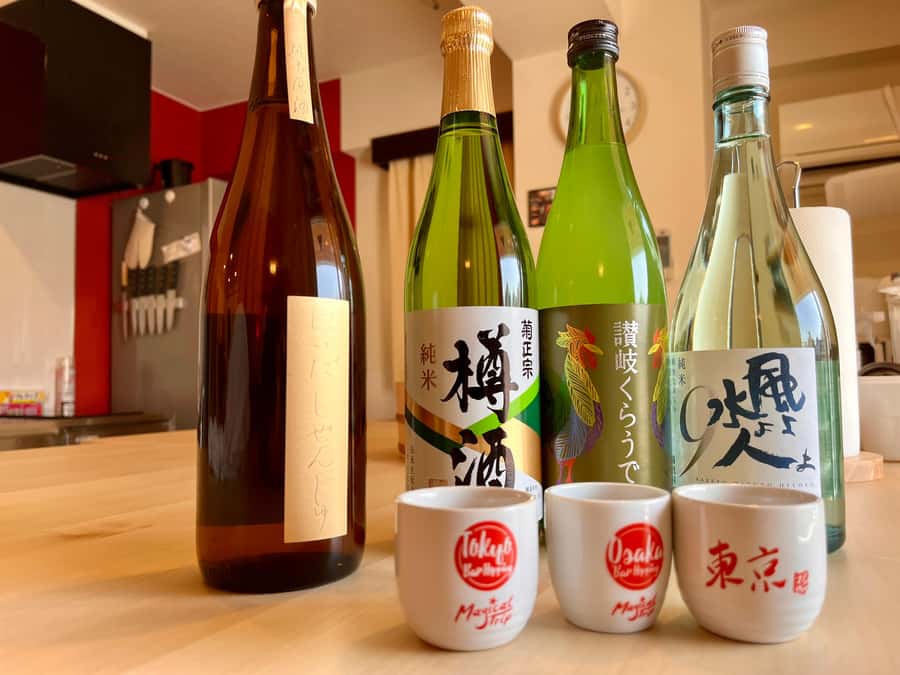
Sake tasting adds another layer to the meal. You choose from four premium sake varieties and pair them with sushi and traditional Japanese dishes.
This is a useful format for beginners because tasting sake with food makes the differences easier to notice. You do not need to arrive with technical knowledge. The guide can connect the sake to the meal and help you decide which style you prefer.
The class presents sake as part of Japanese dining rather than as a separate drinking stop. That makes the pairing feel relevant to the food you have just prepared. If you do not drink alcohol, the supplied information does not specify an alternative tasting arrangement, so you should ask before booking if that matters to you.
The combination of lunch and four sake tastings helps explain the $112 price. You are paying for a four-hour activity with ingredients, teaching, food, tea, photographs, and a small group, not merely for a short demonstration.
Why the small group size matters
The class is limited to seven participants. That is a strong feature for hands-on cooking because you may need help with knife technique, sushi rolling, or the rolled omelet.
A very large class can turn cooking into a wait-and-watch exercise. Here, the guides can move around the kitchen and give more direct help. The positive feedback about Suzy, Sho, Fuji, and the other instructors repeatedly points to clear explanations, patience, and a warm atmosphere.
There may still be other people in your session, so do not expect a private class. The small group makes conversation easier, but the pace and menu are shared. If you prefer cooking completely alone or choosing every dish yourself, this format may feel structured.
A workable choice for families
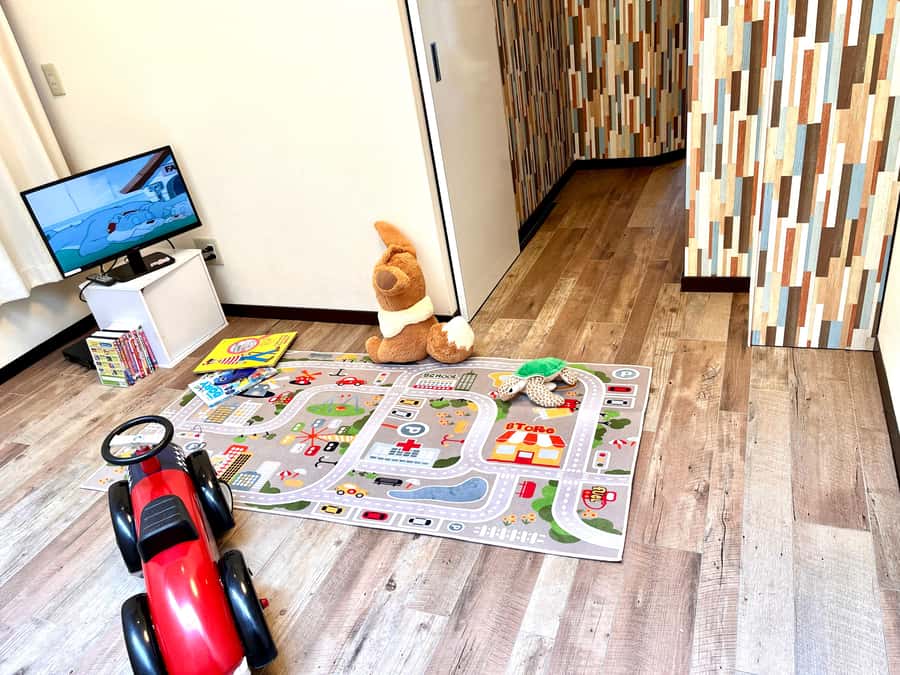
Children of all ages can join, and a playroom is available for young children. The class can therefore work for families who want to include children in a cultural activity without expecting them to sit quietly through a long lecture.
The reports about Mahori and Fuji are especially useful here. Both were praised for including children, explaining steps clearly, and allowing young participants to take part. That suggests the class is not aimed only at serious adult cooks.
Still, an adult should remain responsible for a child during knife work and cooking. The supplied details do not promise that every part of the activity is suitable for every child, so consider your child’s comfort with a kitchen setting before booking.
Dietary needs and access notes
Vegan and vegetarian participants are welcome, and the organizers arrange ingredients and cooking steps for those diets. You should state your requirements when booking so the team can prepare.
Allergy handling is less certain. The food is prepared in kitchens that do not belong to MagicalTrip, and an allergy-free environment cannot be guaranteed. Substitutions may not be possible at every stop, although the team will try to make adjustments elsewhere.
The route includes some locations that are not accessible by wheelchair or stroller. Summer adds another practical concern: Tokyo can be very hot and humid, so bring water and wear a hat to reduce the risk of heat exhaustion.
Recipes and the Asakusa follow-up
At the end, you receive recipes so you can repeat the dishes at home. That is a real benefit for anyone who wants a skill rather than a one-time meal. The recipes also help you remember the class after the trip, when supermarket labels and unfamiliar ingredients are no longer directly in front of you.
The studio is near Asakusa and Kappabashi, two good areas to continue exploring. Asakusa is one of Tokyo’s best-known sightseeing districts, while Kappabashi is useful for anyone interested in Japanese cookware, knives, dishes, or restaurant supplies.
The activity itself ends back at the Iriya meeting point, so plan your onward route from there. The class does not include a formal sightseeing walk through Asakusa, but the location gives you a sensible chance to add one afterward.
Who should book this cooking class
I would choose this class if you want a guided introduction to Japanese home cooking, especially if you are visiting Tokyo for several days and want one activity built around food and local routines.
It suits beginners, families, couples, and small groups of friends. It is also a good fit if you want to learn several dishes rather than make only sushi. The market visit, recipes, and sake pairing give the activity more substance than a basic cooking lesson.
I would think twice if you have serious food allergies, need full wheelchair or stroller access, dislike alcohol-focused activities, or prefer a flexible schedule. The strict start time also means you should not place this class immediately after another appointment across Tokyo.
Is this Tokyo sushi and sake class worth booking?
For $112, this is a good-value four-hour activity if you will use the instruction and recipes after your trip. You receive a supermarket tour, ingredients, lunch, four sake tastings, tea, photos, and guidance from a small English-speaking group.
The strongest reason to book is the teaching. Guides such as Tiger, Suzy, Takahito, Mahori, Fuji, Mihori, and Sho are praised for patience, humor, and clear help, including with children. The main reasons to hesitate are the access limits, allergy restrictions, firm arrival rule, and the fact that this is a shared class rather than a private cooking session.
If you want to understand how everyday Japanese dishes are built, and you like the idea of eating what you prepare, I would book it. If you only want a quick sushi photo opportunity, spend your money on lunch instead.
FAQ
How long does the Tokyo cooking class last?
The activity lasts four hours.
How much does the class cost?
The price is $112 per person.
Where does the class meet?
Meet in front of the FamilyMart next to the Gindako takoyaki shop at Iriya Station Exit 2. It is also beside Doutor Coffee.
Are there two FamilyMart stores at Iriya Station?
Yes. You need the FamilyMart next to Gindako and Doutor Coffee.
Where does the activity finish?
The activity ends back at the meeting point.
What language is the class conducted in?
The live tour guide language is English.
How many people can join the group?
The group is limited to seven participants.
Is sake tasting included?
Yes. The class includes a tasting of four kinds of sake, paired with sushi and Japanese cuisine.
Can vegans and vegetarians join?
Yes. Vegan and vegetarian participants are welcome, and ingredients and cooking steps can be arranged for them.
Can children join the class?
Yes. All ages can join, and a kids playroom is available for young children.
More Sake Tastings in Tokyo
- Sake Tasting Masterclass in Shinjuku (8+ Varieties with a Pro)
★ 5.0 · 271 reviews - Tasting All Types of Sake with Sommelier
★ 5.0 · 151 reviews - Tokyo Wagyu & Sake Pairing Tasting Experience with Local Flavors
★ 5.0 · 108 reviews - Tsukiji: Unlimited Sake Tasting Experience
★ 4.9 · 67 reviews
Just added around Tokyo
- Tokyo Sake Tasting Tour with a Sake Expert★ 5.0 · 7 reviews
- Wagyu BBQ & Sukiyaki with Sake Pairing Experience near Ginza★ 5.0 · 2 reviews
- Sake Tasting and Cherry Blossom Fun in Tokyo!★ 5.0 · 4 reviews
- Private Sake Tasting at 300 Years Old Sake Brewery in Tokyo★ 5.0 · 3 reviews
- Tokyo: Serene Sakura & Sake: An Exclusive Brewery Pairing Lunch★ 5.0 · 2 reviews
- Nagano: Snow Monkey and Zenkoji Temple Free Sake Taste Day Tour★ 4.5 · 8 reviews
- Sake Pairing Workshop with Japanese Food in Shinjuku★ 5.0 · 5 reviews
- Cherry blossom & Japanese Sake Tasting in Shinjuku★ 5.0 · 4 reviews
Sake Cooking Classes, compared.
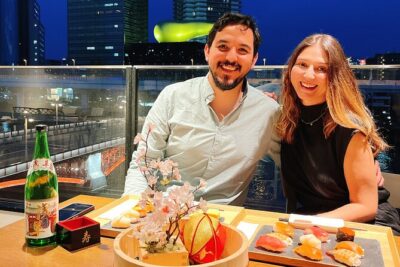
Ramen and Sushi Cooking Class with Sake Pairing Set in Tokyo
Read our review →
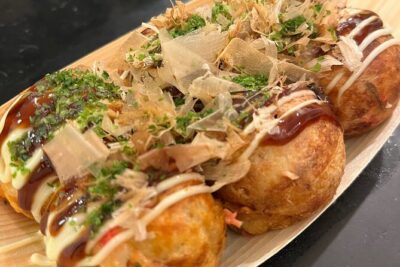
Osaka Sake Tasting & Takoyaki Cooking Experience
Read our review →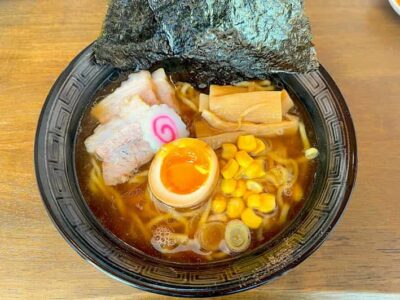
Sushi and Ramen Cooking Class with Sake Pairing Set
Read our review →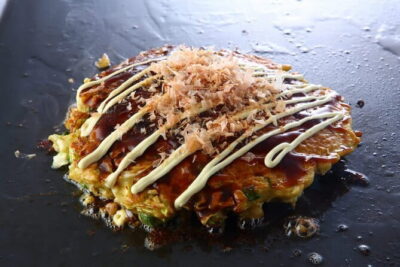
Osaka Cooking Class and Sake Tasting with Local Supermarket Visit
Read our review →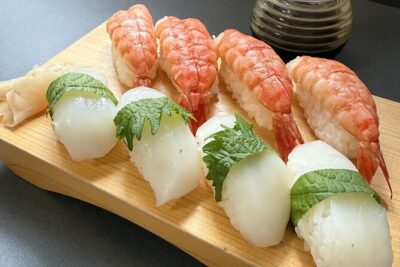
Tokyo Sushi Making Class : Sake Ceremony & Matcha Experience
Read our review →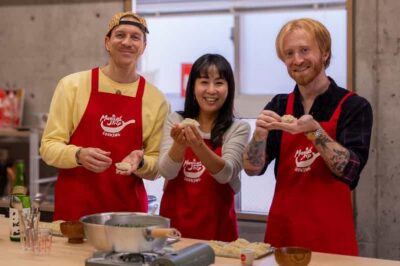
Cooking Class & Sake Tasting with Local Market Visit
Read our review →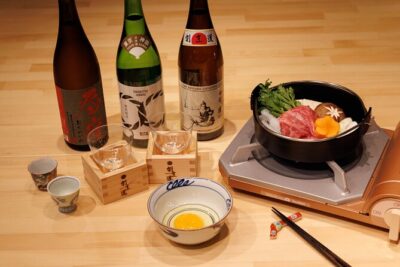
Japanese Sake Tasting & Wagyu Sukiyaki Cooking Class in Tokyo
Read our review →Browse the lists this tour appears in