
REVIEW · TOKYO
Tasting All Types of Sake with Sommelier
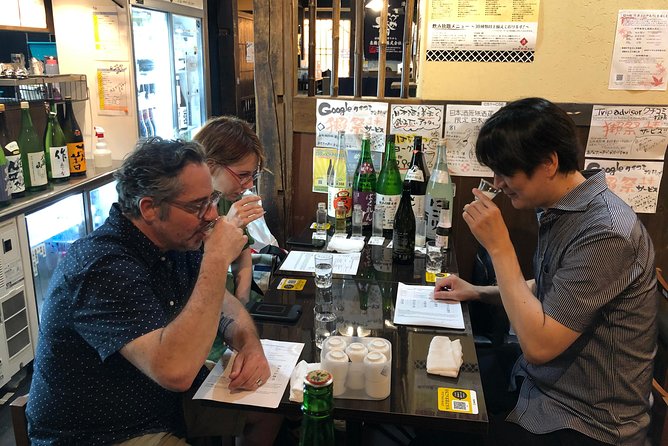
Sake makes more sense after six careful tastes. This Tokyo experience combines six to seven sake samples with clear lessons on brewing, labels, serving styles, and food pairings. I like that the tasting takes place near Shinjuku 3 Chome, close to the nightlife of Kabukicho and Golden Gai, and that guide Aki, also called Akira, explains the drinks in friendly, fluent English.
I also like the chance to try sake that can be hard to find outside Japan, including unpasteurized and sparkling styles. The main drawback is that this is a serious tasting packed into about 90 minutes, so the amount of information may feel heavy if you only want a quick drink and a few photos.
Key points to know before booking
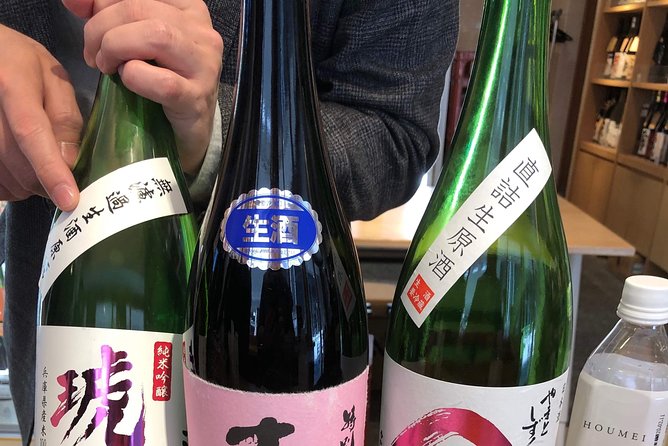
- Six to seven types of sake: Expect a broad tasting that may include sweet, dry, sparkling, hot, pasteurized, and unpasteurized styles.
- Aki leads the session: He is praised for his English, humor, clear explanations, and willingness to answer questions.
- Small sake bar setting: The tasting takes place near Louis Vuitton Shinjuku, rather than in a large museum or factory.
- Useful label lessons: You learn how to read a sake bottle and choose a style that suits your own taste.
- Shinjuku location: The meeting point is near Shinjuku San Chome, with Kabukicho and Golden Gai discussed along the way.
- Good early-trip activity: The advice you receive can help you order sake in restaurants and choose bottles in Japanese shops later.
Why this Shinjuku sake tasting is worth your afternoon
At $62.76 per person, this is not the cheapest way to drink sake in Tokyo. You can certainly order a glass at an izakaya for less. The value comes from tasting several different styles while someone explains why they taste different and how to make sense of Japanese labels.
That distinction matters. A menu may list junmai, ginjo, daiginjo, nama, nigori, or sparkling sake without making those words useful to you. Here, Aki turns those terms into practical buying advice. You do not simply taste a flight and nod politely. You learn how the rice, brewing method, polishing, pasteurization, sweetness, and serving temperature affect what reaches your glass.
I especially like that the session is built around comparison. A sweet sake makes more sense beside a dry one. A sparkling sample gives you a useful contrast with a traditional still pour. Hot and chilled sake show how serving temperature can change the experience.
The focus is educational, but the tone sounds relaxed rather than academic. Aki is described as funny, welcoming, and easy to talk with. That helps because sake has plenty of unfamiliar vocabulary, and a stiff lecture would make the hour and a half feel long.
More Sake Sommelier Experiences in Tokyo:
- Private Sake Tasting in Central Kyoto with Sake Sommelier
★ 5.0 · 32 reviews - Private Food & Sake Tour in Central Kyoto with Sake Sommelier
★ 5.0 · 24 reviews - Private Sake Tasting in Central Kyoto with Sake Sommelier
★ 5.0 · 13 reviews
Meeting Aki near Shinjuku San Chome
The experience begins at Frente Shinjuku San Chome, listed at 3 Chome 4 8 Shinjuku, at 4:00 pm. This is a central city meeting point, so give yourself time to find the exact spot. Shinjuku has a talent for making a simple rendezvous feel like a small navigation exam.
The opening conversation covers Shinjuku and the Shinjuku 3 Chome area. These introductions are brief, about five minutes each, but they give you local context before the tasting begins. Aki also discusses Kabukicho and Tokyo nightlife, including Golden Gai, so the experience is partly a neighborhood orientation.
That setting adds value. You are not learning about sake in isolation from Japan. You are about to drink one of the country’s best-known beverages in one of Tokyo’s famous evening districts, surrounded by restaurants, bars, department stores, and neon streets.
The meeting point can be busy, but Aki is praised for keeping communication clear and finding people successfully. That is a small detail with real value in Shinjuku, where a guide who communicates well can save you time and stress.
The sake bar beside Louis Vuitton Shinjuku
The main tasting takes place at a sake bar beside Louis Vuitton Shinjuku. The location is convenient for pairing the session with shopping or an evening walk, though the experience itself is centered on the bar rather than sightseeing inside a landmark.
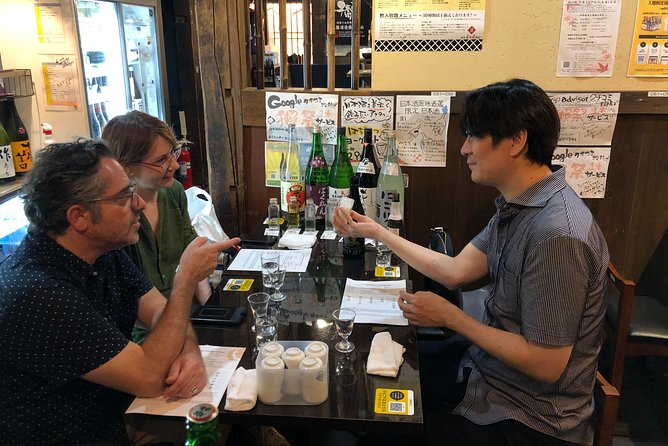
You should expect a small, personal setting. One person described being surprised that the tasting was held at a small sake bar and felt almost private. The group limit is 12 people, and some sessions may be much smaller. A couple who attended alone had a highly personal experience, while larger family and friend groups also found the format comfortable.
That range is useful to understand. This is not a silent tasting where you sit in rows and wait for a presenter to finish. You can ask questions, compare impressions with the group, and raise topics beyond sake. Aki is also described as willing to answer questions about other Japanese drinks and places to visit.
The exact bar atmosphere is not fully specified, so you should not book expecting a grand brewery, a traditional countryside kura, or a formal restaurant meal. The appeal is the setting’s simplicity: sit down, taste, listen, and ask.
Six to seven pours that cover the sake basics
The tasting includes about six to seven types of sake, with an additional welcome sake mentioned by one participant. The selection is designed to show range rather than make you sample several nearly identical bottles.
Styles mentioned include sparkling, pasteurized, unpasteurized, sweet, dry, hot, and chilled sake. This is a helpful spread for a first visit because many people begin with one vague idea of sake: a clear drink served warm. The tasting corrects that narrow picture quickly.
You may discover that you prefer a fragrant and lighter style, a fuller dry pour, a sweet version, or something with bubbles. You also get a chance to notice how serving temperature affects your preference. That is much more useful than being told which style is best. The right sake depends on what you enjoy and what you are eating.
Aki explains his impressions of each sake and suggests suitable ways to drink it. He also covers food pairings, which turns the tasting into a practical guide for future meals. You may not remember every technical term, but you should leave with a clearer answer to a basic question: what should I order next time?
One small limitation is that the printed handout does not necessarily list every sake served or provide technical details for each bottle. You receive a leaflet covering sake production and types, which is useful, but you may want to write down the names of your favorite samples as you go.
More Sake Tastings in Tokyo:
- Sake Tasting Masterclass in Shinjuku (8+ Varieties with a Pro)
★ 5.0 · 271 reviews - Sake Omakase in Tokyo: Guided Tasting by Certified Sommeliers
★ 5.0 · 239 reviews - Tokyo Wagyu & Sake Pairing Tasting Experience with Local Flavors
★ 5.0 · 108 reviews - Tsukiji: Outer Market Walking Tour & Sake Tasting Experience
★ 4.9 · 81 reviews
Learning how to read a sake label
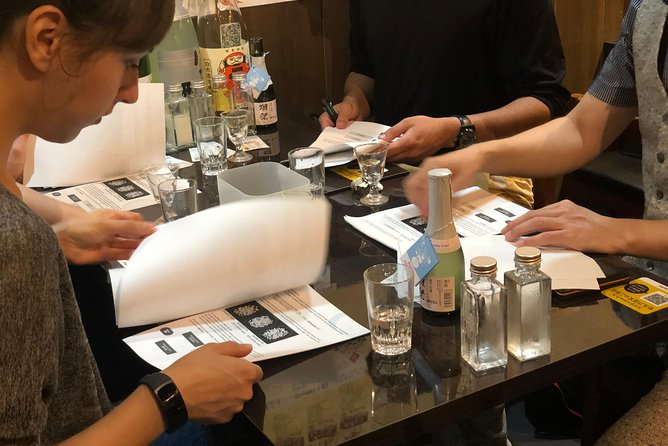
For many people, the label lesson is the most useful part of the session. Japanese sake bottles can look beautiful and tell you very little if you cannot read the script or recognize the main categories.
Aki explains how to use label information to make a better choice. The lesson connects production terms with taste, rather than treating them as vocabulary to memorize. You learn how to think about what is in the bottle and how it may suit your palate.
The details covered include the brewing process, types of sake, pasteurization, aging, market availability, and general production. Several people found the explanations detailed enough to feel like an introductory college class. That is praise for the depth, but it also signals that you should arrive ready to listen.
If you already know sake well, you may find the basic sections familiar. Even so, the unusual bottles and Japan-only availability can make the tasting worthwhile for experienced drinkers. Sake lovers from outside the United States especially appreciated trying unpasteurized bottles that are difficult to ship internationally.
Why the Japan-only bottles matter
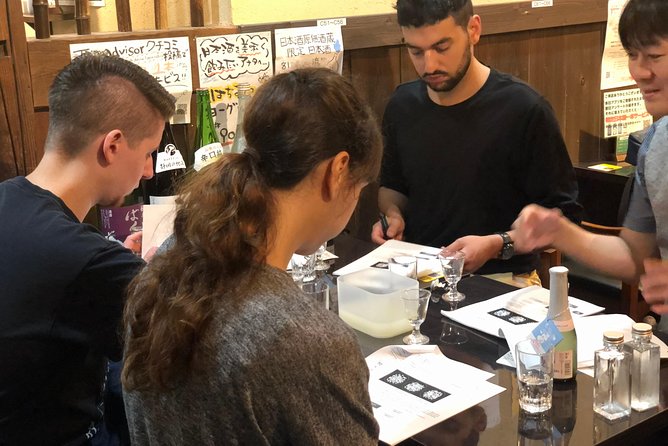
The chance to try sake that is rarely exported is a real benefit. Some bottles are difficult to ship because they are unpasteurized, so drinking them in Tokyo gives you access to styles you may not see at home.
That does not mean every sample will be exotic or unavailable in your country. The selection can vary. Still, the session clearly aims to give you more than standard supermarket sake, and the mix includes unusual forms such as sparkling and unpasteurized varieties.
This is where the price makes more sense for a sake fan. You are paying for access, explanation, and comparison at the same time. If you only want a casual glass, the value is weaker. If you want to understand the drink or find bottles to seek out later, the tasting earns its cost more easily.
A useful start to a Tokyo visit
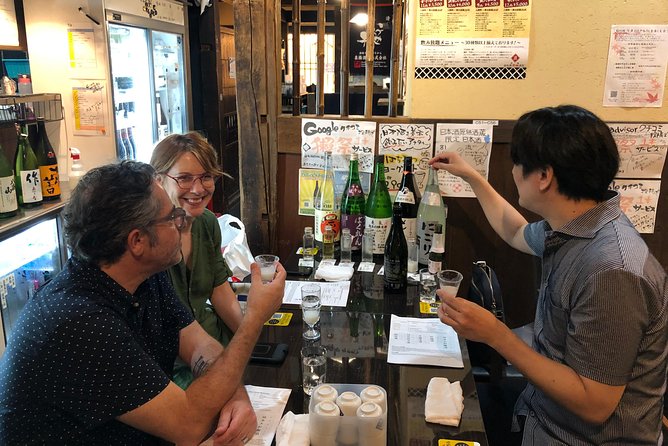
Several people recommend scheduling this near the beginning of a Japan trip, after you have recovered enough from jet lag to enjoy alcohol and absorb the lesson. I agree with that advice.
The experience gives you a working vocabulary for restaurant menus and bottle shops. Afterward, you can recognize more of the choices placed in front of you. You may also feel less dependent on a server to choose for you, especially when the menu offers several unfamiliar labels.
The 4:00 pm start works well for an evening in Shinjuku. You can finish the tasting and continue into the district’s restaurants and bars. Kabukicho and Golden Gai are part of the conversation, so the session can also help you decide how to spend the rest of the night.
Eat beforehand. One practical tip from the experience is to have lunch or an early meal before arriving. Six or seven samples in a short period can catch up with you, especially if you are tired, have not eaten, or plan to continue drinking afterward.
Who will enjoy this most
I would recommend this experience to first-time sake drinkers who want a calm introduction without having to decode everything alone. The guide’s friendly manner and willingness to explain basic points make it suitable for people who know almost nothing about sake.
It also suits couples, families with adult children, and small groups of friends. The format encourages conversation, and the guide’s humor helps keep the subject from feeling too technical.
Experienced sake drinkers can enjoy it too, particularly if they want to sample Japanese bottles that are not easy to find abroad. The value for an expert depends on the final selection and how much new information Aki provides.
I would hesitate to recommend it to someone who wants a short, casual bar stop. The session includes a lot of explanation about brewing, labels, flavor, history, serving, and the market. You will get more from it if you are willing to learn as you drink.
Because alcohol is central to the experience, it is also not a good fit for anyone who does not drink. Most people can participate, and the group is capped at 12, but the supplied information does not describe a nonalcoholic alternative.
Timing, group size, and cancellation
The advertised duration is approximately one hour and 30 minutes. One account describes the tasting lasting closer to two hours, so I would keep your evening schedule flexible rather than booking a tightly timed dinner immediately afterward.
The maximum group size is 12. That is small enough for questions, though the atmosphere will depend on how many people book that day. A smaller group may feel almost private, while a full group will be more social.
Your mobile ticket and booking confirmation make the process straightforward. The activity ends back at the meeting point, so you will not need to arrange a separate return transfer.
Free cancellation is available if you cancel at least 24 hours before the 4:00 pm start time. Changes or cancellations inside that window are not accepted for a refund. The cut-off follows Tokyo local time, which matters if you are changing plans from another time zone.
Is the $62.76 price fair?
I see this as a fair price for a guided tasting, but not a bargain drink stop. The fee covers the sake samples, instruction, label advice, food pairing guidance, and access to bottles that may be hard to find overseas.
The strongest value comes from what you do with the information afterward. If you plan to visit sake shops, order sake with meals, or bring home a bottle, the lesson can prevent a few poor choices. If you simply want alcohol in a pleasant setting, Tokyo offers cheaper options.
The high satisfaction level and 99 percent recommendation rate fit the experience’s main strengths: Aki’s personality, the broad range of samples, and the clear explanations. The only recurring limitation worth noting is that the supplied handout may not identify every sake tasted in detail.
Should you book this sake experience?
Book it if you want to understand sake rather than simply consume it. The combination of six to seven styles, practical label instruction, Japan-only samples, and a personable guide makes this one of the better ways to get oriented quickly.
Schedule it early in your Tokyo stay, but not while you are exhausted from a long flight. Eat first, leave room for the session to run long, and plan to explore Shinjuku afterward.
Skip it if you dislike structured tastings or want an unhurried night at a bar. For everyone else, especially first-time sake drinkers and curious fans, $62.76 buys a useful lesson you can carry into the rest of Japan.
FAQ
Where does the sake tasting begin?
It begins at Frente Shinjuku San Chome, 3 Chome 4 8 Shinjuku, Shinjuku City, Tokyo 160-0022, Japan.
What time does the experience start?
The start time is 4:00 pm.
How long does the tasting last?
The listed duration is approximately one hour and 30 minutes. One account describes the session taking about two hours, so allow some extra time.
How many types of sake will I taste?
You can expect six to seven types of sake, with an additional welcome sake mentioned in one account.
Is the experience limited in size?
Yes. The maximum group size is 12 people.
Can I cancel for a full refund?
Yes, if you cancel at least 24 hours before the scheduled start time. Cancellations or changes made less than 24 hours in advance are not accepted for a refund.
Just added around Tokyo
- Tokyo Sake Tasting Tour with a Sake Expert★ 5.0 · 7 reviews
- Wagyu BBQ & Sukiyaki with Sake Pairing Experience near Ginza★ 5.0 · 2 reviews
- Sake Tasting and Cherry Blossom Fun in Tokyo!★ 5.0 · 4 reviews
- Private Sake Tasting at 300 Years Old Sake Brewery in Tokyo★ 5.0 · 3 reviews
- Tokyo: Serene Sakura & Sake: An Exclusive Brewery Pairing Lunch★ 5.0 · 2 reviews
- Sake Pairing Workshop with Japanese Food in Shinjuku★ 5.0 · 5 reviews
- Nagano: Snow Monkey and Zenkoji Temple Free Sake Taste Day Tour★ 4.5 · 8 reviews
- Cherry blossom & Japanese Sake Tasting in Shinjuku★ 5.0 · 4 reviews
Sake Sommelier Experiences, compared.
Private Sake Tasting in Central Kyoto with Sake Sommelier
Read our review →
Private Food & Sake Tour in Central Kyoto with Sake Sommelier
Read our review →Private Sake Tasting in Central Kyoto with Sake Sommelier
Read our review →Browse the lists this tour appears in