
REVIEW · OSAKA
Osaka: Cooking Class & Sake Tasting with Local Market Visit
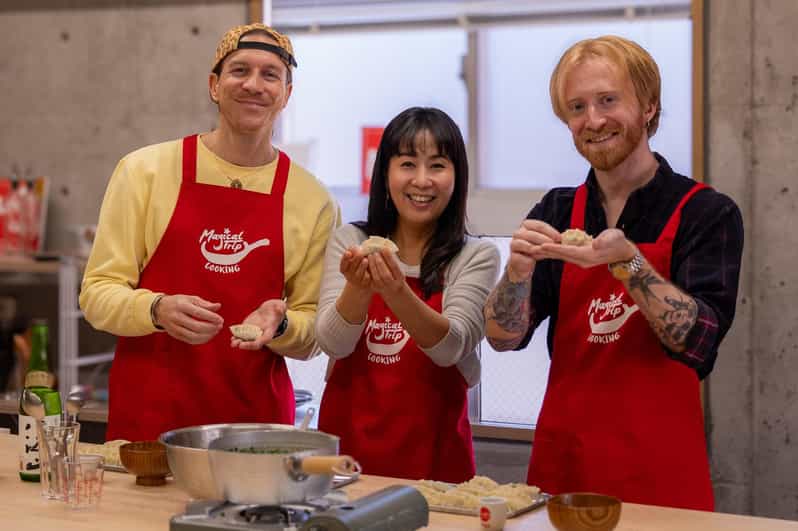
Good food makes Osaka easier to understand. This four-hour class takes you from a neighborhood supermarket to a small cooking studio, where you prepare niku-sui, okonomiyaki, and gyoza with an English-speaking local guide. I like the market visit because it shows how ordinary Osaka shopping works, and I like that the recipes are simple enough to repeat at home. The main drawback is that gluten-free meals are not available, and the class includes cutting and hot cooking, so it is not suitable for children under 12.
The small group of up to seven keeps the class personal without making it feel too formal. Guides such as Chie, Eri, Emi, Ayu, Akko, and Linda have been praised for making the cooking relaxed and answering broader questions about Japanese food and culture. You receive three canned drinks, which can be alcoholic or non-alcoholic, but this is a hands-on lunch with sake and beer rather than a formal sake seminar.
Key points at a glance
- Shop before you cook: Begin at a local supermarket near Minami Morimachi Station and see the ingredients used in everyday Osaka kitchens.
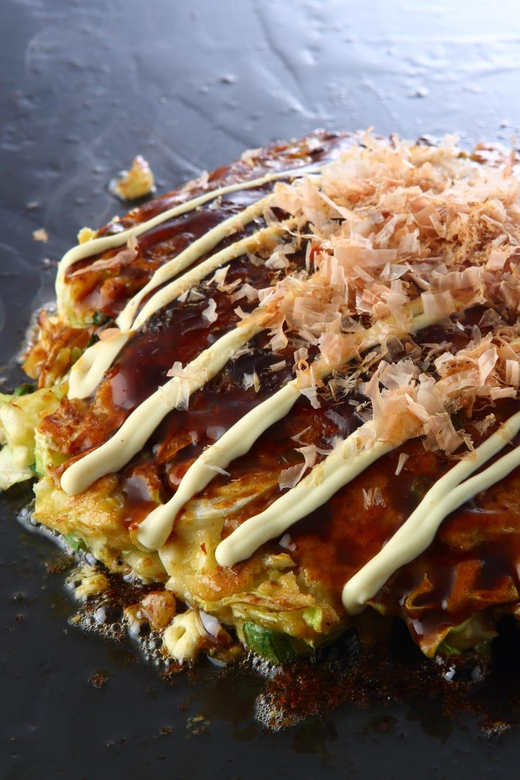
- Three Osaka favorites: Prepare niku-sui beef soup, okonomiyaki, and gyoza in one sitting.
- A genuinely small class: The group is limited to seven people, giving you room to ask questions and work alongside the guide.
- Drinks are part of the meal: Three canned alcoholic or non-alcoholic drinks are included, along with tea.
- Recipes go home with you: Download the recipes afterward and recreate the dishes for friends or family.
- Plan around restrictions: Vegetarian and vegan participants are welcome, but gluten-free options are unavailable, and allergies must be reported at least one day ahead.
Meeting your guide near Minami Morimachi
Your meeting point is in front of FamilyMart, about a one-minute walk from Exit 4 of Minami Morimachi Station. That precise location matters in Osaka, where a station can have several exits and a busy street can make a simple meeting feel less simple.
Arrive early. The class starts on time, and a late arrival cannot join, reschedule, or receive a refund. I would allow extra minutes to find Exit 4, especially if you are carrying shopping bags or navigating Osaka for the first time.
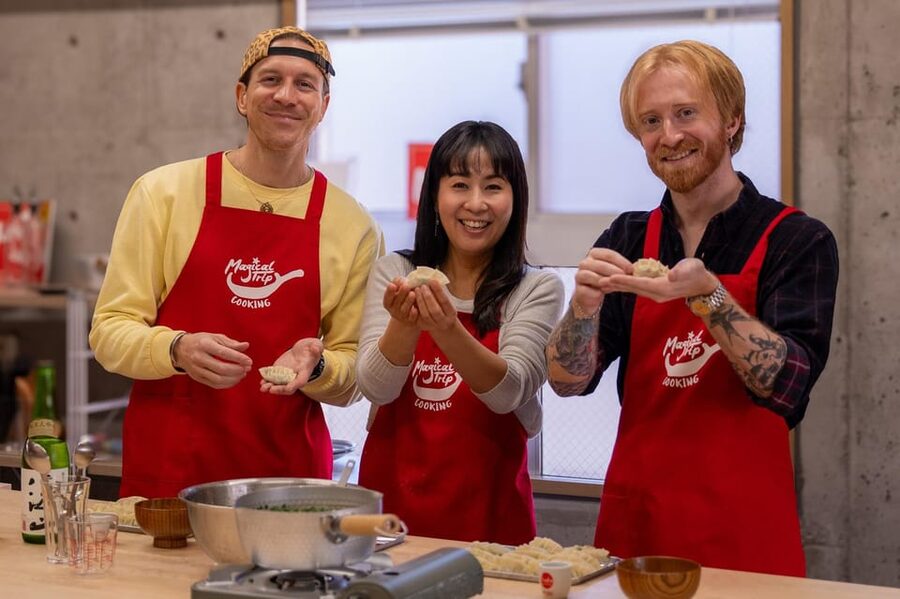
The experience is conducted in English. Because the group is capped at seven, you can expect more direct help than in a large demonstration class. That is useful when folding gyoza or adjusting the texture of okonomiyaki. You are not left to watch from the edge of the room.
The tone is informal. Past sessions have included couples, adult parent and child pairs, friend groups, and solo participants. The strongest part of the teaching seems to be the personal touch. Chie has been praised for mixing food instruction with stories about Japanese regions and products, while Eri has been described as calm, helpful, and happy to answer questions about Osaka and local culture.
More Cooking Classes with Sake in Japan:
- Ramen and Sushi Cooking Class with Sake Pairing Set in Tokyo
★ 5.0 · 291 reviews - Osaka Sake Tasting with Takoyaki Cooking
★ 5.0 · 156 reviews - Osaka Sake Tasting & Takoyaki Cooking Experience
★ 5.0 · 149 reviews
The supermarket visit shows Osaka at ordinary speed
Before cooking, you visit a local supermarket to buy the ingredients for lunch. This is a short but useful part of the experience because it puts the recipes in context. You see what the guide selects, how the ingredients are packaged, and which items are familiar to Japanese home cooks.
This is not simply a trip to collect supplies. The guide explains what you need and how each ingredient will be used. For someone who has wandered through Japanese supermarkets without knowing what to buy, this can be a practical lesson.
The supermarket also gives you a look at daily life away from Osaka’s famous food streets. You are not just eating a finished dish at a restaurant. You are seeing the raw materials and following them through to lunch. That connection makes the cooking feel more useful.
Do not expect a long food tour or a market full of stalls. The stop is designed around the class, so its purpose is to gather ingredients and introduce local shopping habits. If you want a large public market tour, this will feel modest. If you want to understand how the meal begins, it works well.
Niku-sui gives you a taste of local Osaka comfort food
The first dish is niku-sui, a beef soup that is especially associated with Osaka home-style cooking. It is less familiar outside Japan than okonomiyaki, which makes it an interesting choice for a class. You get to try something locals enjoy without relying only on the dishes already famous abroad.
The soup also helps you learn how a few straightforward ingredients can create a satisfying meal. The guide walks you through the method step by step, so you do not need cooking experience. You can ask about ingredients, regional habits, and how the dish fits into Japanese food culture while you work.
I like that niku-sui appears alongside the more famous dishes. It gives the class a wider view of Osaka cooking. You are not just making a tourist favorite. You are also preparing a food that may not have been on your personal list before the class.
The exact pace depends on the guide and the group. Some people may want to move quickly toward eating, while others will enjoy asking questions at each stage. Since this is a shared cooking session, the relaxed pace is part of the appeal.
Okonomiyaki turns lunch into a group project
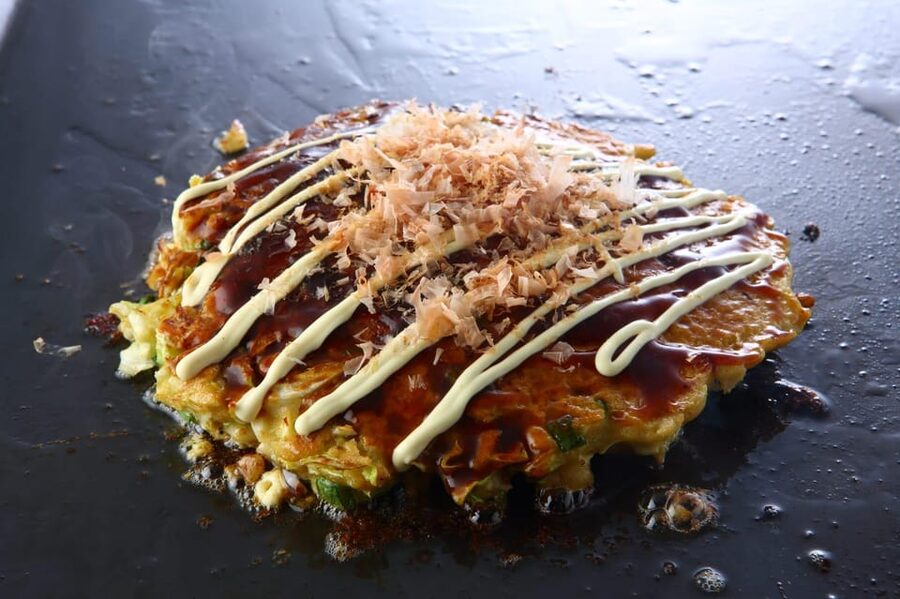
Okonomiyaki is Osaka’s signature savory pancake, and it is the dish most people will recognize before arriving. Its name is often explained as cooking something according to your preference, which fits the dish well. The class lets you prepare it rather than simply ordering one from a restaurant.
This is a good choice for a group because the work is easy to share. You can follow the guide’s instructions, watch the mixture come together, and see how the finished pancake takes shape. The recipe is designed to be authentic but manageable in a home kitchen.
One useful feature is the focus on repeatability. The goal is not to show you a complicated restaurant technique that requires special equipment. You learn a version you can make with simple ingredients after returning home. That makes the $90 price easier to justify for someone who wants more than a single lunch.
The food is also substantial. Angela, who joined with her adult daughter, described making all three dishes as a generous amount of food. Arrive hungry, but do not expect to need another full meal immediately afterward.
More Sake Tastings in Japan:
- 3-Hour Kyoto Insider Sake Brewery Tour with Tastings & Pairings
★ 5.0 · 917 reviews - Kyoto Sake Brewery & Tasting Walking Tour
★ 5.0 · 623 reviews - 1.5-Hour Kyoto Insider Sake Experience with 7 Tastings & Pairings
★ 5.0 · 297 reviews - Sake Tasting Masterclass in Shinjuku (8+ Varieties with a Pro)
★ 5.0 · 271 reviews
Folding gyoza adds the hands-on fun
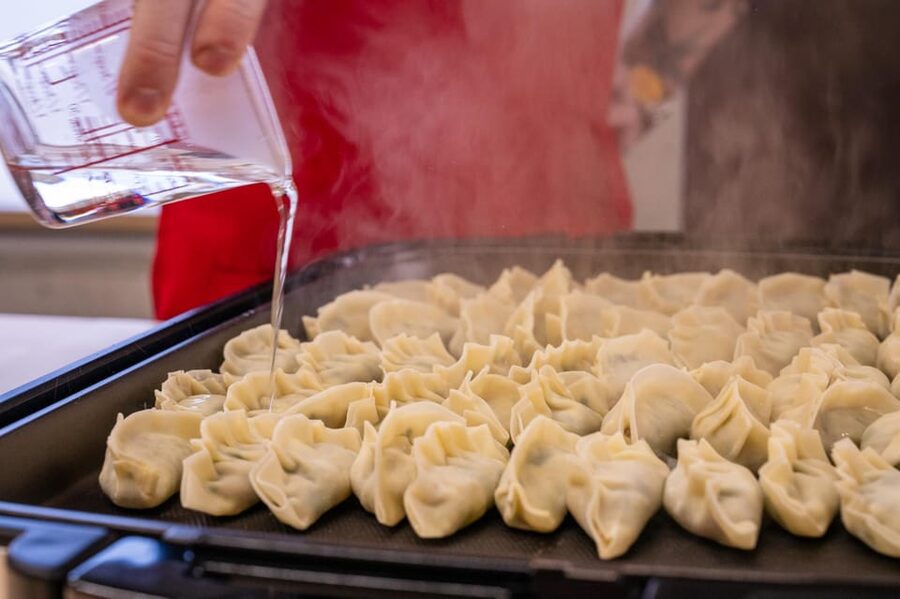
Gyoza is the most tactile part of the class. You fold the dumplings yourself, which turns a familiar restaurant food into a shared activity. The shapes may not all look identical, and that is part of the fun.
For beginners, this is where a small group helps most. The guide can show you how to fold and seal the dumplings, then correct your technique without rushing you. You can also work at your own pace and compare your results with the people around you.
The class treats cooking as a social activity. Music may be selected by the group, and conversation continues while everyone prepares the food. Francesco described the atmosphere as calm and fun, with each step completed under Eri’s guidance. That is a useful clue for solo participants: you do not need to arrive with your own group to have someone to talk with.
Gyoza also gives the class a little lighthearted competition. Perfect folds are not required, and the finished dumplings matter more than their appearance. You get a lesson, lunch, and a story to tell about your less-than-perfect first batch.
Sake, beer, and tea keep the class social
Three canned drinks are included. You can choose alcoholic or non-alcoholic options, and tea is served during the experience. Sake and beer are available among the drink choices, but the setup is casual rather than a detailed tasting led by a sake specialist.
That distinction matters. If you want to compare brewing regions, learn formal tasting terms, or visit a sake brewery, choose a dedicated sake experience instead. Here, drinks support the meal and conversation. They give you something local to try while you cook, without taking over the four-hour session.
The reviews supplied for this experience point to a wide beverage selection and positive reactions to the sake. Linda even went out of her way to help a participant buy additional sake. Treat that as a pleasant possibility, not a guaranteed extra stop, since the class centers on cooking.
You can choose non-alcoholic drinks, which makes the class suitable for people who do not drink. Still, tell the provider about dietary needs and allergies at least one day in advance. Same-day requests cannot be accommodated, substitutions are not guaranteed, and the meals are prepared in an external kitchen that cannot promise an allergy-free environment.
The guides make the difference
The cooking itself follows three approachable recipes, but the guide shapes the experience. Chie has been praised for combining cooking with Japanese history and regional food knowledge. Eri has been described as especially helpful with questions about Osaka and culture. Emi was noted for answering general questions while keeping the meal preparation lively, and Akko was praised for making the class friendly and comfortable.
These details matter because a cooking class can become either a warm conversation or a quiet production line. Here, the repeated praise is for care, clear instruction, and a friendly manner. Linda even decorated the room for a Christmas session, showing how much the host may tailor the mood for the group.
You should not assume every guide will offer the same personal touches. The provider assigns the guide, and individual styles vary. The consistent promise is English instruction, a small group, and help at every step.
The guides also serve as a useful source of everyday Osaka advice. You can ask about local food, neighborhoods, and culture while your lunch cooks. That informal exchange may be one of the best reasons to choose this class over a larger cooking demonstration.
What the $90 price includes
At $90 per person, the cost is fair if you value instruction, food, drinks, and a small group. The four-hour duration is long enough to include shopping, preparation, cooking, eating, and conversation. You are also paying for all ingredients, tea, three canned drinks, an English-speaking guide, and photos taken during the class and sent by email afterward.
The value is strongest for people who plan to cook Japanese food at home. You receive recipes after the session, and the dishes use ingredients intended to be manageable outside a professional kitchen. One participant specifically planned to recreate the recipes at home, which is exactly the point of this format.
The value is weaker if you want a quick meal or a formal culinary lesson. Four hours is a sizeable block of an Osaka day, and some people may prefer to spend that time eating in restaurants or exploring the city. You also need to be comfortable with a shared class rather than a private lesson.
A group of up to seven is a good middle ground. It is more personal than a large class, but you may still share preparation tasks and attention with others. Solo visitors can meet people naturally, while couples and families can cook together without losing access to the guide.
Who should book this Osaka class?
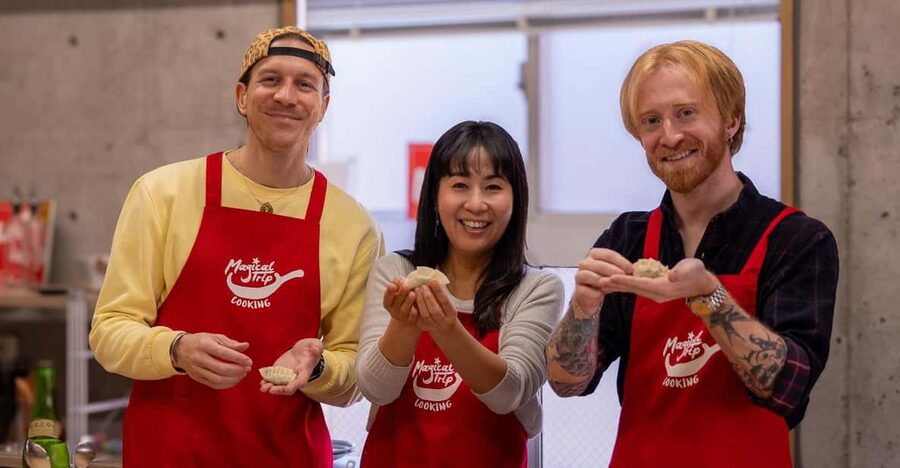
I would recommend it to you if you like food, want practical recipes, and enjoy talking with a local while you work. It suits first-time cooks because the guide explains each stage clearly. It also suits experienced home cooks who want to see how Osaka-style dishes are prepared with ordinary ingredients.
The class is particularly good for:
- Couples seeking a shared activity beyond restaurant meals
- Families with children over 12 who can handle knives and hot cooking
- Solo visitors who want an easy social setting
- Friends who enjoy food, drinks, and relaxed conversation
- Home cooks who want recipes they can repeat after Japan
It is less suitable if you need gluten-free food, have serious allergies, use a wheelchair or stroller, or have difficulty walking. Some locations may not be accessible, and the provider suggests a private class for people with walking difficulties. Vegans and vegetarians are welcome, but you must provide dietary information at least a day ahead.
Osaka’s weather can also affect comfort. Summer temperatures may reach 40°C, while winter temperatures can fall to -5°C. Dress for the season, especially for the walk between the station, supermarket, and studio.
Should you book it?
Book this class if you want to understand Osaka through everyday food rather than simply order famous dishes. The supermarket visit, three-course cooking session, drinks, and recipe download give you a complete four-hour activity for $90. The strongest reasons to go are the small group, the warm guides, and the chance to make niku-sui, okonomiyaki, and gyoza yourself.
Skip it if you want a formal sake tasting, a short food stop, or guaranteed allergy-safe cooking. For everyone else, this is a practical and friendly way to spend part of an Osaka day, with skills and recipes you can carry home.
FAQ
Where does the cooking class meet?
Meet in front of FamilyMart, about a one-minute walk from Exit 4 of Minami Morimachi Station in Osaka.
How long does the experience last?
The experience lasts four hours. Check the available starting times when booking.
What dishes will I cook?
You will prepare niku-sui beef soup, okonomiyaki, and gyoza.
Are drinks included?
Yes. The experience includes three canned alcoholic or non-alcoholic drinks, plus tea. Sake and beer are among the drink options.
Can vegetarians and vegans join?
Yes. Vegetarians and vegans are welcome, but you must share your dietary needs at least one day in advance. Gluten-free options are unavailable.
Is the class suitable for children?
Participants must be over 12 because the class involves cutting and heating food.
What happens if I arrive late?
The class starts on time. Late arrivals cannot join, reschedule, or receive a refund.
More Market Visits in Japan
- Tsukiji: Outer Market Walking Tour & Sake Tasting Experience
★ 4.9 · 81 reviews - Tsukiji Market Eating Tour, Authentic Sushi & Sake Comparison
★ 5.0 · 52 reviews - Private Nishiki Market Food & Sake Tour by Young Local Guides
★ 5.0 · 12 reviews - Nishiki Market, Private Sushi class & Sake Tasting in Townhouse
★ 5.0 · 6 reviews
Just added around Japan
- Tokyo Sake Tasting Tour with a Sake Expert★ 5.0 · 7 reviews
- Wagyu BBQ & Sukiyaki with Sake Pairing Experience near Ginza★ 5.0 · 2 reviews
- Sake Tasting and Cherry Blossom Fun in Tokyo!★ 5.0 · 4 reviews
- Private Sake Tasting at 300 Years Old Sake Brewery in Tokyo★ 5.0 · 3 reviews
- Tokyo: Serene Sakura & Sake: An Exclusive Brewery Pairing Lunch★ 5.0 · 2 reviews
- Nagano: Snow Monkey and Zenkoji Temple Free Sake Taste Day Tour★ 4.5 · 8 reviews
- Sake Pairing Workshop with Japanese Food in Shinjuku★ 5.0 · 5 reviews
- Cherry blossom & Japanese Sake Tasting in Shinjuku★ 5.0 · 4 reviews
Sake Cooking Classes, compared.
Ramen and Sushi Cooking Class with Sake Pairing Set in Tokyo
Read our review →
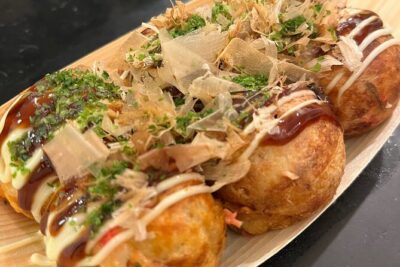
Osaka Sake Tasting & Takoyaki Cooking Experience
Read our review →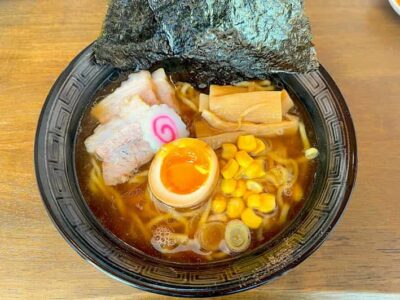
Sushi and Ramen Cooking Class with Sake Pairing Set
Read our review →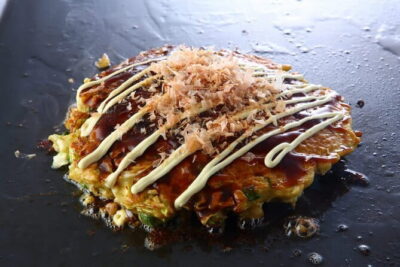
Osaka Cooking Class and Sake Tasting with Local Supermarket Visit
Read our review →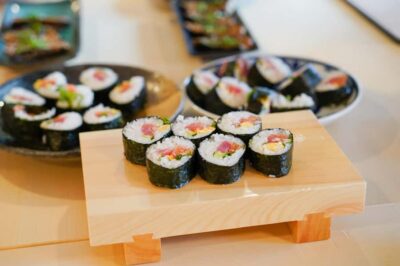
Tokyo Sushi Making Class : Sake Ceremony & Matcha Experience
Read our review →
Japanese Sake Tasting & Wagyu Sukiyaki Cooking Class in Tokyo
Read our review →Browse the lists this tour appears in