
REVIEW · TOKYO
Tsukiji Market Eating Tour, Authentic Sushi & Sake Comparison
Sushi tastes better when you know its market. This three-hour Tsukiji tour combines a small group of up to six people with guided tastings, market browsing, and a sushi lunch. I like the personal scale, which makes it easier to ask questions, and I like that the food is not limited to sushi: you may also try omelet, strawberry daifuku, dashi, tea, nuts, and other market treats.
The tour also adds three types of sake, nearby religious sites, and a Kanji name sticker, giving the outing more character than a simple food stop. The main drawback is that the experience depends on a fixed meeting time and market conditions, and one serious cancellation problem was reported. I would confirm the tour is operating before setting out, especially if this is your only Tsukiji visit.
Key points to know before booking
- A maximum of six people keeps the tour personal and makes questions easy.
- Sushi lunch and sake tastings are included, along with several smaller snacks.
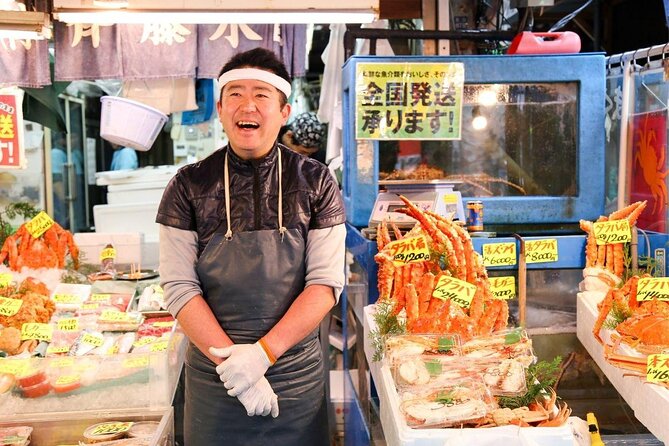
- Ariel receives especially warm praise for her energy, food knowledge, and friendly approach.
- The route includes two religious sites, Tsukiji Hongwanji Temple and Namiyoke Inari Shrine.
- The $30 price is strong value if the listed inclusions are provided as planned.
- The tour begins at Tsukiji Station, not at your hotel, and private transport is not included.
Why this Tsukiji tour works well
Tsukiji can be easy to enjoy badly. You arrive hungry, see dozens of food stalls, and face more choices than you can sensibly sort out. A guide gives the market some order. Instead of guessing which snack or shop deserves your yen, you move through the area with someone who can explain what you are seeing and help shape the route around your interests.
That matters most for first-time visitors. The outer market area combines seafood shops, cooking tools, sweets, soup stock, sake, and restaurants. It is not just a place to grab raw fish. The tour helps you see the market as part of Japanese food culture, from ingredients and knives to prepared dishes and the customs tied to the area.
The six-person limit is a real advantage. You should be able to hear the English-speaking guide without standing in a large crowd, and you can ask about foods that may be unfamiliar. If your group is small enough, the outing may feel closer to going around with a food-minded local than following a flag through the streets.
Ariel is the guide most often singled out for her warm manner, enthusiasm, and ability to explain both food and Tokyo. Families with children aged eight and fourteen found the experience engaging, and a private booking gave one group the chance to try many different foods. Those details suggest this is not a stiff lecture. It has a social, flexible feel.
More Sushi and Sake Tours in Tokyo:
- Ramen and Sushi Cooking Class with Sake Pairing Set in Tokyo
★ 5.0 · 291 reviews - Sake Omakase in Tokyo: Guided Tasting by Certified Sommeliers
★ 5.0 · 239 reviews - Tsukiji: Outer Market Walking Tour & Sake Tasting Experience
★ 4.9 · 81 reviews
Starting at Tsukiji Hongwanji Temple
The tour begins at Tsukiji Station, at 3 Chome-9 Tsukiji, Chuo City. From there, the first stop is Tsukiji Hongwanji Temple, with about ten minutes set aside for a look around.
This is a smart opening stop because it gives you a cultural frame before the eating begins. The temple exterior draws on Buddhist architecture from India and other parts of Asia, while stained glass appears at the entrance to the main hall. Animal sculptures add an unusual touch, so keep your eyes up and around the building rather than rushing straight toward the market stalls.
Ten minutes is enough for orientation and photographs, but not for a long visit or quiet study. I would treat this as an introduction, not a full temple tour. If religious architecture interests you, you may wish you had more time. Still, the brief stop breaks up the food focus and reminds you that Tsukiji is more than a shopping district.
Exploring the 400-plus shops of Jogai Market
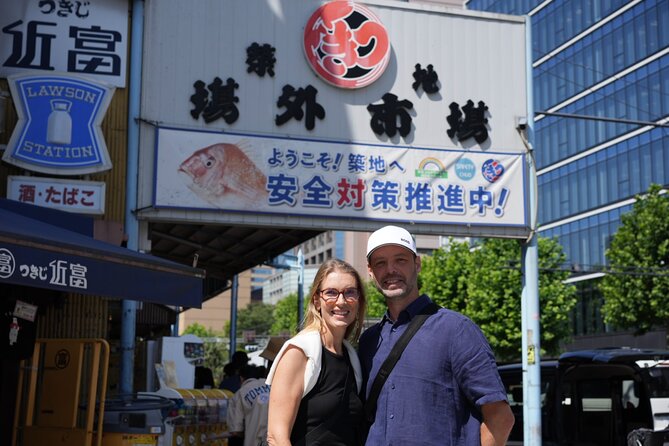
The main market visit lasts about an hour. Jogai Market has more than 400 stores arranged through the area, with fresh seafood, knives and cooking tools, sushi, sweets, soup stock, sake, and other Japanese specialties.
This is where the guide adds the most practical value. You can browse without trying to map the entire market in your head, and you can ask what a product is used for before buying it. A guide who knows the area can also steer you toward foods that match your interests, which is useful when signs and menus are unfamiliar.
The included snack selection gives the hour some structure. Expect items such as egg omelet, strawberry daifuku, dashi, Japanese tea, and nuts, with other select foods depending on the day and route. The mix is important. You are not simply eating one kind of seafood over and over. You get sweet, savory, light, and traditional tastes.
The food examples also show why you should arrive with some appetite. The later sushi lunch is the main meal, but the market tastings can add up. You may also want to buy something extra, such as a sweet, seasoning, knife, or packaged food. Those purchases are personal expenses, so carry room in your budget beyond the $30 tour price.
The market is a working food district, not a museum. Shops may have different products available from day to day, and the exact tasting choices can change. That flexibility is part of the appeal, but it means you should not book expecting a precise list of every bite.
Seeing seafood up close at Tsukiji Fish Market
The next market section lasts about 45 minutes and focuses on specialty seafood shops. Buyers from culinary businesses also come here, giving you a look at the supply side of Japanese cooking.
For you, the value is visual as much as edible. Fresh seafood is displayed in a setting where food professionals shop, and the guide can explain what you are seeing. If the timing is right, you might even watch a tuna dismantling show. The timing point matters: this is a possibility, not a promised performance, so do not book solely for that event.
This portion may appeal most to people who like food markets as places of work. It is less polished than a department-store food hall and more useful for understanding how ingredients reach restaurants. Families may also find the large seafood displays memorable, though younger children may have different reactions to the working market environment.
The tour does not include private transport, hotel pickup, or extra meals and drinks. You meet the group at the station and walk through the area. Wear shoes you can use comfortably for three hours and keep your hands free enough to sample food and browse, though the supplied details do not specify a formal dress code or luggage policy.
More Market Visits in Tokyo:
- Osaka: Cooking Class & Sake Tasting with Local Market Visit
★ 4.8 · 31 reviews - Private Nishiki Market Food & Sake Tour by Young Local Guides
★ 5.0 · 12 reviews - Nishiki Market, Private Sushi class & Sake Tasting in Townhouse
★ 5.0 · 6 reviews
A short visit to Namiyoke Inari Shrine
The ten-minute stop at Namiyoke Inari Shrine provides another change of pace. The shrine sits in a corner of Tsukiji Market, where fishermen and market workers pray for safety.
The setting connects daily work with local belief in a direct way. You are not visiting a distant sight removed from the market. You are seeing a place tied to the people who handle seafood and keep the district running.
Look for the distinctive lion statue. This is a short stop, but it gives the route a memorable visual marker and adds a little tradition without taking you away from the food for too long. As with the temple, the time is enough for a quick visit rather than a detailed religious tour.
Ending with sushi and a three-sake comparison
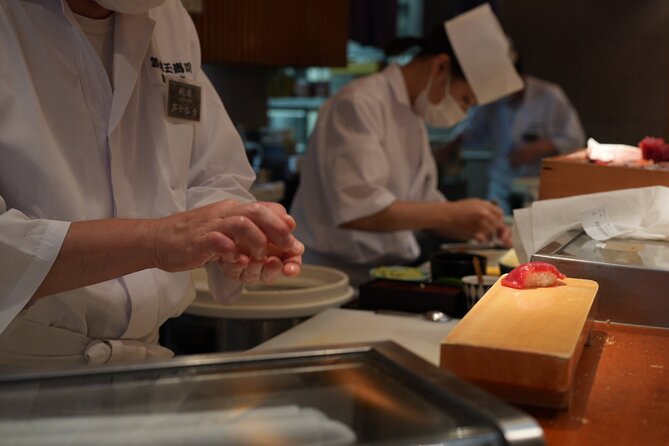
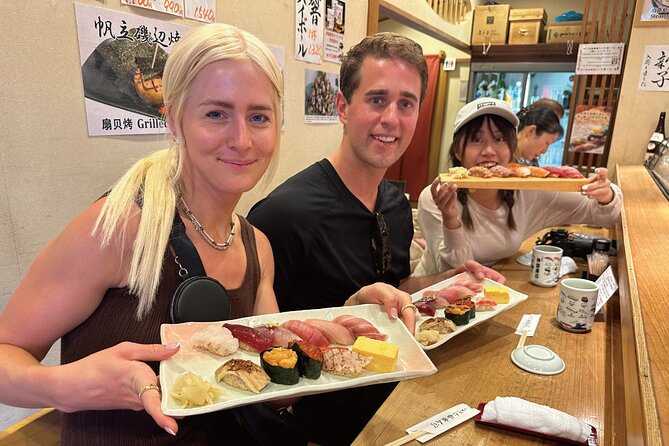
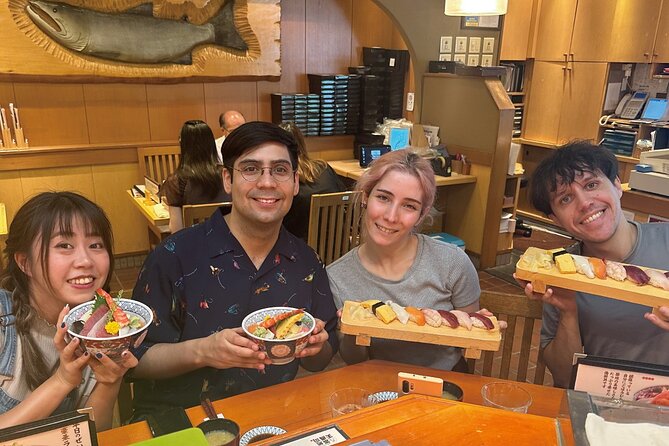
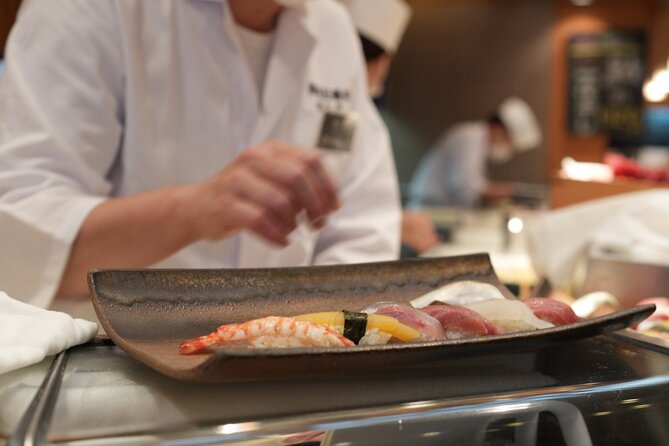
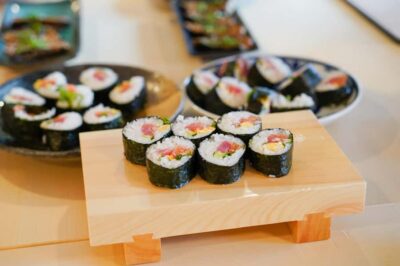
The final 45 minutes bring the tour back to food with a real sushi lunch at an authentic restaurant. The meal uses fresh seafood from Tsukiji and is the main reason many people will choose this experience over a simple market walk.
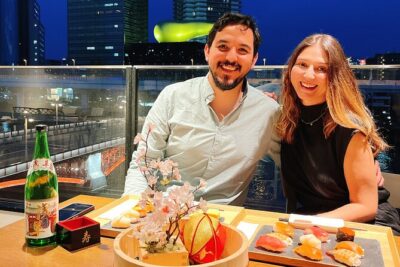
The sushi lunch is repeatedly described as the highlight, and that makes sense. You have already seen the market and sampled smaller items, so the meal feels like a proper finish rather than another quick bite eaten while standing. It also gives you a chance to compare the prepared sushi with the ingredients you saw earlier.
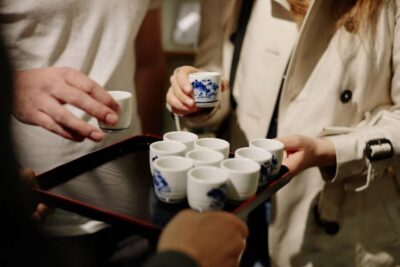
The sake comparison adds another layer. You can sample three types from several Japanese sake brands and compare them side by side. That is more useful than ordering one glass at random, particularly if you are new to sake and want to notice differences between bottles.
Alcohol is included only through the chosen Sake Drinking Comparison. Additional drinks are not included, so you should not assume the tour covers anything beyond the stated tastings. Pace yourself as you would with any alcohol tasting, especially since the route includes several food stops before lunch.
The restaurant itself is presented as a high-quality sushi stop, but no specific restaurant name or sushi menu is provided. That means I would judge the meal as a strong promised feature, while keeping expectations sensible about the exact fish and number of pieces. Market availability can affect what appears on the plate.
What the $30 price really gives you
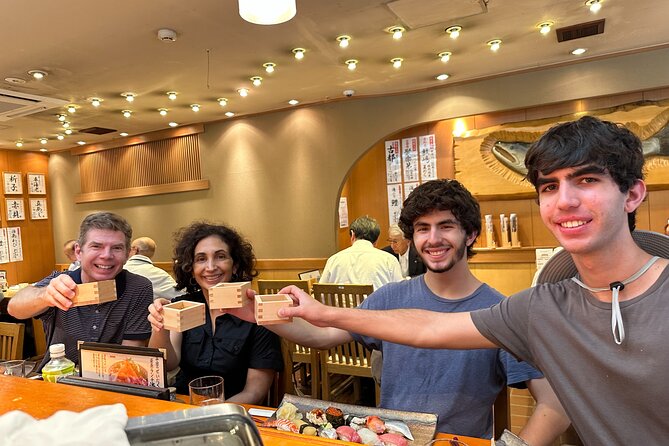
At $30, this tour offers considerable value if you want food, guidance, and a meal in one package. You receive an English-speaking local guide, market snacks, a sushi lunch, and sake comparison tastings. You also get three hours of structure, which can save you from spending the same amount of time wandering past stalls without knowing what to try.
The value is especially good for a first visit or for anyone who feels unsure about Japanese food. A guide can explain unfamiliar ingredients, help you choose snacks, and answer questions about Tokyo beyond Tsukiji. Several outings also seem to become private tours when only one booking group is present, though you should not assume that will happen every time.
The price does not cover private transport, hotel pickup, extra food, extra beverages, or shopping. If you are a serious souvenir buyer, plan to spend more on knives, sweets, sake, seafood products, or other market goods. The tour price covers the guided experience and listed tastings, not a shopping allowance.
The strongest value comes from the combination. A basic walking tour might show you the market. A meal alone would not explain the neighborhood. Here, you get temples, shops, snacks, sake, and sushi in one compact morning or afternoon.
Who should book this experience
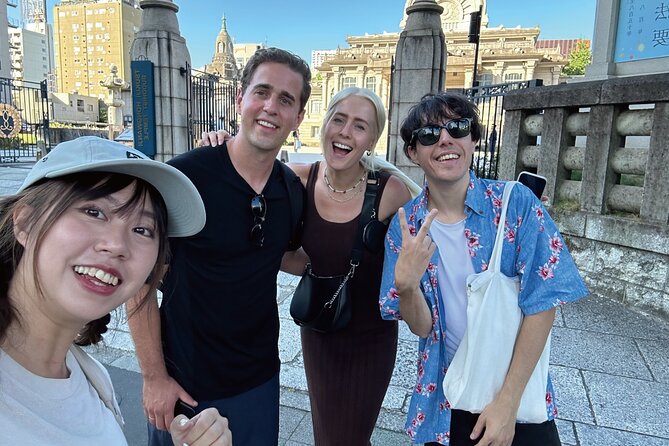
I would recommend this tour to first-time visitors to Tsukiji, food-focused couples, small families, and anyone who wants help choosing what to eat. The friendly style described by past participants should suit people who prefer conversation and recommendations over a formal history talk.
It also works well for adults curious about sake but unsure how to compare it. Three types give you a starting point, and the guide can help connect the tasting to Japanese food.
Families should note that the tour includes alcohol, but children can still take part in the market, temple, shrine, snack, and sushi portions. One family with children aged eight and fourteen enjoyed the experience, which is a helpful sign for parents planning a food-centered outing.
I would be more cautious if you need a guaranteed tuna demonstration, a fixed food menu, or a quiet, slow temple visit. The market is active, the route is compact, and the tasting selection may depend on what is available. I would also be cautious if a missed start would seriously damage your plans, given the report of a cancellation notice arriving later than expected.
You receive a mobile ticket, and confirmation is issued when you book. Free cancellation is available up to 24 hours before the start time. Within 24 hours, the payment is not refunded, and changes are not accepted, so check your schedule carefully.
Should you book the Tsukiji Market Eating Tour?
Book it if you want an easy introduction to Tsukiji with real food at the center. The small group, wide range of tastings, sushi lunch, and three-sake comparison make this more useful than simply walking through the market and hoping you choose well.
The best reason to book is the combination of guidance and eating. Ariel appears to bring the kind of warmth that makes questions easy, and the route includes enough cultural stops to keep the outing from becoming one long snack crawl. At $30, the included food and drink make a convincing case.
Skip it if you want a fully private itinerary, a guaranteed tuna show, extensive temple time, or complete control over every dish. For everyone else, this is a practical way to get oriented, eat well, and leave Tsukiji with a better sense of how Japanese food reaches the table.
FAQ
How long does the Tsukiji Market Eating Tour last?
The experience lasts approximately three hours. The listed stops include Tsukiji Hongwanji Temple, Jogai Market, Tsukiji Fish Market, Namiyoke Inari Shrine, and a sushi lunch.
Where does the tour meet?
The meeting point is Tsukiji Station at 3 Chome-9 Tsukiji, Chuo City, Tokyo 104-0045, Japan.
How many people can join the tour?
The tour has a maximum of six participants. This keeps the group small enough for clear questions and conversation with the English-speaking guide.
Is sushi lunch included?
Yes. A sushi lunch using fresh seafood from Tsukiji is included at the end of the tour.
Is sake included?
Yes, if you choose the Sake Drinking Comparison. You can compare three types of sake from several Japanese brands.
What other food is included?
The snack menu may include egg omelet, strawberry daifuku, dashi, Japanese tea, nuts, and other select foods. Additional meals and beverages are not included.
Can I cancel for a refund?
Yes. You can cancel at least 24 hours before the experience start time for a full refund. Cancellations or changes made less than 24 hours before the start time are not accepted for a refund.
Just added around Tokyo
- Tokyo Sake Tasting Tour with a Sake Expert★ 5.0 · 7 reviews
- Wagyu BBQ & Sukiyaki with Sake Pairing Experience near Ginza★ 5.0 · 2 reviews
- Tokyo: Serene Sakura & Sake: An Exclusive Brewery Pairing Lunch★ 5.0 · 2 reviews
- Sake Tasting and Cherry Blossom Fun in Tokyo!★ 5.0 · 4 reviews
- Private Sake Tasting at 300 Years Old Sake Brewery in Tokyo★ 5.0 · 3 reviews
- Nagano: Snow Monkey and Zenkoji Temple Free Sake Taste Day Tour★ 4.5 · 8 reviews
- Sake Pairing Workshop with Japanese Food in Shinjuku★ 5.0 · 5 reviews
- Cherry blossom & Japanese Sake Tasting in Shinjuku★ 5.0 · 4 reviews
Sushi & Sake Tours, compared.
Ramen and Sushi Cooking Class with Sake Pairing Set in Tokyo
Read our review →
Sake Omakase in Tokyo: Guided Tasting by Certified Sommeliers
Read our review →
Sushi and Ramen Cooking Class with Sake Pairing Set
Read our review →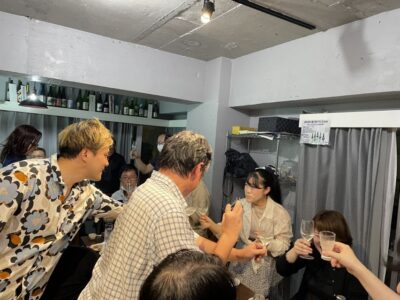
Outer Market Walking Tour & Sake Tasting Experience
Read our review →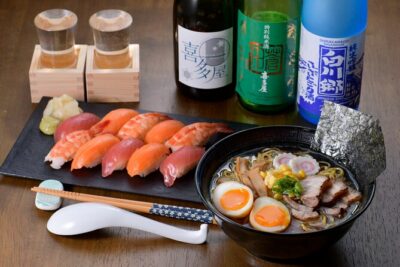
Cozy Tokyo Class: Ramen, Sushi, Sake Pairing & Cultural Exchange
Read our review →
Browse the lists this tour appears in