
REVIEW · TOKYO
Japanese Sake Tasting & Wagyu Sukiyaki Cooking Class in Tokyo
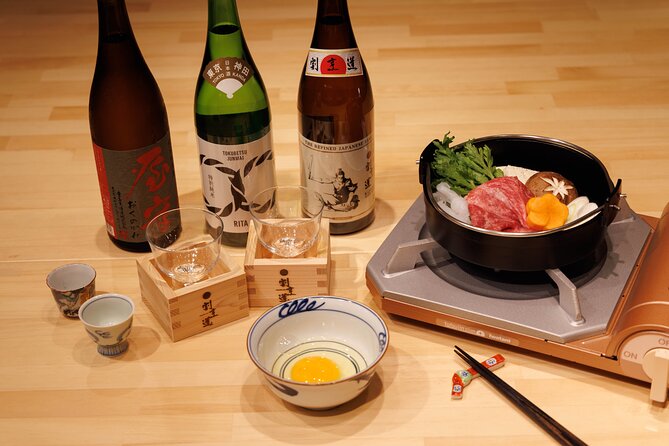
Sake tastes different at every temperature. This two-hour Tokyo class combines a guided tasting with hands-on Wagyu sukiyaki cooking, giving you a useful look at Japanese food culture rather than just another restaurant meal. I especially like the comparison of the same sake chilled, at room temperature, and warm, plus the chance to cook premium beef yourself. The live vegetable-cutting demonstration adds a memorable visual touch.
The main consideration is the price: $129 per person is not cheap for a two-hour activity. Still, that fee includes several sake pours, Japanese snacks, a Wagyu sukiyaki lunch, equipment, and a participation certificate. With a maximum of eight people, the class should feel more personal than a large food tour, though it is still a shared group activity.
Key points to know before booking
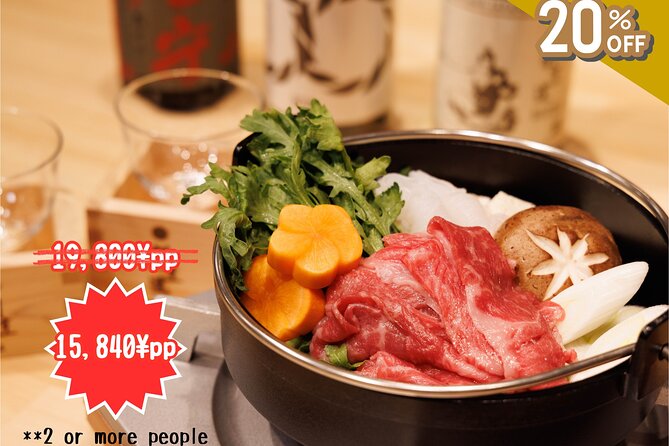
- Three sake temperatures: Compare sake chilled, at room temperature, and warm to see how heat changes aroma and flavor.
- Premium Wagyu sukiyaki: Cook and eat a hot pot lunch featuring Wagyu beef.
- Small group setting: The class accepts a maximum of eight people, which allows room for questions and demonstrations.
- Professional vegetable cutting: Watch a chef create decorative cuts while your sukiyaki cooks.
- English-friendly instruction: Hiromi has been praised for clear, engaging teaching, and the class covers sake and cooking in English.
- Same-day shop discount: You receive 10% off items at the first-floor shop after the workshop.
A two-hour food lesson in Nishiazabu
The class begins at 11:00 am at Kappodo H.Q., also called the Tokyo D Kitchen Studio, in Nishiazabu, Minato City. The address is 2-chome-21-12 DK Building, Tokyo 106-0031. The studio is near public transportation, but private transportation is not included, so you need to make your own way there.
That location matters because this is not a sightseeing bus outing or a quick tasting counter. You go to one place, settle into a modern kitchen studio, and spend about two hours learning, cooking, and eating. The activity also ends at the same meeting point, which keeps the plan simple for a morning in Tokyo.
The maximum group size is eight. That is small enough for the instructor to explain the tasting and cooking without shouting across a room. It also gives you a better chance to ask about sake, ingredients, or cooking methods. A small group can still feel less private than a one-to-one class, so book this for a sociable food lesson rather than a quiet personal chef session.
The class is structured but not rushed. You start with sake, move into food pairing, then prepare sukiyaki while watching a knife and vegetable demonstration. Finally, you sit down to eat what you have made with more sake. For a short class, it covers a good amount without asking you to spend an entire afternoon indoors.
More Wagyu and Sake Tours in Tokyo:
- Wagyu & Sake Pairing in Shinjuku – Steak, Shabu-Shabu & More
★ 5.0 · 112 reviews - Tokyo Wagyu & Sake Pairing Tasting Experience with Local Flavors
★ 5.0 · 108 reviews - Wagyu Beef and Sake Pairing Foodie Tour in Tokyo
★ 5.0 · 71 reviews
Why tasting sake at three temperatures matters
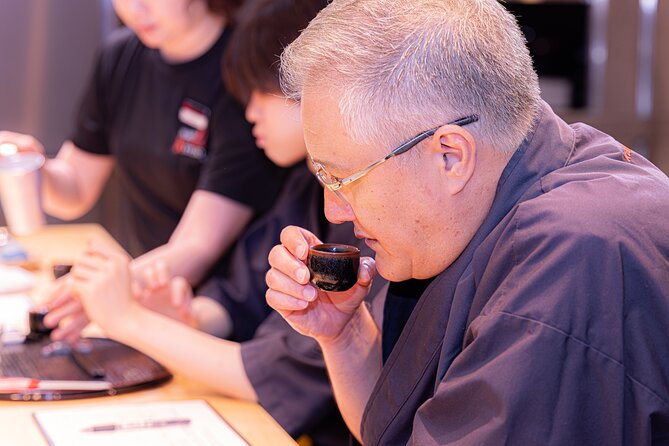
The strongest part of this activity is the temperature comparison. You taste sake chilled, at room temperature, and warm. This is more useful than simply sampling several unrelated bottles because the changing temperature shows you how one style can shift in the glass.
Cold sake can seem crisp and light. At room temperature, its aroma and texture may become easier to notice. Warm sake can bring out different savory or rounded notes. The point is not that one temperature is correct. The lesson helps you identify what you prefer.
That is a practical skill for the rest of your Japan trip. If you order sake at an izakaya or restaurant, you will have a better idea of what to ask for. You may also discover that you prefer warm sake with food, even if you usually choose chilled drinks.
The class also explains how serving vessels affect flavor. That detail gives the tasting a little more depth. The cup or vessel can change how the drink reaches your nose and palate, and it can influence the way the sake feels in your hand and with your meal.
You also try other types of sake, not just the three temperature versions. The included tasting lesson comes with equipment and selected Japanese snacks for pairing. Those small dishes give you a way to compare sake with food instead of judging each pour on its own.
I like this format because it turns sake from a mysterious menu item into something you can assess. You are not expected to memorize technical terms. The useful lesson is simple: temperature, vessel, and food all affect the experience.
Japanese snacks make the tasting more practical
The snacks are not just filler before lunch. They help show how sake works alongside Japanese flavors. A sip may seem sharp or delicate on its own, then feel different beside a salty or savory bite.
The available details do not list every snack, so you should not expect a fixed menu of named dishes. What is clear is that the tasting includes a variety of Japanese side dishes selected for pairing. That variety gives you more than one chance to find a combination you enjoy.
This part may appeal to you if you are new to sake. You can focus on your own reactions rather than worry about giving the correct answer. The staff has been praised for creating a warm and relaxed atmosphere, which matters when the subject is unfamiliar.
Hiromi is identified as one of the instructors and has received especially warm praise for making the lesson fun, clear, and informative. Several comments also point to the class being suitable for families and for people who live in Tokyo, not only first-time international visitors.
The class is conducted in English according to the available information. That makes the tasting easier to follow, especially when discussing temperature and flavor. If you have little experience with sake, this clear explanation is one of the main reasons to choose a guided class instead of simply ordering a flight at a bar.
Cooking Wagyu sukiyaki in the Tokyo studio
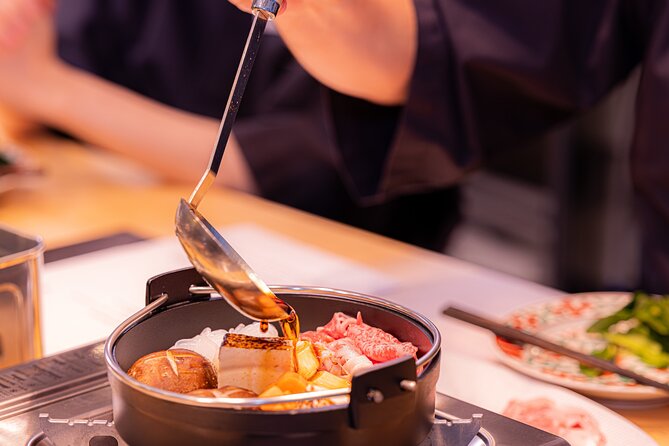
After the tasting, the focus shifts to sukiyaki. You take part in a hands-on workshop using Wagyu beef, then cook and eat your own hot pot. Sukiyaki is a good choice for a short class because it is social, warming, and relatively easy to enjoy at the table once the basic method is explained.
The cooking is not presented as a long professional-chef course. Instead, you learn enough to prepare the meal and understand how the ingredients come together. The hot pot simmers while you watch the next part of the program, so the schedule makes good use of the cooking time.
Wagyu is the ingredient that gives this meal its premium feel. The beef is the main reason the $129 price may make sense for some people. You are not only paying for a restaurant serving of meat. You are also receiving instruction, sake tasting, food pairings, a cooking activity, and a small group format.
Still, value depends on what you want. If you only want to eat sukiyaki, a restaurant may cost less. If you want to understand the dish and make it yourself while tasting sake, the class offers more than a standard lunch.
You should also remember that sukiyaki is a shared style of meal, even when you prepare your own portion. The activity is best suited to people who enjoy participating at the table. It may be less appealing if you prefer a quiet meal with no instruction or demonstration.
More Cooking Classes with Sake in Tokyo:
- Ramen and Sushi Cooking Class with Sake Pairing Set in Tokyo
★ 5.0 · 291 reviews - Tokyo: Sushi and Ramen Cooking Class with Sake Pairing Set
★ 5.0 · 81 reviews - Tokyo: Sushi Cooking Class with Sake Tasting
★ 4.8 · 55 reviews - Tokyo Sushi Making Class : Sake Ceremony & Matcha Experience
★ 5.0 · 44 reviews
The vegetable-cutting demonstration adds a visual lesson
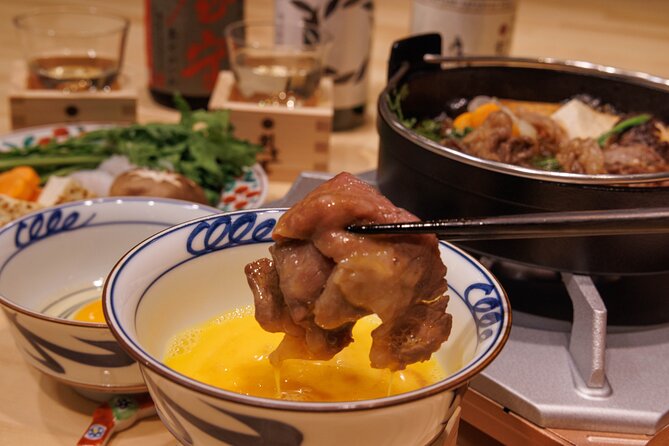
While the sukiyaki simmers, a professional chef gives a decorative vegetable-cutting demonstration. This is a small part of the schedule, but it adds something that a normal cooking lesson may not include.
Japanese food presentation often pays close attention to shape, balance, and detail. Watching vegetables transformed into decorative forms helps explain that care without requiring you to spend hours practicing knife work. It also gives you something interesting to watch while the hot pot cooks.
The demonstration is not advertised as a hands-on knife lesson, so do not book this expecting to master decorative cutting yourself. Its value is visual. You see how a professional handles the ingredients and how presentation can change the feel of a dish.
That contrast works well with the sukiyaki. The hot pot is warm, generous, and practical. The vegetable work is precise and decorative. Together, they show two sides of Japanese cooking: food that is meant to be shared and food that is shaped with care.
Eating the finished sukiyaki with sake
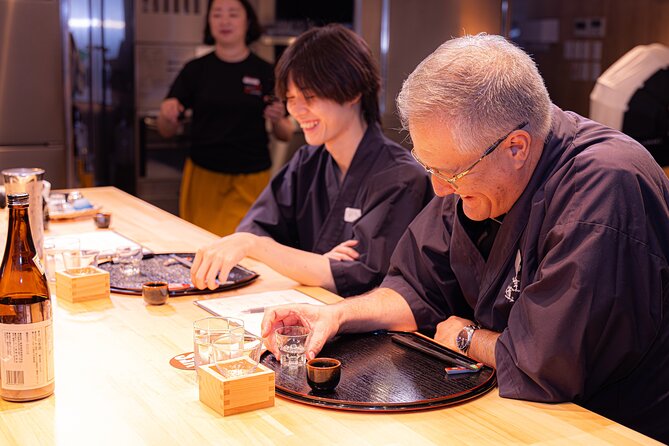
The final stage is the meal itself. You eat the sukiyaki you have prepared and pair it with sake. This gives the class a satisfying finish because the tasting and cooking are connected rather than treated as separate activities.
By this point, you have already seen how temperature changes sake. You can now think about which pour works best with the beef and hot pot. That makes the final drink more meaningful than a simple included beverage.
The food quality receives some of the strongest praise in the available feedback. The Wagyu and sake are repeatedly described as delicious, and the sukiyaki is singled out as a favorite part of the class. Staff friendliness is another consistent strength, with Hiromi and Naoya receiving personal praise for their teaching and cooking.
The meal is described as lunch, and the class begins at 11:00 am. That timing makes it easy to use the activity as your main midday plan. You should avoid scheduling something far away immediately afterward, since the exact pace of a hands-on class can vary and the activity lasts about two hours.
What the $129 price includes
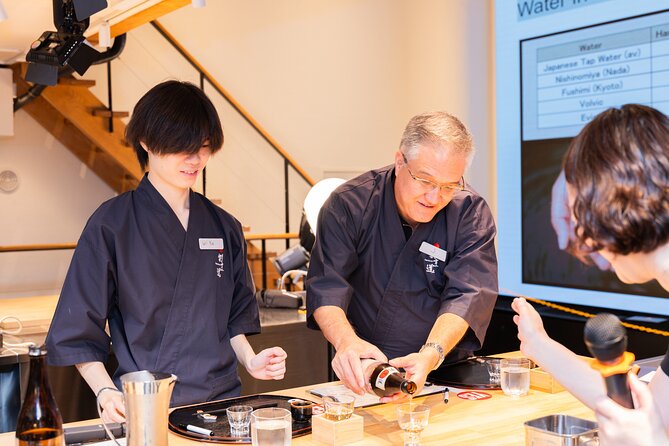
At $129 per person, the class sits in the premium range for a short Tokyo food activity. The price includes:
- Sake in three temperature ranges
- Other types of sake
- Japanese food pairings
- Wagyu beef sukiyaki lunch
- Equipment used during the sake lesson
- A certificate of participation
- 10% off items at the first-floor shop on the same day
The shop discount is useful if you already want to browse Kappodo products after class. It should not be treated as a major saving unless you plan to buy something there. The certificate is a pleasant keepsake, but the real value is in the food, drink, instruction, and small group size.
I would judge the price by comparing it with your alternatives. A casual sake tasting may cost less, and a sukiyaki lunch alone may also be cheaper. This class makes the most sense if you want both activities in one compact session and appreciate having an instructor explain what you are tasting.
Group discounts are available, though the specific discount amount is not provided. If you are booking with family or friends, it is worth checking the current group rate before paying. The class has already been described as enjoyable for families and groups, so the format works well for people who want a shared cultural activity.
Who will enjoy this class most
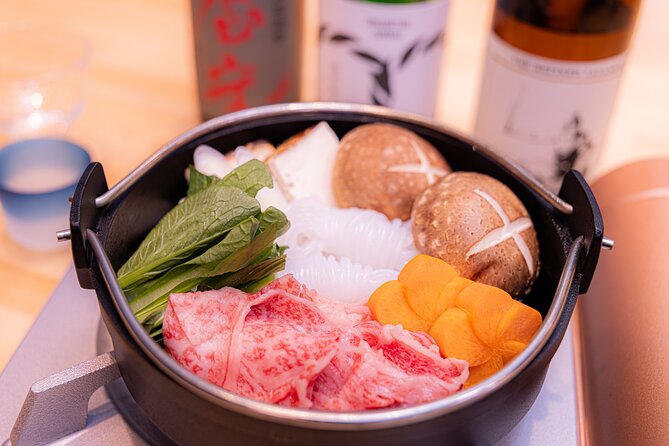
I would recommend this for first-time sake drinkers, food-focused visitors, and anyone who wants a cultural activity with a meal attached. It is also a good fit for families whose older children can take part in a cooking lesson, though the provided information does not specify an age minimum.
The class suits small groups particularly well. You can share the tasting reactions, cook together, and compare which sake temperature you prefer. The 10% same-day shop discount may also be useful if your group wants to browse after eating.
You may want to choose another activity if you do not drink alcohol. Alcoholic beverages are a central part of the class, not an optional side feature. It may also disappoint you if you want a full-day culinary course, a private lesson, or a detailed tour of Tokyo.
The two-hour length is a strength for a busy itinerary. You get a clear introduction to sake and sukiyaki without giving up an entire day. The tradeoff is that the cooking instruction must stay focused, so there is limited time for extended practice or a long discussion of every ingredient.
Practical details for your Tokyo schedule
Your meeting point is Kappodo H.Q., Tokyo D Kitchen Studio in Nishiazabu. The listed start time is 11:00 am, and the activity finishes back at the same location after about two hours.
Public transportation is nearby, but no private transfer is included. Plan your route before the day begins and allow enough time to find the DK Building. Since the class starts at a set time and includes a group lesson, arriving late could mean missing the opening sake explanation.
Confirmation is provided when you book. The activity requires a minimum number of participants, so a cancellation by the operator is possible if that minimum is not reached. In that case, you are offered another date or experience, or a full refund.
You can cancel for a full refund up to 24 hours before the local start time. Cancellations or changes made less than 24 hours before the experience are not accepted for a refund. That policy is fairly manageable, but keep it in mind before placing the class in a tightly packed schedule.
Should you book the sake and sukiyaki class?
I would book this class if you want a compact, well-organized introduction to Japanese sake and cooking, especially if Wagyu and sukiyaki are already high on your Tokyo food list. The temperature comparison is genuinely useful, the meal is more engaging because you prepare it yourself, and the small group limit should keep the class personal.
I would skip it if you are looking for the cheapest lunch, do not drink alcohol, or want advanced chef training. At $129, the value comes from combining several parts: sake education, food pairing, Wagyu, a cooking lesson, a chef demonstration, and lunch in one visit.
For most food-loving visitors, this is a strong choice for a half-day Tokyo plan. Book it for the teaching and participation, not simply for the meal. The sukiyaki is the delicious reward, but learning why sake changes with temperature is the part you can carry with you to the next restaurant.
FAQ
How long does the Japanese sake and Wagyu sukiyaki class last?
The class lasts approximately two hours.
What time does the class begin?
The listed start time is 11:00 am.
Where does the activity take place?
It begins at Kappodo H.Q., also called Tokyo D Kitchen Studio, at 2-chome-21-12 DK Building in Nishiazabu, Minato City, Tokyo 106-0031.
Does the activity include transportation?
No. Private transportation is not included, though the meeting point is near public transportation.
How many people can join the class?
The activity has a maximum of eight participants.
What is included in the price?
The price includes sake served at three temperature ranges, other types of sake, Japanese food pairings, a Wagyu beef sukiyaki lunch, equipment for the sake lesson, and a participation certificate. You also receive 10% off items at the first-floor shop on the same day.
Can I cancel the booking for a refund?
Yes. You can cancel at least 24 hours before the local start time for a full refund. Cancellations or changes made less than 24 hours before the start time are not accepted for a refund.
More Sake Tastings in Tokyo
- Sake Tasting Masterclass in Shinjuku (8+ Varieties with a Pro)
★ 5.0 · 271 reviews - Sake Omakase in Tokyo: Guided Tasting by Certified Sommeliers
★ 5.0 · 239 reviews - Tasting All Types of Sake with Sommelier
★ 5.0 · 151 reviews - Tsukiji: Outer Market Walking Tour & Sake Tasting Experience
★ 4.9 · 81 reviews
Just added around Tokyo
- Wagyu BBQ & Sukiyaki with Sake Pairing Experience near Ginza★ 5.0 · 2 reviews
- Tokyo Sake Tasting Tour with a Sake Expert★ 5.0 · 7 reviews
- Sake Tasting and Cherry Blossom Fun in Tokyo!★ 5.0 · 4 reviews
- Private Sake Tasting at 300 Years Old Sake Brewery in Tokyo★ 5.0 · 3 reviews
- Tokyo: Serene Sakura & Sake: An Exclusive Brewery Pairing Lunch★ 5.0 · 2 reviews
- Nagano: Snow Monkey and Zenkoji Temple Free Sake Taste Day Tour★ 4.5 · 8 reviews
- Sake Pairing Workshop with Japanese Food in Shinjuku★ 5.0 · 5 reviews
- Cherry blossom & Japanese Sake Tasting in Shinjuku★ 5.0 · 4 reviews
Sake Cooking Classes, compared.
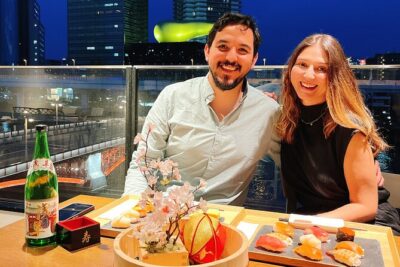
Ramen and Sushi Cooking Class with Sake Pairing Set in Tokyo
Read our review →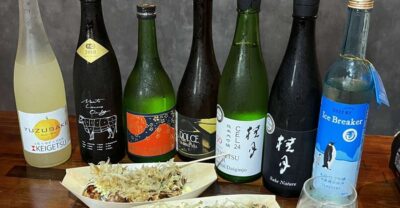
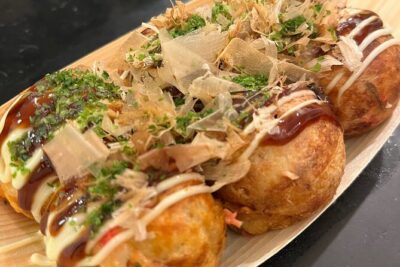
Osaka Sake Tasting & Takoyaki Cooking Experience
Read our review →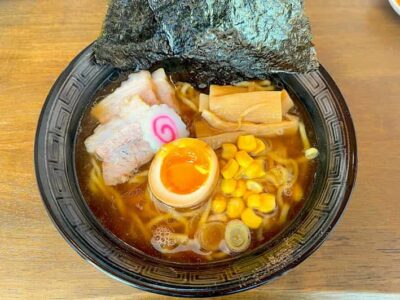
Sushi and Ramen Cooking Class with Sake Pairing Set
Read our review →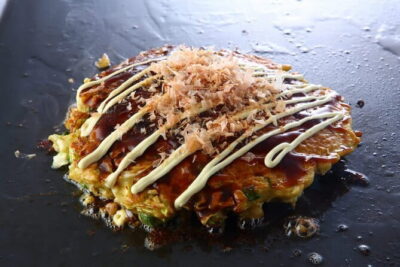
Osaka Cooking Class and Sake Tasting with Local Supermarket Visit
Read our review →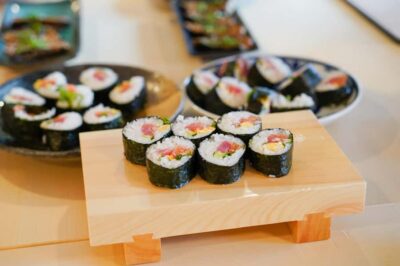
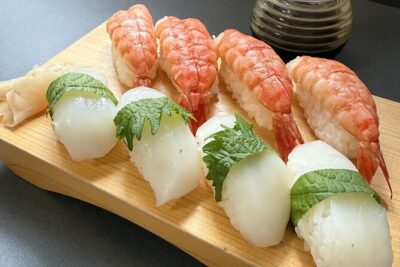
Tokyo Sushi Making Class : Sake Ceremony & Matcha Experience
Read our review →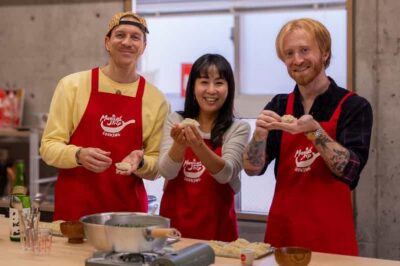
Cooking Class & Sake Tasting with Local Market Visit
Read our review →Browse the lists this tour appears in