
REVIEW · TOKYO
Tokyo Sushi Making Class : Sake Ceremony & Matcha Experience
Start with a barrel, end with foam. This Asakusa sushi class packs a lot into 90 minutes, pairing hands-on nigiri making with a sake-barrel ceremony and a quiet matcha finish. I like the friendly, step-by-step teaching, and I like that you make real food rather than simply watching a demonstration. The only drawback is the tight schedule, especially if a group of up to 20 is working at once.
The best moments are the spirited Yoisho! sake toast and the playful torched salmon mayo gunkan, which adds a modern Tokyo flavor to the traditional sushi lesson. At $45.77 per person, the price is fair for a short cultural activity that includes several different skills, though it is not a full meal or a long chef-led workshop.
Key points to know before booking
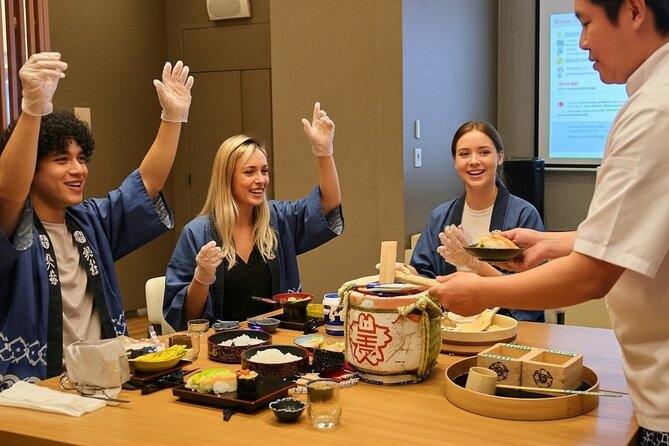
- A traditional opening starts the class: Join a kagami-biraki ceremony, open a sake barrel, and chant Yoisho! three times before the group toast.
- You make 6 to 12 pieces: The class covers nigiri and rolls, giving beginners a practical introduction to shaping rice and handling toppings.
- The salmon gunkan is the fun modern twist: Add salmon and mayonnaise, then finish the piece with a quick torch for smoky flavor.
- Matcha brings the pace down: Whisk your own bowl and enjoy it at the end of the session.
- The meeting point is in Asakusa: Find Sushi Meets Matcha at 1-chōme-10-16 Hanakawado, Taito City, Tokyo 111-0033.
- The group can reach 20 people: The class is social and lively, but personal attention may vary with the group size.
A 90-minute introduction to Tokyo food culture
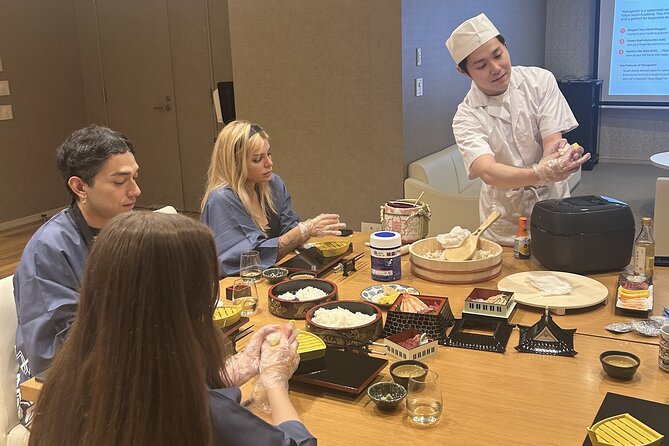
This is not only a sushi lesson. It is a compact cultural activity built around three familiar Japanese food traditions: sake, sushi, and matcha.
You begin at Sushi Meets Matcha in Asakusa, then stay at the same location until the activity ends. That makes the outing simple to plan. You do not need to follow a guide through several neighborhoods or worry about finding a second meeting place after the class.
The total time is about one hour and 30 minutes. That is long enough to make several pieces and learn the basic movements, but short enough to fit between sightseeing stops in Asakusa. I would treat it as a focused activity, not as a substitute for dinner.
The tone is clearly social. The chants, group toast, photographs, and shared preparation give the class a party-like feel. If you want a silent, formal lesson with one chef working closely with one student, this may feel busy. If you enjoy learning with other people, the group energy should add to the fun.
More Sushi and Sake Tours in Tokyo:
- Ramen and Sushi Cooking Class with Sake Pairing Set in Tokyo
★ 5.0 · 291 reviews - Sake Omakase in Tokyo: Guided Tasting by Certified Sommeliers
★ 5.0 · 239 reviews - Tsukiji: Outer Market Walking Tour & Sake Tasting Experience
★ 4.9 · 81 reviews
Kagami-biraki gives the class a proper beginning
The first ceremony is kagami-biraki, the opening of a sake barrel. It is used to mark a new beginning or a good occasion, so it fits this class neatly: you are starting a new cooking skill with a small celebration.
You join the group in chanting Yoisho! and take part in the barrel opening. The ceremony gives the class a stronger sense of place than a standard cooking demonstration. You are not simply handed ingredients and told to copy a recipe. You begin with a Japanese custom tied to good fortune and shared occasions.
The group then raises a toast. Alcohol is not required. You can choose water or warm Japanese tea instead, which makes the activity workable for people who do not drink, younger participants, or anyone who wants to stay fully clear-headed for the cooking.
I like this opening because it is brief but meaningful. It also helps break the ice. A room full of strangers can feel stiff at the start of a class, but a shared chant gives everyone something easy to do together. The tradeoff is that the ceremony takes time from the cooking portion, so the class is best for people who want culture and presentation along with technique.
Learning nigiri without making it fussy
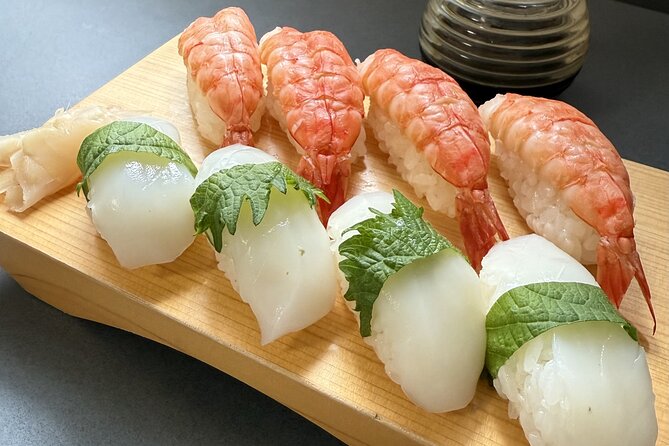
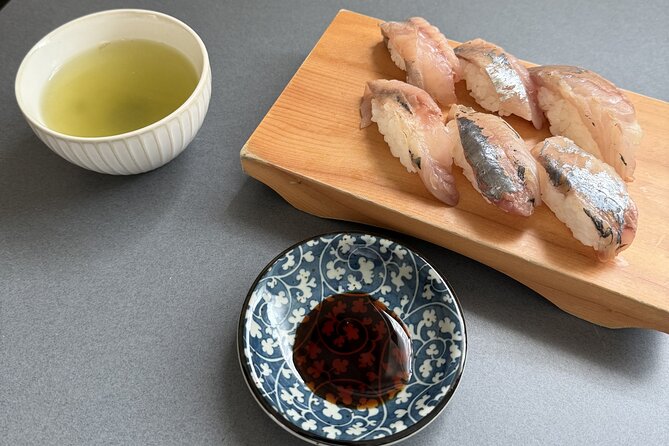
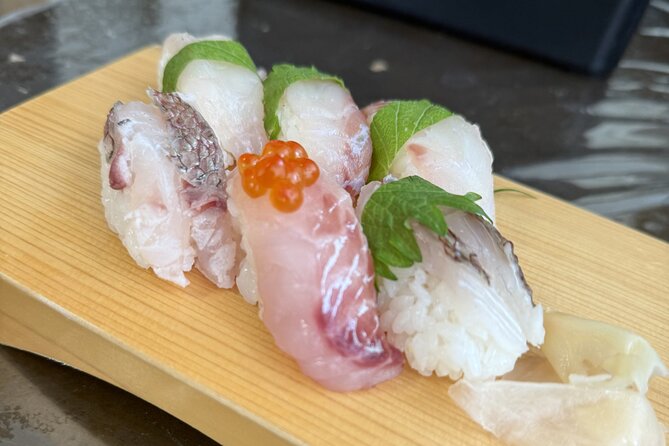
The main lesson focuses on nigiri sushi. You learn how to shape the rice, control the pressure, manage the topping, and place it cleanly. These sound like small steps, but they are the difference between a neat piece of sushi and a rice lump that falls apart on the plate.
The class uses friendly, step-by-step instruction. That matters for beginners, since sushi rice can be surprisingly difficult to handle. Too much pressure makes a dense piece. Too little pressure leaves rice scattered across the plate. The lesson helps you find the middle ground.
You also practice placing fish on the rice with care. The goal is not to train you as a professional sushi chef in one session. Instead, you learn enough of the basic movement to make pieces that look presentable and hold together when you pick them up.
The expected result is around 6 to 12 pieces, including nigiri and rolls. The exact number can depend on your pace and the shape of the group, so do not arrive expecting a fixed dozen. The range gives you a better picture of the class: you will make enough to understand the process and enjoy the result, but not enough to call it a complete sushi feast.
I would especially recommend this part to first-time sushi makers. You get a useful skill to take home, and the instructions are designed to build confidence rather than test expert knife work. The class description does not promise advanced cutting techniques, elaborate plating, or a lesson in fish sourcing. Its focus is the basic assembly of sushi you can feel proud to show someone afterward.
The torched salmon mayo gunkan adds a Tokyo twist
After the classic nigiri work, the class shifts into a more playful style with torched salmon mayo gunkan.
Gunkan sushi has a seaweed wrap that holds a topping above the rice. Here, you pile on salmon, add a zigzag of mayonnaise, and finish it with a quick torch. The result aims for smoky, creamy umami rather than the cleaner, more restrained profile associated with classic Edomae sushi.
That contrast is one of the strongest parts of the experience. You get a taste of traditional sushi technique, then try a popular modern combination that feels closer to the creative side of Tokyo sushi shops. The torch also makes a good photo moment, and the group chants Wasshoi! three times at the best point in the process.
The activity is clearly designed to be enjoyable on camera without turning into a photo session. You make the food first, then capture the lively finish. If you are booking this with friends or family, the salmon gunkan may become the piece everyone talks about afterward.
There is also a useful lesson in the contrast. Sushi is not one fixed style. The rice-shaping skills are traditional in spirit, while the salmon, mayonnaise, and torch create a newer combination. That makes the class more approachable for people who prefer familiar, rich flavors to delicate raw fish alone.
The torching portion should still be treated as a guided activity. The supplied details do not specify how much individual torch handling each person gets, so the amount of hands-on time may depend on the session setup and group size. With as many as 20 people, you may share some parts of the process or take turns.
More Cooking Classes with Sake in Tokyo:
- Tokyo: Sushi and Ramen Cooking Class with Sake Pairing Set
★ 5.0 · 81 reviews - Tokyo: Sushi Cooking Class with Sake Tasting
★ 4.8 · 55 reviews - Japanese Sake Tasting & Wagyu Sukiyaki Cooking Class in Tokyo
★ 5.0 · 10 reviews - Beauty Vegan Dessert Cooking Class + Sake Kasu Hand Mask Trial!
★ 5.0 · 3 reviews
Whisking matcha changes the pace
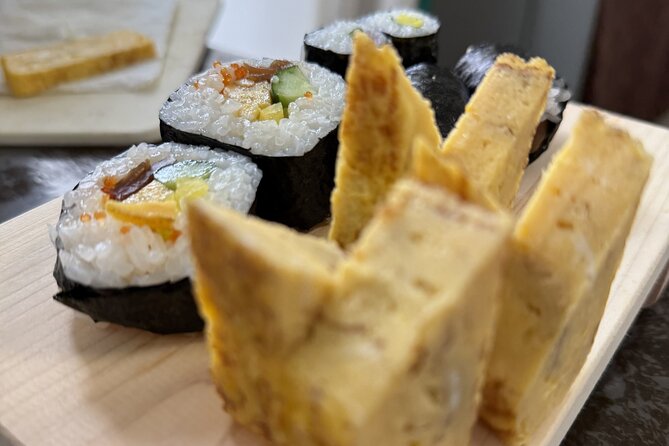
The final stage is matcha preparation. After the noise and motion of sushi making, you whisk your own bowl and aim for a smooth, foamy finish.
This is a good closing activity because it asks for a different kind of attention. Sushi requires pressure, placement, and quick assembly. Matcha requires steady whisking and patience. The change of pace gives the session a calm finish instead of ending with the last plate of food.
You are not simply served matcha at the end. You learn to whisk it yourself. That small detail makes the finish more personal, and it gives you another technique to remember from the class.
The matcha portion also helps balance the sake ceremony. One begins with a lively group cheer; the other ends with a quiet bowl. Together, they give the experience a clear rhythm: celebration, making, tasting, and calm.
Keep your expectations practical. The information provided does not describe a full tea ceremony, a formal explanation of tea history, or a large dessert course. This is a hands-on matcha introduction, included as the closing piece of a broader food activity.
What the $45.77 price really buys
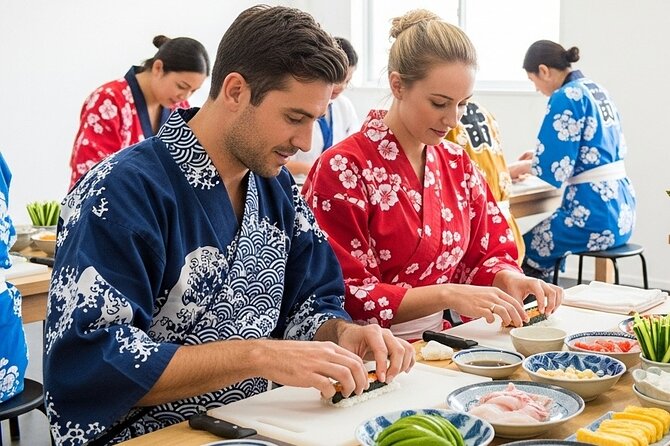
At $45.77 per person, the value comes from the variety. In about 90 minutes, you take part in a sake-barrel opening, learn basic nigiri, make rolls, prepare the torched salmon gunkan, and whisk matcha.
That is a stronger package than a class focused only on rolling sushi. You are paying for instruction, ingredients, a cultural ceremony, a group activity, and the chance to eat what you make. The photos and the skills add value, especially if you want a memory you can share after the class.
Still, I would not book it mainly for the amount of food. The stated yield is 6 to 12 pieces, and the activity has several parts. If you are hungry, plan another meal in Asakusa. Think of this as a cultural workshop with a snack-sized meal, not an all-you-can-eat sushi sitting.
The price also makes sense for visitors with limited time. You do not need to give up half a day, and the class ends where it begins. That can be useful when you are planning other Asakusa sights around it.
Group size, timing, and the Asakusa setting
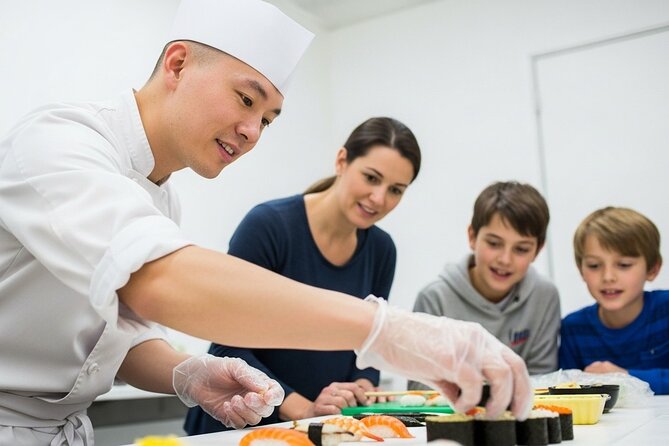
The maximum group size is 20 people. A group of that size can create a cheerful atmosphere, especially during the chants and barrel ceremony. It can also mean that the instructor cannot watch every hand movement at every second.
If personal coaching matters most to you, try to focus on the demonstrations and ask for help when you need it. If you prefer a social activity, the larger format may be a plus. The high rating and full recommendation attached to the experience suggest that the welcoming approach works well for many people, though no short class can offer unlimited one-on-one time.
The address is 1-chōme-10-16 Hanakawado, Taito City, Tokyo 111-0033, Japan. The activity is near public transportation, and a mobile ticket is accepted. I would keep the address ready on your phone and allow enough time to find the exact entrance, since a Tokyo street address is more useful than relying on a general neighborhood name.
Asakusa is a sensible location for this kind of class. You can build it into a day centered on Japanese food and culture without crossing the city between activities. Since the class ends back at the meeting point, you can continue your plans from there without arranging a separate return transfer.
Who will enjoy this class most
I would recommend this experience to:
- First-time sushi makers who want clear basic instruction
- Couples, friends, and families looking for a shared activity
- People who want a cultural experience without committing to a full-day workshop
- Visitors interested in both traditional and modern Japanese food
- Anyone who would like a hands-on souvenir skill rather than another sightseeing stop
It is also a good choice for people who do not drink alcohol, since the opening toast can be made with water or warm Japanese tea.
I would be more cautious if you want advanced sushi training, a long chef demonstration, or a quiet meal. The class has chants, group participation, and a modern salmon-mayo creation. Its appeal is its range and friendly energy, not technical depth or formal ceremony.
The available praise centers on the welcoming instructor and the feeling that the session goes beyond basic expectations. That matches the structure: you are given several memorable moments instead of one repeated exercise. The experience aims to feel special without becoming difficult.
Booking and cancellation details
Confirmation is provided when you book, and the activity accepts a mobile ticket. You can cancel for a full refund if you do so at least 24 hours before the local start time.
Cancellations made less than 24 hours before the start are not refunded, and changes inside that window are not accepted. Keep the local time in mind if you are booking from another country.
Should you book the Asakusa sushi and matcha class?
I would book it if you want a short, good-value cultural activity with plenty of participation. The sake-barrel opening gives the session a memorable start, the nigiri lesson gives you a real skill, the torched salmon gunkan keeps things playful, and matcha provides a calm finish.
At $45.77, the mix is appealing for a 90-minute experience, especially if you enjoy learning by doing. Just keep the limits clear: the group may reach 20 people, the sushi portion is not a full dinner, and the lesson is aimed at beginners rather than aspiring sushi chefs.
Choose it for the smiles, the shared chants, the smoky salmon bite, and the satisfaction of making sushi with your own hands. Skip it only if you want a quiet, highly technical class or a substantial meal. For most first-time visitors who want to connect food with Japanese culture, this is an easy activity to fit into an Asakusa day.
FAQ
How long does the Tokyo sushi-making class last?
The experience lasts approximately one hour and 30 minutes.
Where does the class start?
It starts at Sushi Meets Matcha, located at 1-chōme-10-16 Hanakawado, Taito City, Tokyo 111-0033, Japan.
Where does the activity end?
The activity ends back at the meeting point.
How much sushi will I make?
You will make approximately 6 to 12 pieces, including nigiri and rolls.
Is alcohol required for the sake ceremony?
No. You can choose water or warm Japanese tea instead of sake for the group toast.
How many people can join the class?
The activity has a maximum of 20 participants.
Can I cancel for a full refund?
Yes. You can receive a full refund if you cancel at least 24 hours before the experience start time. Cancellations or changes made less than 24 hours before the start are not accepted for a refund.
Just added around Tokyo
- Tokyo Sake Tasting Tour with a Sake Expert★ 5.0 · 7 reviews
- Wagyu BBQ & Sukiyaki with Sake Pairing Experience near Ginza★ 5.0 · 2 reviews
- Sake Tasting and Cherry Blossom Fun in Tokyo!★ 5.0 · 4 reviews
- Private Sake Tasting at 300 Years Old Sake Brewery in Tokyo★ 5.0 · 3 reviews
- Tokyo: Serene Sakura & Sake: An Exclusive Brewery Pairing Lunch★ 5.0 · 2 reviews
- Sake Pairing Workshop with Japanese Food in Shinjuku★ 5.0 · 5 reviews
- Nagano: Snow Monkey and Zenkoji Temple Free Sake Taste Day Tour★ 4.5 · 8 reviews
- Cherry blossom & Japanese Sake Tasting in Shinjuku★ 5.0 · 4 reviews
Sake Cooking Classes, compared.
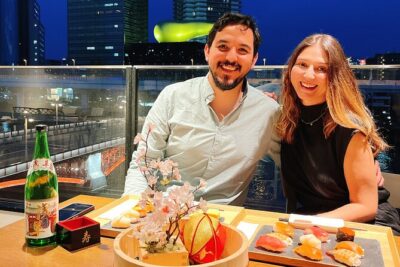
Ramen and Sushi Cooking Class with Sake Pairing Set in Tokyo
Read our review →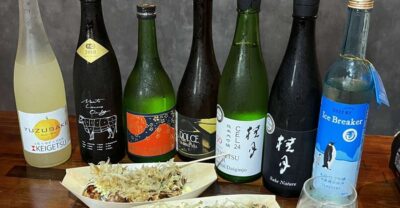
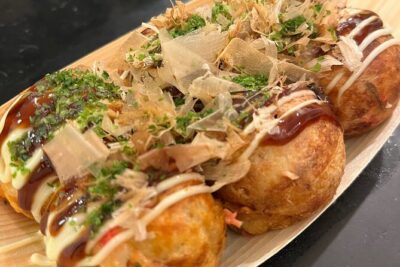
Osaka Sake Tasting & Takoyaki Cooking Experience
Read our review →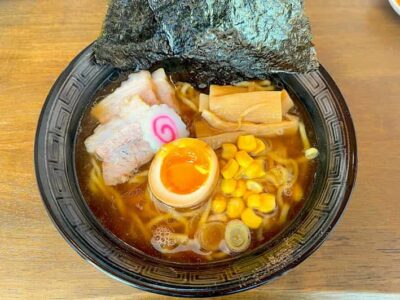
Sushi and Ramen Cooking Class with Sake Pairing Set
Read our review →
Osaka Cooking Class and Sake Tasting with Local Supermarket Visit
Read our review →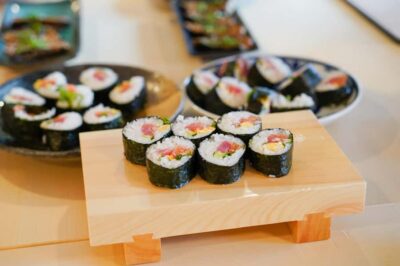
Cooking Class & Sake Tasting with Local Market Visit
Read our review →
Japanese Sake Tasting & Wagyu Sukiyaki Cooking Class in Tokyo
Read our review →Browse the lists this tour appears in