
REVIEW · TOKYO
Japanese Sake Tasting and Masu Crafting Experience in Tokyo
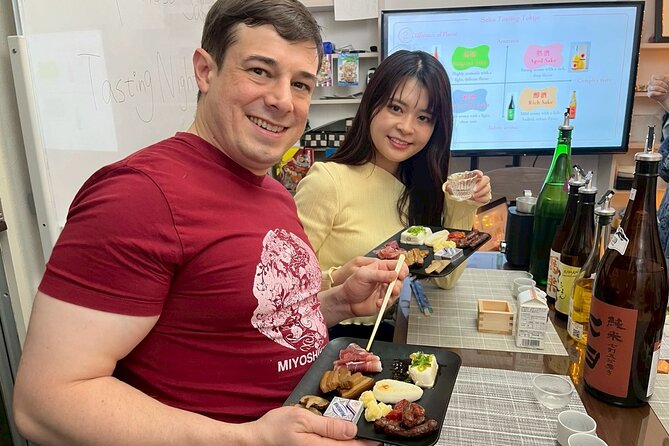
Sake reveals more than you expect. This 90-minute Tokyo session combines five to six sake tastings with simple lessons, small food pairings, and a hands-on craft project in a cozy Manga Dojo near Ikebukuro Station. I like the range of flavors and temperatures, especially the warm kanzake, and I like that you take home a decorated wooden masu cup. The main consideration is that vegetarian and vegan food options are not available.
The small group size, capped at eight people, gives the experience a friendly feel rather than the pace of a large commercial tasting. It is also worth knowing that alcohol is forbidden for anyone under 20 in Japan, and the 6 p.m. start makes this best suited to an evening in Ikebukuro.
Key Points to Know Before You Book
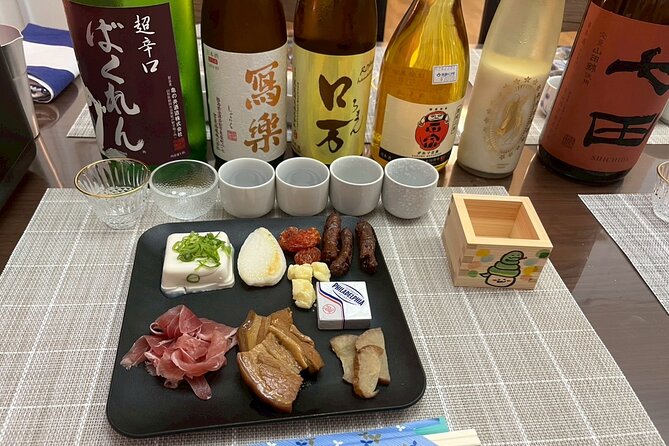
- Five to six sake varieties: Compare different aromas and flavors instead of trying only one familiar style.
- Hot sake included: The warm kanzake shows how temperature can change the character of the drink.
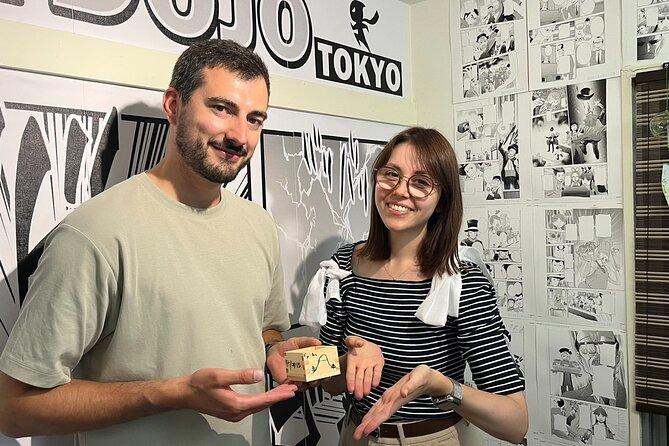
- A wooden souvenir: Decorate your own traditional masu cup with Japanese brush pens.
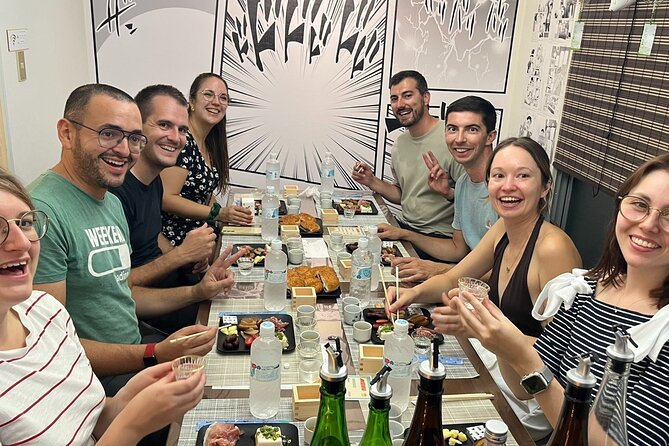
- Small, social setting: The group limit is eight, with time for conversation and questions.
- Unexpected snack pairings: Small bites may include creative combinations such as curry bread with sake.
- Convenient evening location: Manga Dojo Tokyo is a few minutes from Ikebukuro Station and close to Animate.
Why This Sake Experience Works for Curious Beginners
Sake can look simple on a menu, especially if you have only tried one cup with sushi. In practice, the drink covers a wide range of aromas, textures, sweetness, dryness, and serving temperatures. This experience gives you a useful first map without asking you to spend an entire day in a brewery or formal class.
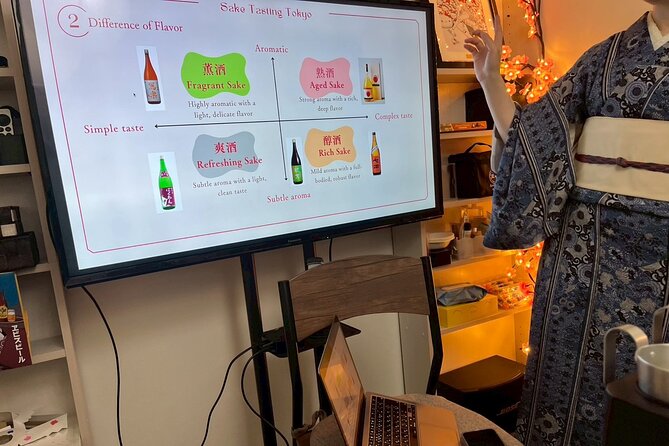
The host begins with the basics of how sake is made, how to taste it, and why one variety differs from another. That short introduction matters. Instead of swallowing each sample and deciding only if you like it, you get a way to compare what is in the glass.
I especially like the tasting format for first-time sake drinkers. You can test several styles in one sitting, then notice which one suits your own taste. The session also works for sake fans who want to sharpen their understanding. One lesson can correct common assumptions, such as the idea that all sake tastes alike or that a more expensive label is automatically better for everyone.
The atmosphere is informal. The event takes place inside Manga Dojo Tokyo, a cozy creative venue in an apartment building near Ikebukuro. Manga displays and the setting give the evening a distinctly local, personal feel. This is not a grand sake hall, and that is part of its appeal. You are entering a small cultural workshop rather than a polished hotel bar.
More Sake Tastings in Tokyo:
- Sake Tasting Masterclass in Shinjuku (8+ Varieties with a Pro)
★ 5.0 · 271 reviews - Sake Omakase in Tokyo: Guided Tasting by Certified Sommeliers
★ 5.0 · 239 reviews - Tasting All Types of Sake with Sommelier
★ 5.0 · 151 reviews
Arriving at Manga Dojo Tokyo in Ikebukuro
The meeting point is Manga Dojo Tokyo, at 170-0013 Tokyo, Toshima City, Higashiikebukuro, 1-chome 31-6, Sansho Building 602. It is a few minutes from Ikebukuro Station and close to Animate, which makes the area easy to combine with manga shopping, anime browsing, or an evening meal.
The session starts at 6 p.m. Since the activity takes about one hour and 30 minutes, it fits neatly into an evening plan. You might spend the afternoon around Sunshine City or Animate, arrive for the tasting, then continue elsewhere in Ikebukuro afterward.
The venue is described as a room in an apartment, not a large public tasting facility. Keep that in mind when you arrive. The address and building details matter more than a large storefront sign, so allow enough time to find the correct building and room.
The small scale also shapes the experience. With a maximum of eight people, the host can explain the samples at a human pace. You have a better chance to ask why one sake tastes different from another, or to discuss a snack pairing without shouting across a crowded room.
Five to Six Sakes, Served Across Different Temperatures
The central part of the evening is the tasting flight. You sample five to six distinct varieties, each chosen to show a different side of sake. The exact selection can vary, so you should treat the experience as a guided introduction rather than a fixed list of labels.
The host explains how to taste and what makes each style unique. Pay attention to the contrast between samples. The value is not only in the number of drinks, but in trying them close together. Your palate can compare them while the differences are still fresh.
One particularly useful feature is the hot sake. The warm kanzake reveals added layers and changes the way the drink comes across. A sake that seems one way when cool may show a different balance when heated. This is a good reminder that serving temperature is not a minor detail.
The tasting may also introduce terms such as ginjo and daiginjo. You do not need prior knowledge, and the explanations are intended for beginners as well as people who already enjoy sake. The point is not to memorize a classification system. It is to understand why two bottles made from the same broad drink category can taste so different.
I would approach the flight with a notebook app or a quick mental ranking. Decide which sample you liked best, which surprised you, and which one you would order again. Since the event is relatively short, a little attention helps you leave with a clearer sense of your own preferences.
Remember that this is a tasting experience, not a free-flowing night out. The descriptions indicate a generous selection of sake, but they do not promise unlimited pours. Drink at a comfortable pace, and use the food and conversation to keep the evening balanced.
Small Snacks That Change the Way Sake Tastes
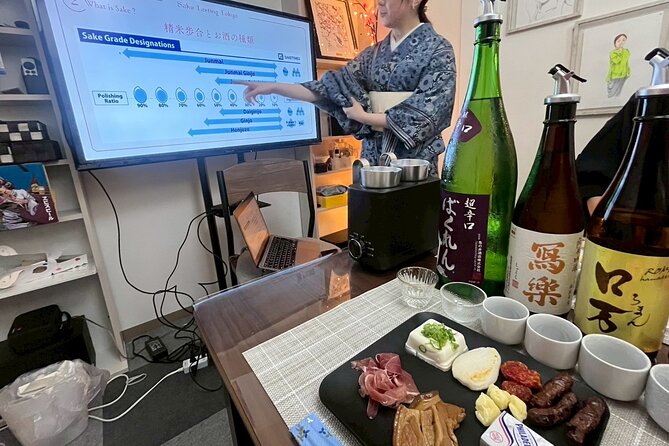
Each sake comes with light snacks. These pairings add more than something to eat between pours. They show how food can alter your impression of a drink.
One unusual pairing highlighted by the experience is curry bread with Japanese sake. It is the kind of combination you might not plan on your own, and that makes it useful. A familiar savory snack can make a sake taste softer, sharper, sweeter, or more balanced.
The snacks are part of the teaching method, even when the atmosphere remains relaxed. You are not simply told that sake matches Japanese food. You get to test how it works with actual bites.
The menu changes with the season, so do not expect a fixed food lineup. Vegetarian and vegan options are not offered, which is an important limitation for some people. If you have food allergies, tell the provider in advance because allergy-friendly options are available.
The light food also means you should not assume this replaces dinner. If you need a full meal, eat beforehand or plan one afterward in Ikebukuro. For most people, the snacks should be viewed as tasting accompaniments rather than a complete evening meal.
A few more sake experiences around Tokyo worth a look
- Ramen and Sushi Cooking Class with Sake Pairing Set in Tokyo
★ 5.0 · 291 reviews - Wagyu & Sake Pairing in Shinjuku – Steak, Shabu-Shabu & More
★ 5.0 · 112 reviews - Tokyo Wagyu & Sake Pairing Tasting Experience with Local Flavors
★ 5.0 · 108 reviews - Tsukiji: Outer Market Walking Tour & Sake Tasting Experience
★ 4.9 · 81 reviews
Decorating Your Own Masu Cup
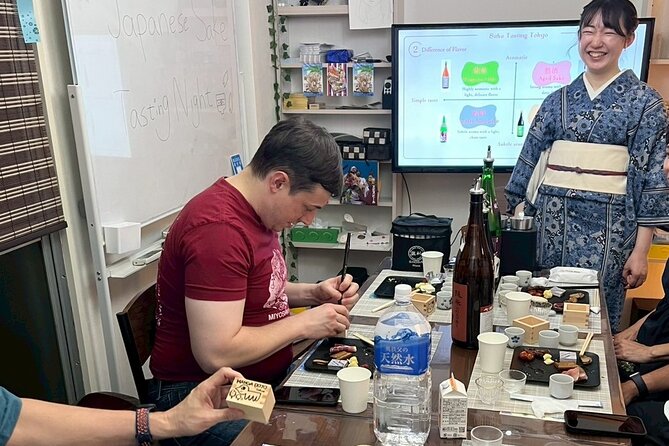
After the sake lesson and tasting, you decorate a traditional wooden masu cup with Japanese brush pens. This gives the experience a creative finish and helps break up the seated tasting format.
A masu is closely associated with sake service, so the craft connects directly to what you have been learning. Rather than buying a generic souvenir in a shop, you make something linked to the evening. Your finished cup is yours to take home.
The brush pens also make the activity approachable. You do not need to arrive as an artist. The goal is personal expression, not a perfect piece of traditional calligraphy. You might write a name, draw a simple design, or create something that reminds you of Tokyo.
The manga setting adds another layer to the craft. Manga artwork is displayed in the room, and the venue is also connected with manga workshops led by professional manga artists. The sake session is not presented as a full manga class, but the creative surroundings give the cup-decorating activity a natural home.
For couples or friends, this is a pleasant shared project. Solo participants also have an easy conversation starter because everyone is working on a small keepsake. The souvenir is practical in the sense that it carries a story, even if you mainly use it as a display piece.
A Friendly Group Rather Than a Formal Lecture
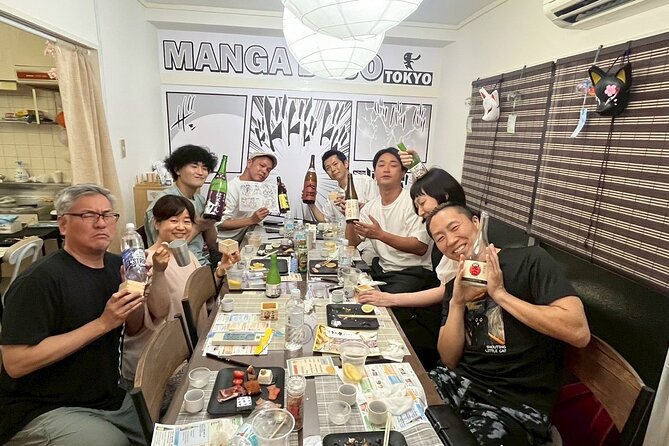
The experience is conducted in English, which removes a major barrier for visitors who want to learn about sake without relying on translated labels. The host explains the process and differences in flavor in clear terms, with time for casual conversation.
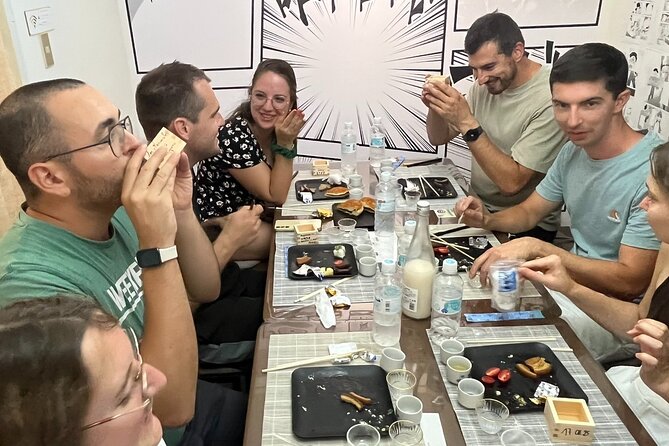
The social side is one of the strongest reasons to choose this event. You may chat with the other people in the group while tasting and crafting. The small room and shared activity make it easier to meet people than at a quiet bar, yet the event still has enough structure to keep the evening focused.
Aki-san is associated with the manga workshop at the venue and has been part of the welcoming atmosphere described for the session. The host’s interest in sake is clear in the way the tasting connects drinks, snacks, Japanese culture, and conversation.
This setting suits you if you enjoy learning through talk and comparison. It may be less ideal if you want a private date with no interaction, or if you prefer a large professional tasting room with formal printed notes and a strict lecture format.
Is $60 a Fair Price?
At $60 per person, this is not the cheapest way to drink sake in Tokyo. You could order a single glass at an izakaya for much less. The comparison is not quite fair, though, because this experience includes five to six samples, food pairings, instruction in English, and a decorated masu cup to take home.
The value depends on what you want from the evening. If you simply want alcohol, the price is hard to justify. If you want a guided introduction, several comparisons, a small cultural activity, and an easy social setting, the cost is more reasonable.
The souvenir matters here. The cup is not a major luxury item, but it gives the session a physical ending. You leave with something connected to the tasting rather than only a memory and an empty glass.
The group size also supports the price. A maximum of eight allows for questions and conversation that you would not get from a very large event. You are paying partly for access to an organized explanation and a host who can respond to your level of interest.
The experience is often booked about 68 days ahead, so popular dates may not remain open close to your trip. Confirmation arrives within 48 hours of booking, subject to availability. If your schedule is tight, reserve early rather than building your evening around an unconfirmed place.
Who Will Enjoy This Most?
I would recommend this experience to first-time sake drinkers who want a friendly introduction without committing to a long class. The tasting gives you several points of comparison, and the English explanations make the information easy to follow.
It also suits sake fans who want to explore styles beyond their usual order. The warm sample and snack pairings may reveal combinations you would not discover by ordering one bottle at a time.
Couples, friends, and solo visitors can all fit comfortably into the format. The craft activity gives couples something to do together, while the small group makes it easier for solo participants to meet people.
Families need to plan carefully. Anyone under 20 cannot drink alcohol under Japanese law, and the experience is built around sake tasting. The information does not describe a separate nonalcoholic program for minors, so this is mainly an adult activity.
Food restrictions are another deciding factor. Allergy-friendly options may be arranged with advance notice, but vegetarian and vegan choices are not available. If that affects you, contact the provider before booking rather than hoping the menu can be changed on the day.
Practical Details for a Smooth Evening
The activity begins at 6 p.m. and ends back at the same meeting point after about 90 minutes. It uses a mobile ticket, and the location is near public transportation.
Free cancellation is available if you cancel at least 24 hours before the start time. Cancellations or changes made less than 24 hours before the experience are not refunded or accepted, and the cut-off follows local Tokyo time.
Wear something comfortable for sitting and working with brush pens. The venue is a small apartment-style room, so you should not expect the space or movement of a large studio.
Plan your evening around the tasting rather than rushing in from another part of Tokyo. Ikebukuro is easy to pair with manga and anime attractions, especially Animate, but give yourself time to locate the building at 1-chome 31-6 and reach room 602.
Should You Book This Sake Tasting?
Book it if you want more than a drink. The strongest parts are the comparison of five to six sake varieties, the warm kanzake, the surprising snack pairings, and the chance to decorate a masu cup in a small English-speaking group.
Skip it if you need a full dinner, require a vegetarian or vegan menu, or want a private and highly formal tasting. For everyone else, the $60 price is fair when you value instruction, conversation, food, and a personal souvenir along with the sake.
The best fit is an adult who has a free Tokyo evening, an interest in Japanese culture, and enough curiosity to try a sake that may taste unlike anything already familiar.
FAQ
Where does the Japanese sake tasting take place?
It takes place at Manga Dojo Tokyo in Higashiikebukuro, Toshima City, Tokyo, in Sansho Building 602. The venue is a few minutes from Ikebukuro Station.
What time does the experience start?
The session starts at 6 p.m.
How long does the sake experience last?
It lasts approximately one hour and 30 minutes.
How many sake varieties will be served?
You will sample five to six different sake varieties.
Is hot sake included?
Yes. The tasting includes warm kanzake so you can compare how sake changes with temperature.
Is the experience conducted in English?
Yes. The session is conducted in English.
Do I get to take anything home?
Yes. You decorate a traditional wooden masu cup with Japanese brush pens and keep it as a souvenir.
Are vegetarian or vegan food options available?
No. Vegetarian and vegan options are not offered. Allergy-friendly options are available if you inform the provider in advance.
Can I cancel for a full refund?
Yes. You can cancel at least 24 hours before the local start time for a full refund. Cancellations or changes made less than 24 hours before the start time are not accepted.
Just added around Tokyo
- Wagyu BBQ & Sukiyaki with Sake Pairing Experience near Ginza★ 5.0 · 2 reviews
- Tokyo Sake Tasting Tour with a Sake Expert★ 5.0 · 7 reviews
- Sake Tasting and Cherry Blossom Fun in Tokyo!★ 5.0 · 4 reviews
- Private Sake Tasting at 300 Years Old Sake Brewery in Tokyo★ 5.0 · 3 reviews
- Tokyo: Serene Sakura & Sake: An Exclusive Brewery Pairing Lunch★ 5.0 · 2 reviews
- Nagano: Snow Monkey and Zenkoji Temple Free Sake Taste Day Tour★ 4.5 · 8 reviews
- Sake Pairing Workshop with Japanese Food in Shinjuku★ 5.0 · 5 reviews
- Cherry blossom & Japanese Sake Tasting in Shinjuku★ 5.0 · 4 reviews
Sake Tasting, compared.
3-Hour Kyoto Insider Sake Brewery Tour with Tastings & Pairings
Read our review →
1.5-Hour Kyoto Insider Sake Experience with 7 Tastings & Pairings
Read our review →
Sake Tasting Masterclass in Shinjuku (8+ Varieties with a Pro)
Read our review →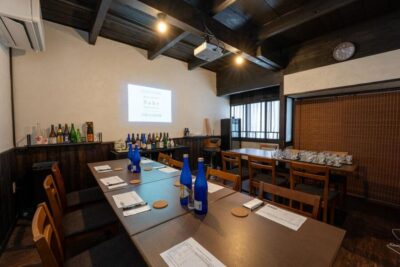
Insider Sake Experience with 7 Tastings and Snacks
Read our review →
Sake Omakase in Tokyo: Guided Tasting by Certified Sommeliers
Read our review →
Private Tea Ceremony and Sake Tasting in Kyoto Samurai House
Read our review →
Casual Japanese SAKE tasting and snack experience in Kabukicho
Read our review →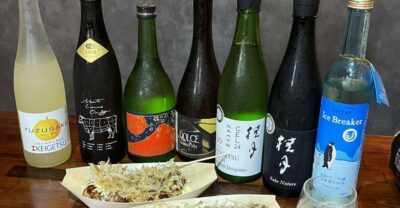
Browse the lists this tour appears in