
REVIEW · OSAKA
Osaka Home Feast Cooking and Sake Experience
Osaka tastes best around a shared table. This three-hour evening experience combines a Japanese supermarket visit with hands-on cooking, so you get more than a meal and more than a standard class. I like the small group of up to seven and the chance to create your own takoyaki fillings. I also like the friendly, home-drinking feel, with sake, beer, or soft drinks served as you cook.
The main thing to consider is the fixed 4:30 pm start at FamilyMart Minamimorimachi Station. You need to reach the meeting point on time, and the class is built around cooking and eating rather than a broad Osaka sightseeing route. At $91.04 per person, it offers good value if you want a social food experience, but less so if you only want a quick meal.
Key points at a glance
- Start with a real supermarket visit: Shop for Japanese ingredients and think up unusual takoyaki fillings before cooking.
- Cook several izakaya favorites: Prepare crispy takoyaki, wasabi-marinated tuna, chicken with green onion, mayo, and ponzu, plus Mugen Cabbage.
- Pair food with Japanese drinks: Sip selected sake, beer, or soft drinks while you cook and eat.
- Enjoy a small, personal group: The maximum is seven people, and some departures may feel almost private.
- Learn beyond the recipes: Guides such as Chie and Nina have added cultural explanations and answered questions about Japan.
- Take the meal home with you: A downloadable recipe pack lets you repeat the dishes after your Osaka visit.
Why this Osaka cooking class feels different
Many cooking classes begin with ingredients already measured and waiting on a counter. This one begins outside the kitchen, at a nearby Japanese supermarket. That simple change gives you a better sense of how everyday Japanese cooking starts.
You meet your English-speaking local guide at the south side of FamilyMart near Minamimorimachi Station. From there, you walk to the supermarket and look over the ingredients together. The activity includes a little decision-making, especially when you brainstorm fillings for takoyaki.
That part matters because takoyaki is not just a fixed recipe. Osaka’s famous ball-shaped snack can hold different fillings, and choosing them together gives the class a playful local angle. You are not simply copying a dish. You are helping decide what goes into it.
The supermarket stop also gives you a look at ordinary Japanese shopping. One participant noticed a small but interesting difference from American shopping: shoppers bag their own purchases. It is not a grand cultural lesson, but these everyday details can make an evening feel more connected to local life.
More Cooking Classes with Sake in Japan:
- Ramen and Sushi Cooking Class with Sake Pairing Set in Tokyo
★ 5.0 · 291 reviews - Osaka Sake Tasting with Takoyaki Cooking
★ 5.0 · 156 reviews - Osaka Sake Tasting & Takoyaki Cooking Experience
★ 5.0 · 149 reviews
The 4:30 pm start at Minamimorimachi
The meeting point is FamilyMart Minamimorimachi station, south side, in Osaka’s Kita Ward at 2-chome 3-10, 1F. The start time is 4:30 pm, and the activity returns to this same meeting point at the end.
You should allow enough time to find the correct side of the station and the convenience store. Since the class starts with a walk and shopping, arriving late could affect the whole group. A mobile ticket is provided, and booking confirmation is sent at the time of booking.
The timing works well for a food-focused evening. You shop before dinner, cook as the sky darkens, and finish with a homemade feast. It is not designed for people trying to squeeze in a full evening of sightseeing afterward, since the experience lasts about three hours and ends back at the starting point.
The group limit is seven. That is small enough for the guide to help with cooking and for everyone to take part. It also means the atmosphere can change depending on the booking. One recorded experience was a private cooking class because only one person had signed up. That is a useful possibility to keep in mind, though it should not be treated as a promise.
Shopping for takoyaki fillings in Osaka
At the supermarket, your guide introduces ingredients and helps you consider what might work inside takoyaki. The experience does not list a fixed set of fillings, so the exact choices may depend on the group and what is available.
This is one of the strongest parts of the evening for curious cooks. You get to see ingredients in their everyday setting before they appear on a plate. You can ask questions as you shop, and you have a chance to notice how Japanese food products are packaged and sold.
The shopping stop also breaks down the mystery of Japanese cooking. If a recipe later calls for ingredients you do not recognize, you have already seen them in the store. That can make the downloadable recipe pack more useful once you return home.
The trade-off is that supermarket time is not a guided food market tour. The focus is on gathering ingredients for the class, not on tasting every unusual product or touring a large market. If you want a long Osaka street-food walk, this is the wrong format. If you want to connect shopping with cooking, it works well.
Cooking Mugen Cabbage and wasabi tuna
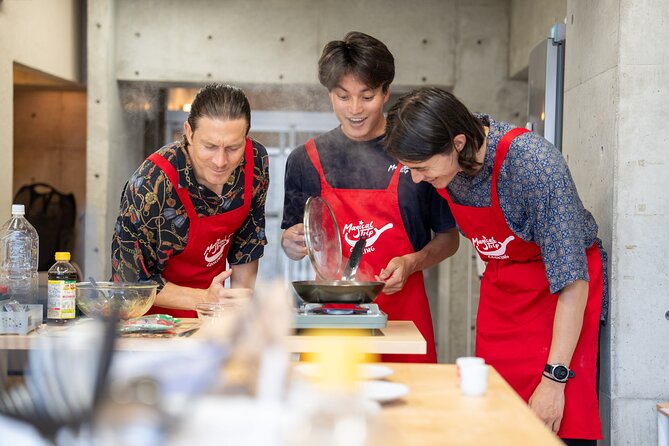
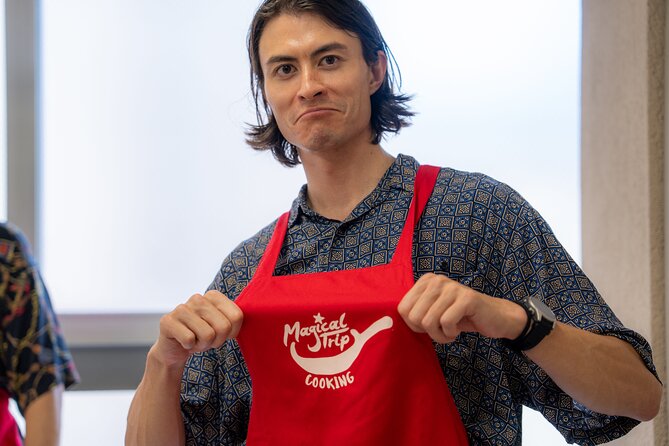
After shopping, you head to a cozy cooking studio and put on a MagicalTrip apron. The menu starts with smaller dishes, including Mugen Cabbage and Wasabi Tuna Salad. These early bites give you something to eat while the main dishes take shape.
Mugen Cabbage is a useful first dish because it is simple in spirit and suited to a home-drinking table. The wasabi tuna adds a sharper flavor and shows how Japanese ingredients can be used in a quick dish with a clean, strong taste.
The sequence is practical. You do not wait until the end of the class to eat everything. Instead, you can sample early dishes while continuing to cook. That makes the session feel more like preparing food with friends at home than sitting through a formal demonstration.
Your guide also has room to explain Japanese food customs and answer questions. Chie, one guide named in a past experience, added a history lesson about Japan along with cooking instruction. That extra conversation can be especially useful if you want context rather than a recipe alone.
A few more sake experiences around Japan worth a look
- 1-Day Snow Monkeys, Zenko-ji Temple & Sake in Nagano
★ 5.0 · 1,020 reviews - 3-Hour Kyoto Insider Sake Brewery Tour with Tastings & Pairings
★ 5.0 · 917 reviews - Nagano: Snow Monkeys, Zenkoji Temple & Sake Day Trip
★ 4.9 · 833 reviews - Kyoto: Insider Sake Brewery Tour with Sake and Food Pairing
★ 5.0 · 704 reviews
Making crispy takoyaki from scratch
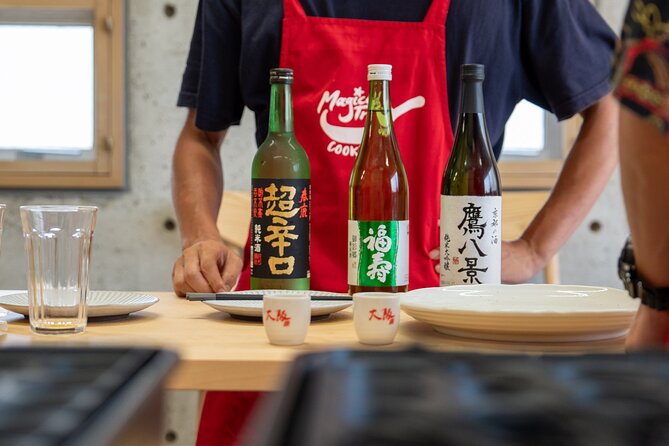
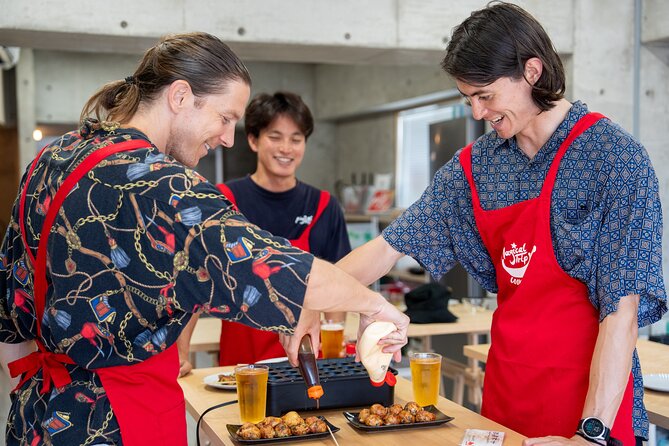
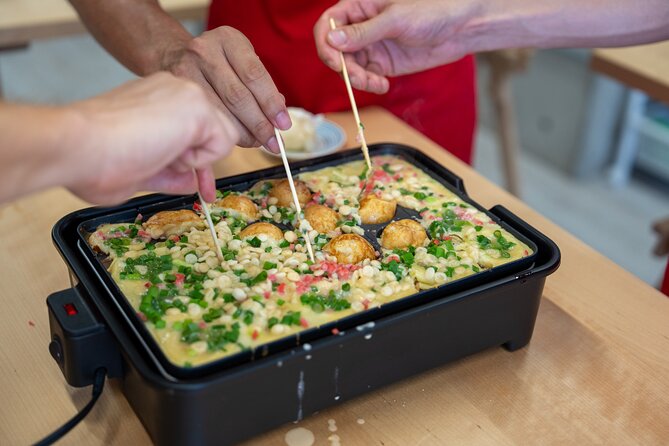
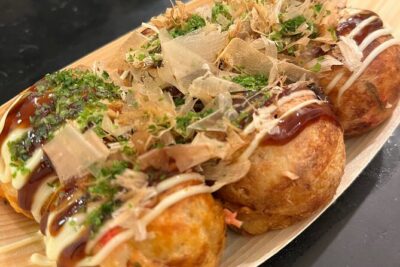
Takoyaki is the centerpiece of the class, and the Osaka connection is clear. You learn to cook the batter into crisp, round pieces while working with the filling ideas chosen during the supermarket visit.
The appeal is partly the technique. Takoyaki needs attention as it cooks, and shaping the pieces is more active than preparing a cold salad. You get a chance to practice the motions and see how the texture changes from soft batter to a crisp outside.
The experience describes the takoyaki as crispy, but it does not promise a particular filling or topping combination. That gives the group some freedom, but it also means the final dish may vary from one session to another.
For a first-time cook, this is a good reason to choose a guided class instead of attempting the dish alone. You can ask questions while cooking and get help with the process. The small group limit should make it easier to see what is happening and take part directly.
Chicken with green onion, mayo, and ponzu
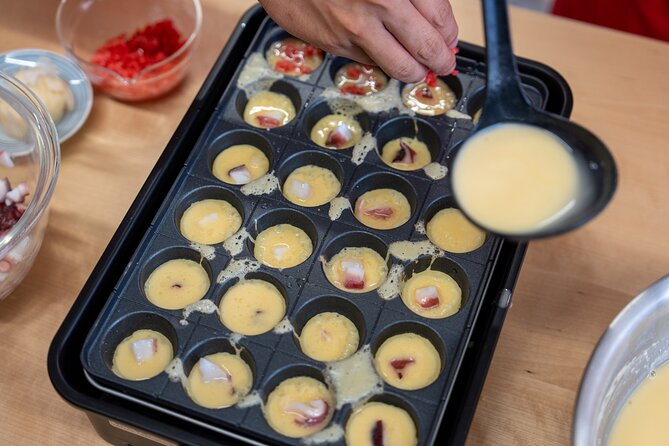
The other main dish is chicken with green onion, mayonnaise, and ponzu. It brings together rich, tangy, and fresh flavors, and it fits the relaxed izakaya-style menu.
This dish helps balance the meal. Takoyaki is the Osaka specialty, while the chicken provides a heartier plate for the full spread. The green onion adds freshness, mayo gives body, and ponzu brings a citrusy sharpness.
The menu is broad enough to feel like dinner rather than a single-dish lesson. You prepare several plates, taste as you go, and then sit down to eat what you made. If you prefer learning one complex recipe in great technical detail, the number of dishes may feel more important than depth. If you enjoy variety, the format is a plus.
Sake pairing and the taku-nomi mood
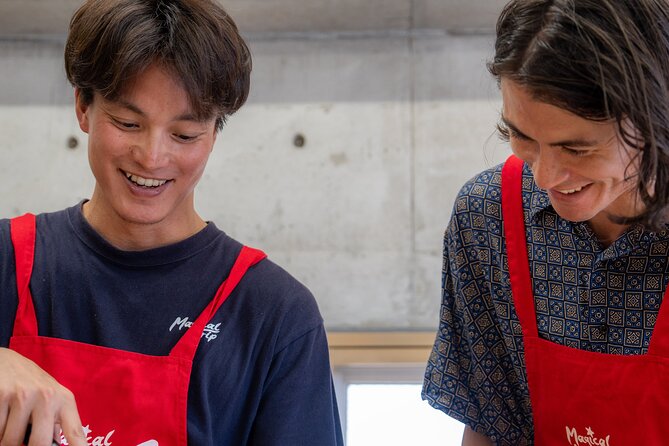
The cooking includes handpicked sake pairings, with beer and soft drinks also available. You can sip while preparing the food, then match the drinks with the finished dishes at the table.
The stated mood is taku-nomi, a Japanese-style home drinking atmosphere. That phrase captures the social side of the experience. You are not simply eating in a restaurant where someone else does all the work. You are preparing food, sharing it, and talking as the evening unfolds.
The sake element adds value, especially for visitors who want an introduction to Japanese drinks without booking a separate tasting. Still, the experience is not described as a technical sake seminar. You should expect selected pairings and a friendly explanation, not an advanced course in brewing regions or flavor analysis.
Soft drinks make the activity accessible to people who do not drink alcohol. This is helpful for mixed groups, though the drinks included are described generally rather than by brand or exact quantity.
What the guides add to the evening
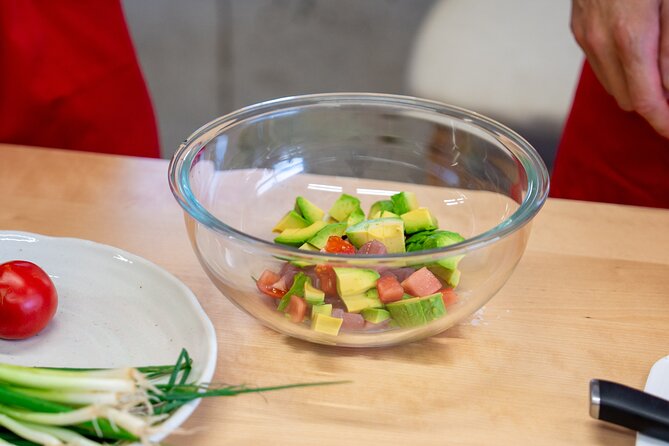
The food is the main attraction, but the guide can shape the whole experience. Past bookings included guides named Chie and Nina, and their roles went beyond showing recipes.
Chie was praised for combining cooking with a history lesson and answering questions about Japan. Nina led a private session for a solo participant, met her at the meeting point, and made the class fun even with only one person present.
Those details suggest a flexible, personal style. You can expect conversation to be part of the evening, not just instruction from across a counter. The English-speaking format also makes it easier to ask about ingredients, shopping habits, Japanese food, and daily life.
Guide assignments can change, so you should not book solely expecting Chie or Nina. Their examples do show the kind of interaction the experience can provide: welcoming, informal, and open to questions.
Is $91.04 a fair price?
At $91.04 per person, this is not the cheapest way to eat in Osaka. You could buy takoyaki and several other dishes for much less. The price makes more sense when you count the supermarket visit, the instruction, the cooking studio, the meal, the drinks, and the social setting.
You are also paying for an evening that combines several activities. You shop for ingredients, learn cooking techniques, taste food during preparation, pair the meal with sake, and receive recipes for later use. For someone who wants a memory and a skill, that is stronger value than simply ordering dinner.
The value is especially good for solo visitors or small groups who want a personal activity. A maximum of seven keeps the class from feeling like a large food demonstration. A private departure may even be possible if demand is low, though you should not count on having the studio to yourself.
The price is less attractive if you dislike cooking, do not drink, or have little interest in Japanese home food. In that case, an Osaka food tour or casual restaurant meal may offer more for your money.
Who should book this experience?
I would suggest this class to visitors who want to do something social in Osaka and leave with recipes they can actually use. It suits couples, friends, solo visitors, and small groups who enjoy taking part rather than watching.
It is also a good choice for people who want a gentle introduction to Japanese food culture. The supermarket stop makes the experience feel connected to daily life, while the guide’s conversation can add broader context about Japan.
Families may find the hands-on format appealing, but the provided information does not specify a minimum age or child pricing. You should confirm those details before booking if children are part of your group.
This is not the best pick for anyone seeking a formal chef-led course, a long market tour, or a major sightseeing route through Osaka. The experience stays focused on food, drink, and conversation for roughly three hours.
Practical details before you reserve
The tour runs for about three hours and begins at 4:30 pm. It starts and ends at FamilyMart Minamimorimachi station, south side, in Osaka’s Kita Ward.
The activity is near public transportation, and confirmation arrives when you book. The small maximum of seven makes early booking sensible, especially since the experience is booked about 29 days ahead on average.
You can cancel for a full refund up to 24 hours before the start time. Cancellations or changes made less than 24 hours before the activity are not accepted for a refund, and cut-off times use Osaka local time.
Bring an appetite and arrive ready to participate. The evening is built around cooking, tasting, and conversation, so you will get more from it if you are willing to handle ingredients and try dishes as they are prepared.
Should you book the Osaka Home Feast?
Book it if you want an evening that feels personal, practical, and food-centered. The supermarket visit, flexible takoyaki fillings, several homemade dishes, and sake pairing give the class more character than a basic cooking demonstration.
I especially like that you do not just receive a meal. You help shop for it, make it, eat it with the group, and take the recipes home. The main cautions are the fixed start time, the three-hour commitment, and the price, which only pays off if you value the activity as much as the food.
For an authentic-feeling Osaka night with a small group and a friendly local guide, this is a strong choice. For a quick dinner or a broad city tour, spend your money elsewhere.
FAQ
Where does the Osaka Home Feast Cooking and Sake Experience start?
It starts at FamilyMart Minamimorimachi station on the south side, in Osaka’s Kita Ward at Tenjinbashi 2-chome 3-10, 1F.
What time does the experience begin?
The start time is 4:30 pm.
How long does the activity last?
The experience lasts approximately three hours.
Where does the experience end?
It ends back at the original meeting point.
How many people can join?
The maximum group size is seven people.
Is the experience conducted in English?
Yes. The activity includes an English-speaking local guide.
What food do you prepare?
The menu includes takoyaki, Wasabi Tuna Salad, Mugen Cabbage, and chicken with green onion, mayonnaise, and ponzu.
Are drinks included?
You can enjoy handpicked sake pairings, beer, or soft drinks during the cooking and meal.
Can I cancel for a full refund?
Yes. You can cancel at least 24 hours before the start time for a full refund. Changes or cancellations made less than 24 hours before the start time are not accepted for a refund.
Just added around Japan
- Tokyo Sake Tasting Tour with a Sake Expert★ 5.0 · 7 reviews
- Wagyu BBQ & Sukiyaki with Sake Pairing Experience near Ginza★ 5.0 · 2 reviews
- Sake Tasting and Cherry Blossom Fun in Tokyo!★ 5.0 · 4 reviews
- Private Sake Tasting at 300 Years Old Sake Brewery in Tokyo★ 5.0 · 3 reviews
- Tokyo: Serene Sakura & Sake: An Exclusive Brewery Pairing Lunch★ 5.0 · 2 reviews
- Nagano: Snow Monkey and Zenkoji Temple Free Sake Taste Day Tour★ 4.5 · 8 reviews
- Sake Pairing Workshop with Japanese Food in Shinjuku★ 5.0 · 5 reviews
- Cherry blossom & Japanese Sake Tasting in Shinjuku★ 5.0 · 4 reviews
Sake Cooking Classes, compared.
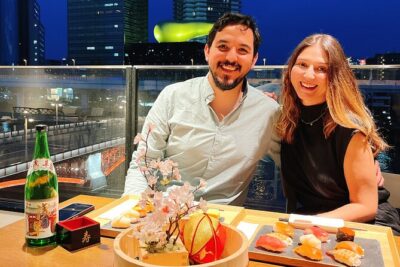
Ramen and Sushi Cooking Class with Sake Pairing Set in Tokyo
Read our review →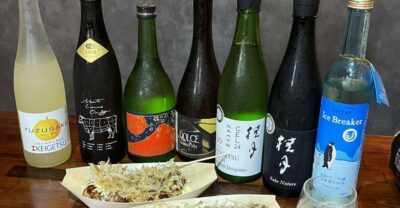
Osaka Sake Tasting & Takoyaki Cooking Experience
Read our review →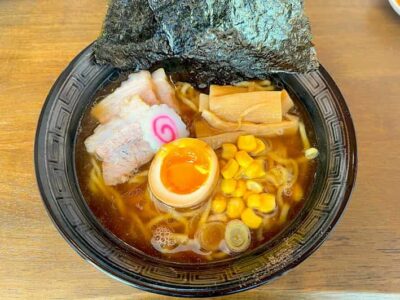
Sushi and Ramen Cooking Class with Sake Pairing Set
Read our review →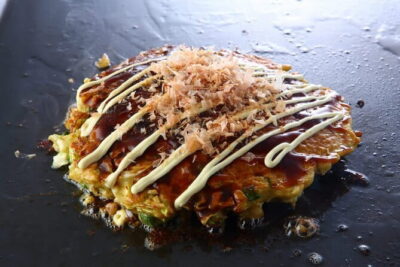
Osaka Cooking Class and Sake Tasting with Local Supermarket Visit
Read our review →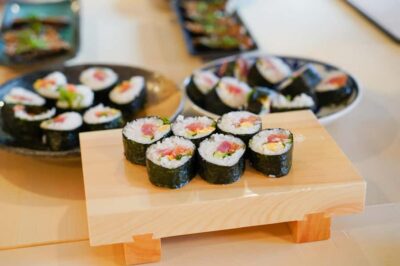
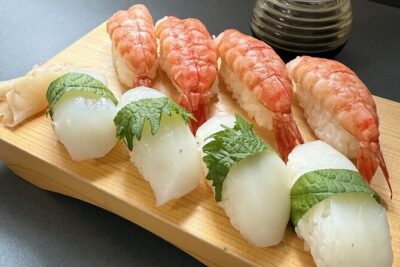
Tokyo Sushi Making Class : Sake Ceremony & Matcha Experience
Read our review →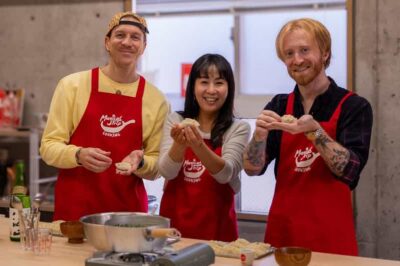
Cooking Class & Sake Tasting with Local Market Visit
Read our review →Browse the lists this tour appears in