
REVIEW · TOKYO
Ginza, Tokyo: Sake Experience with traditional vessels
Sake tells a different story in every glass. This Ginza tasting pairs three carefully chosen sakes with vessels designed to bring out their character, while bilingual hosts explain how the drink fits into Japanese culture. I like the intimate group size of seven and the chance to enjoy views toward Tokyo Bay rather than sit in a crowded tasting room. The $22 price is also fair for three pours and guided instruction.
I especially like the use of 400-year-old Imari porcelain in KINTSUGI, a detail that gives the tasting a stronger cultural connection than a simple bar sampler. Hosts such as Hiyori, Nana, and Rireka have received praise for being warm, helpful, and clear when explaining sake making and offering Tokyo tips. The main drawback is that only three sake tastings are included, so anyone wanting a longer drinking session will pay extra for more drinks or snacks.
Key points to know before you go
- Three sakes, three different vessels: You will compare how wine glasses and traditional Japanese vessels affect the drinking experience.
- A small group of up to seven: This makes it easier to ask questions and speak directly with the host.
- A Ginza setting with Tokyo Bay views: You get a polished central Tokyo location and a scenic backdrop while you taste.
- Bilingual English instruction: The host explains sake making, regional traditions, and drinking customs in English.
- A strong value at $22: The price includes three sake samples, cultural explanation, and the special vessels, but not extra drinks or snacks.
- Helpful local advice: Staff can suggest travel tips and recommendations for the rest of your time in Japan.
Arriving at JIDAI on Ginza’s 11th floor
Your meeting point is JIDAI, on the 11th floor of the JEWEL BOX GINZA building. Look for the Swarovski store on the first floor, then go upstairs to the bar. This is useful to know because Ginza has many polished buildings and entrances, and a quick check of the building name can save you from wandering around the wrong block.
Ginza is a convenient base for this kind of stop. It is known for its upscale feel, broad access to central Tokyo, and concentration of shops, restaurants, and bars. You can fit the tasting into an evening in the area, though the experience itself is listed as valid for one day and has different available starting times. Check the time when booking rather than assuming it starts at night.
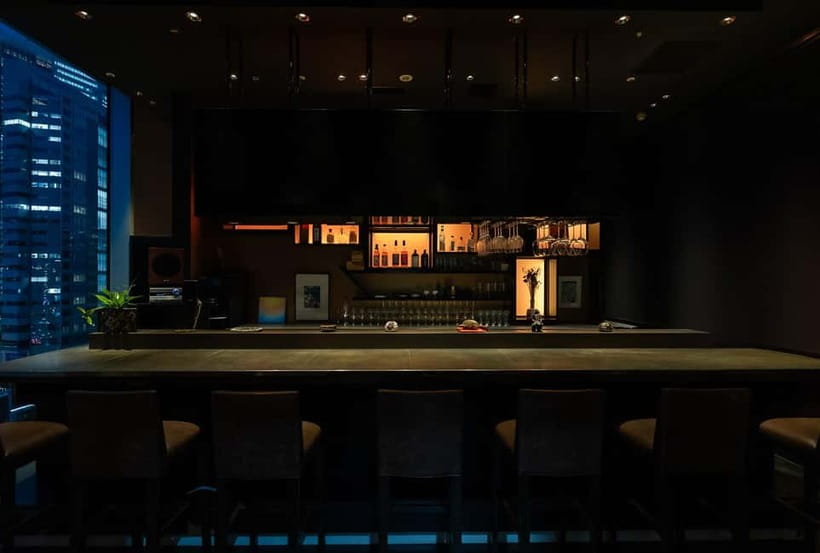
The setting is part of the appeal. You are not tasting sake in a remote brewery or a plain classroom. Instead, you sit in a bar with a view toward Tokyo Bay. The city setting makes this a sensible choice if you want a short cultural activity without spending half a day traveling outside central Tokyo.
A few more sake experiences around Tokyo worth a look
- Ramen and Sushi Cooking Class with Sake Pairing Set in Tokyo
★ 5.0 · 291 reviews - Sake Tasting Masterclass in Shinjuku (8+ Varieties with a Pro)
★ 5.0 · 271 reviews - Sake Omakase in Tokyo: Guided Tasting by Certified Sommeliers
★ 5.0 · 239 reviews
Three sakes selected for a first taste
The tasting centers on three types of sake chosen for people who may be trying the drink for the first time. That focus matters. Sake can seem confusing when you face a long menu filled with unfamiliar names, styles, and brewing terms. Here, the host narrows the choice and gives each sample a purpose.
You can expect to taste the sakes one at a time, with the host explaining what makes each one different. The supplied details do not identify the brewery, prefecture, rice variety, or exact sake styles, so you should not expect a fixed regional tasting menu. The selection is designed as an introduction rather than an exhaustive survey of Japanese sake.
Japan has about 1,500 sake breweries, and each one produces sake connected to its local area and culture. That fact gives the three samples some useful context. Even a short tasting can show you why sake is not one uniform drink. The style, aroma, texture, and finish can vary from bottle to bottle.
I like this approach for a first visit because it keeps the experience manageable. Three samples are enough to compare without turning the session into a blur of similar pours. If you already know sake well, you may find the selection too introductory, but you can order additional glasses separately.
Why the vessel changes the tasting
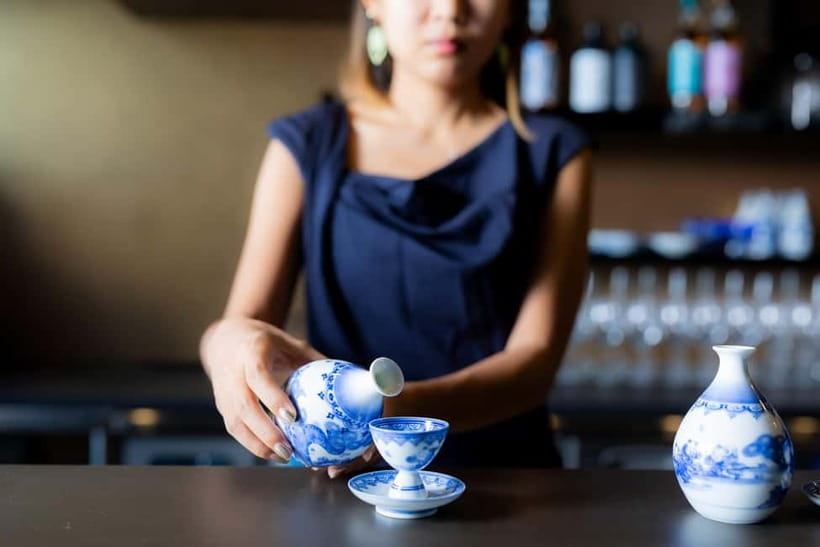
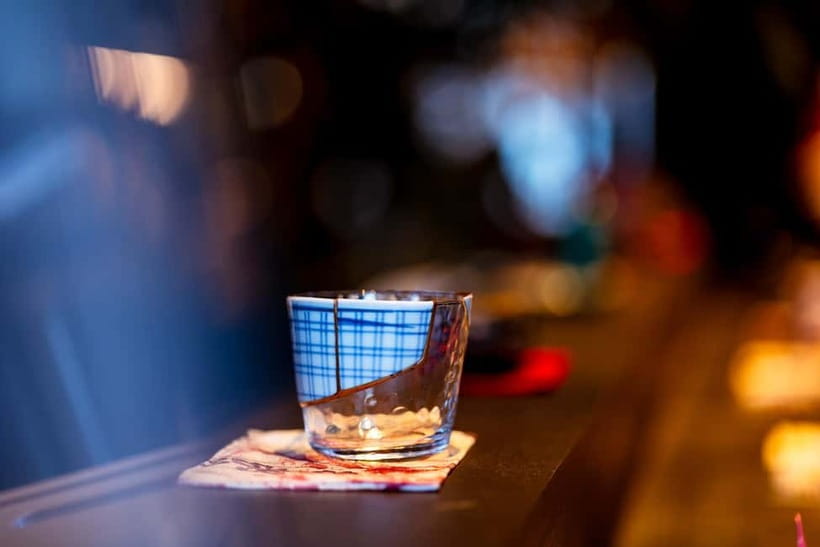
The most distinctive feature here is the attention given to serving vessels. Each sake is paired with a vessel that is meant to suit its character. Some are served in wine glasses, while others are presented in KINTSUGI using 400-year-old Imari porcelain.
A wine glass gives you a familiar shape if you have tasted wine before. It can also make the comparison feel approachable for people who are new to sake. The traditional vessel offers a different experience, one that connects the drink to Japanese craftsmanship and table culture.
The KINTSUGI reference is especially interesting. Kintsugi is associated with the Japanese practice of repairing ceramics, often highlighting the repaired lines rather than hiding them. In this tasting, the vessel uses 400-year-old Imari porcelain, adding age and artistic value to the act of drinking. The supplied details do not explain the exact repair work or design of the piece, so the host is the right person to ask for more background when you arrive.
This is more than a decorative touch. The shape, material, and size of a vessel can affect how you smell and taste a drink. The tasting gives you a direct way to notice those differences. Even if you cannot identify every flavor, you can compare how the same type of drink feels in a wine glass and in traditional Japanese tableware.
English explanations from a small team
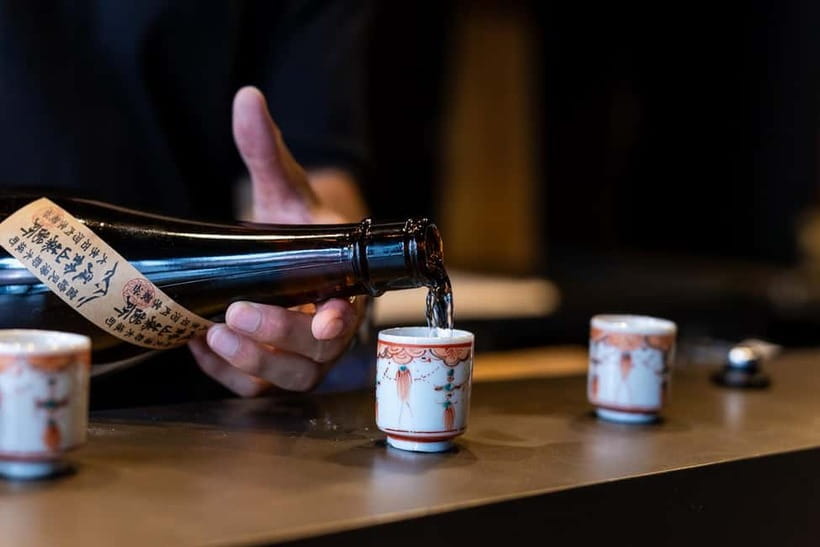
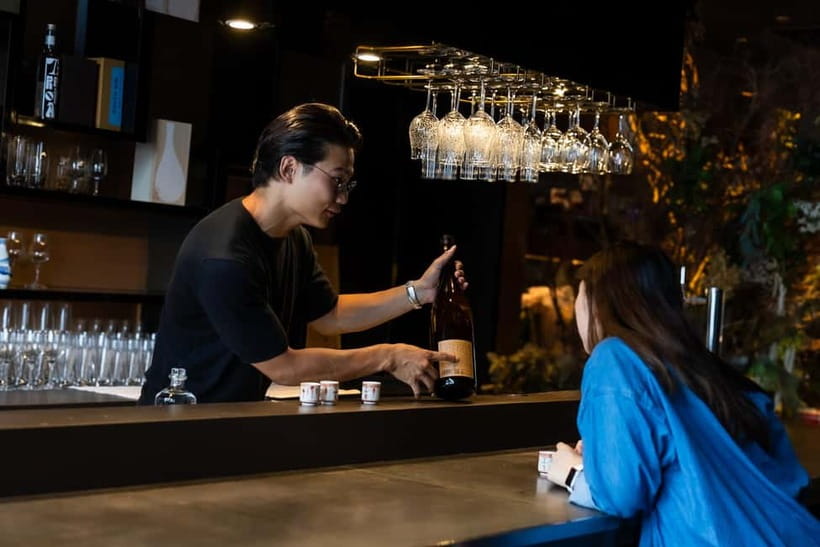
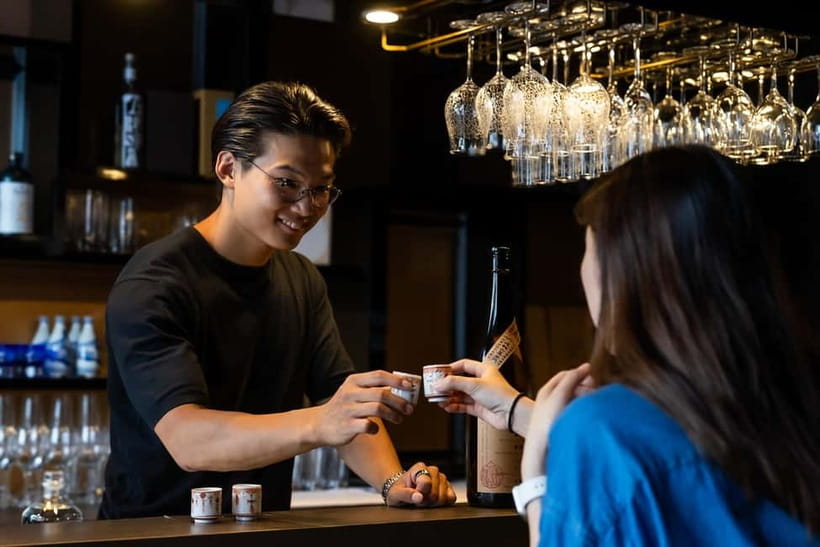
Instruction is provided in English, and bilingual staff explain the history and culture of sake. The best part of a small tasting is the chance to ask simple questions without holding up a large group. If you are unsure about pronunciation, serving customs, or how a particular sample differs from another, this format gives you room to ask.
Several hosts receive especially warm praise. Hiyori and Nana are described as sweet and excellent hosts who explained how sake is made and served delicious samples. Rireka is also singled out for being helpful and friendly, with a strong habit of offering practical advice. Those names matter because the host shapes a small tasting more than the room or the menu does.
You may hear about sake production in different parts of Japan, along with the role of local culture in brewing. The exact lesson can vary with the host and the questions you ask. This is not advertised as a technical brewing workshop, so expect a clear cultural introduction rather than a detailed lesson on fermentation chemistry.
The staff also act as informal concierges. They can provide travel tips and recommendations for your time in Japan. This is a useful bonus at the start or end of a Tokyo stay, especially if you want advice from someone who can respond to your interests. Keep in mind that general recommendations are included, but a private itinerary-planning session is not described.
Same place, a different pour:
- Tasting All Types of Sake with Sommelier
★ 5.0 · 151 reviews - Wagyu & Sake Pairing in Shinjuku – Steak, Shabu-Shabu & More
★ 5.0 · 112 reviews - Tokyo Wagyu & Sake Pairing Tasting Experience with Local Flavors
★ 5.0 · 108 reviews - Tsukiji: Outer Market Walking Tour & Sake Tasting Experience
★ 4.9 · 81 reviews
Tokyo Bay views add atmosphere
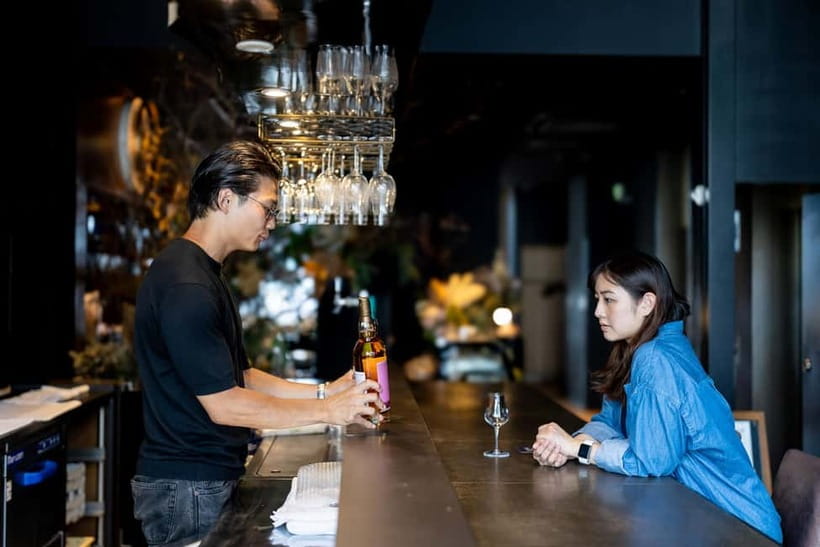
The view toward Tokyo Bay gives the tasting a visual change from the usual Ginza shopping streets. You can sip sake while looking out over the city rather than focusing only on the glass in front of you. The view is one of the reasons this works well as a calm pause between sightseeing and dinner.
The atmosphere is polished and attractive, which suits Ginza. One rating described the setting as dreamlike and the staff as highly capable. That praise fits the appeal of the experience, but you should keep your expectations in proportion: this is a small bar tasting, not a full meal, a brewery tour, or a long sightseeing cruise.
The view may be more important to some people than others. If you are mainly interested in sake education, the host and vessel pairings are the real value. If you want an elegant place to slow down and take in Tokyo, the setting makes the $22 feel more worthwhile.
What the $22 price includes
At $22 per person, the experience is priced as a short, guided introduction rather than an open-ended night of drinking. Your fee includes three sake samples, a bilingual explanation of sake history and culture, and the designated vessels for each drink. That is a reasonable package for Ginza, where location and atmosphere often add to the cost of a stop.
You should not read the price as covering a full evening out. Extra glasses, other drinks, and snacks are not included. If you arrive hungry or want to continue sampling after the three pours, budget for additional purchases at the bar.
The value is strongest for three kinds of people:
- You are new to sake and want someone to explain the basics.
- You care about Japanese vessels, ceramics, and food culture.
- You want a convenient Ginza activity with a view and local advice.
The value is weaker if you already know exactly which sake styles you like and only want a large selection. The experience is built around comparison and explanation, not quantity.
Group size, timing, and comfort
The group is limited to seven participants. That is small enough to keep the host accessible, while still giving the tasting a social feel. A smaller group also suits the vessel demonstrations, since you can watch how each sake is presented and ask about the reason behind the choice.
The activity is listed as lasting one day, but no exact tasting length is supplied. Treat that as a booking validity note rather than a promise of a full-day program. Check the available start times and plan your Ginza schedule around the confirmed slot.
The experience is wheelchair accessible. The meeting point is inside a building, so anyone who uses a wheelchair should still confirm the access details for the building entrance and elevator when booking if they need specific arrangements.
The activity is for adults aged 18 and over. The supplied restrictions also exclude pregnant women and people with claustrophobia, heart problems, vertigo, respiratory issues, epilepsy, diabetes, a cold, haemophilia, pre-existing medical conditions, kidney problems, high blood pressure, recent surgeries, or lactose intolerance. Children under 33 pounds or 15 kilograms are also listed as unsuitable, though the activity already excludes children under 18.
That list is unusually broad for a sake tasting. If any item applies to you, contact the provider before booking rather than guessing. Alcohol is involved, and the provider’s restrictions should be taken seriously.
What the strongest praise tells you
The most consistent positive theme is the hosts. Hiyori, Nana, and Rireka are praised for being friendly, patient, and helpful. That is important because the tasting depends on explanation. Three small pours can feel ordinary if no one connects them to place, production, or custom.
The second strong point is the setting. The attractive room and view help turn a simple tasting into a pleasant Ginza outing. The combination of a city view, traditional ceramics, and English instruction gives the activity more character than ordering one sake at a standard bar.
A third strength is the cultural context. The explanation of sake making in different parts of Japan helps you understand why local breweries matter. You leave with more than a preferred sample. You also gain a better sense of how sake relates to regional identity and Japanese craft.
There is one clear caution in the feedback: not every visit receives top marks. One verified booking received two out of five stars without a detailed explanation. Because the sample size is small, I would not treat that as proof of a regular problem, but it is a reminder that the host, exact sake selection, and personal expectations can shape the experience.
Who should book this Ginza tasting
I would recommend it to first-time sake drinkers, couples looking for a quiet Ginza activity, solo visitors who enjoy guided tastings, and anyone curious about Japanese ceramics. It also suits people who want English instruction without committing to a long excursion beyond central Tokyo.
The experience is less suitable for someone seeking a brewery visit, a sake-making demonstration, a full meal, or a broad tasting of many bottles. You will receive three samples, not a complete survey of Japan’s sake regions.
It is also a good choice if you enjoy asking questions. The group limit and bilingual staff give you a chance to ask about the vessel, the brewing process, or places to visit next. If you prefer to drink privately and skip explanations, the format may feel too structured.
Booking is flexible, with free cancellation up to 24 hours in advance for a full refund and a reserve-now, pay-later option. Those terms help if your Tokyo plans are still shifting, but you should still check the available time before finalizing your day.
Should you book it?
Book this experience if you want a compact introduction to sake with three guided samples, traditional serving vessels, and a Ginza setting. The $22 cost is sensible when you value the explanation and the 400-year-old Imari porcelain as much as the alcohol itself.
Skip it if you want a long night of drinking, a meal, or a technical brewery tour. For most first-time sake drinkers, though, this is a thoughtful way to learn the basics, compare vessels, and get useful Tokyo advice from a friendly English-speaking host.
FAQ
Where is the sake tasting held?
It is held at JIDAI on the 11th floor of the JEWEL BOX GINZA building in Ginza, Tokyo. Swarovski is located on the first floor.
How much does the experience cost?
The listed price is $22 per person.
How many types of sake are included?
Three types of sake are included in the tasting.
Are additional drinks and snacks included?
No. Additional glasses of sake, other drinks, and snacks are not included.
Which languages are available?
The activity is provided in English by bilingual staff.
What types of vessels are used?
The tasting includes specific vessels for each sake, including wine glasses and KINTSUGI using 400-year-old Imari porcelain.
How large is the group?
The group is limited to seven participants.
Is the activity wheelchair accessible?
Yes, the activity is listed as wheelchair accessible.
Can I cancel for a full refund?
Yes. You can cancel up to 24 hours in advance for a full refund.
Are children allowed to participate?
No. Children under 18 are not suitable for this activity.
Just added around Tokyo
- Tokyo Sake Tasting Tour with a Sake Expert★ 5.0 · 7 reviews
- Wagyu BBQ & Sukiyaki with Sake Pairing Experience near Ginza★ 5.0 · 2 reviews
- Sake Tasting and Cherry Blossom Fun in Tokyo!★ 5.0 · 4 reviews
- Private Sake Tasting at 300 Years Old Sake Brewery in Tokyo★ 5.0 · 3 reviews
- Tokyo: Serene Sakura & Sake: An Exclusive Brewery Pairing Lunch★ 5.0 · 2 reviews
- Sake Pairing Workshop with Japanese Food in Shinjuku★ 5.0 · 5 reviews
- Nagano: Snow Monkey and Zenkoji Temple Free Sake Taste Day Tour★ 4.5 · 8 reviews
- Cherry blossom & Japanese Sake Tasting in Shinjuku★ 5.0 · 4 reviews
Tokyo Sake Tours, compared.
Ramen and Sushi Cooking Class with Sake Pairing Set in Tokyo
Read our review →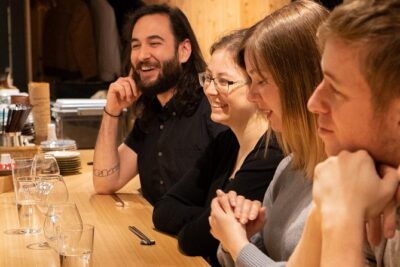
Sake Tasting Masterclass in Shinjuku (8+ Varieties with a Pro)
Read our review →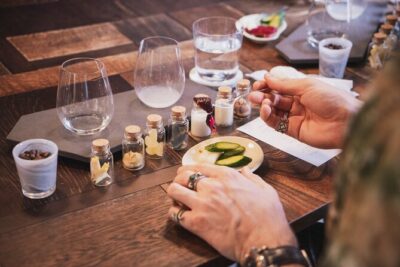
Sake Omakase in Tokyo: Guided Tasting by Certified Sommeliers
Read our review →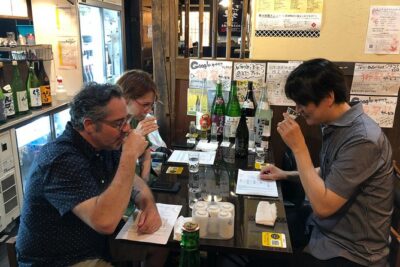
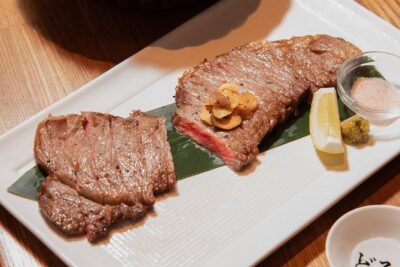
Wagyu & Sake Pairing in Shinjuku – Steak, Shabu-Shabu & More
Read our review →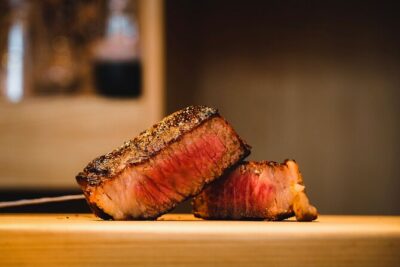
Tokyo Wagyu & Sake Pairing Tasting Experience with Local Flavors
Read our review →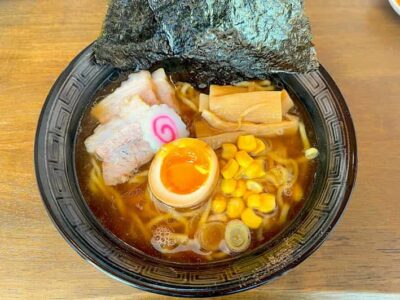
Sushi and Ramen Cooking Class with Sake Pairing Set
Read our review →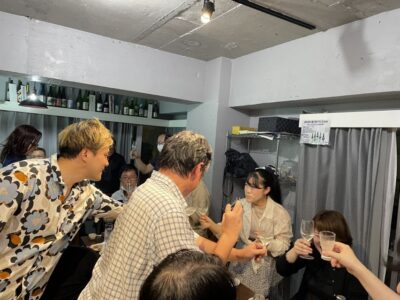
Outer Market Walking Tour & Sake Tasting Experience
Read our review →Browse the lists this tour appears in