
REVIEW · TOKYO
Wagyu & Sake Pairing in Shinjuku – Steak, Shabu-Shabu & More
Come hungry for beef and sake. This three-hour evening meal in Shinjuku combines several wagyu preparations with carefully matched Japanese drinks, while an English-speaking host explains what you are eating and why it matters. I especially like the small group size, capped at eight, and the chance to compare cuts from different Japanese regions rather than ordering one expensive steak and calling it dinner.
I also like the practical side. Hosts such as Joe, Tadashi, Chi, Andrea, and Miyuki have helped diners understand wagyu grades, sake production, Japanese menus, and good bottles to seek out later. The main drawback is the setting: the restaurant space can feel tight, and one diner found the welcome less warm than expected for the price.
Key details before you book
- A full wagyu meal, not just a tasting: Expect appetizers, beef tongue, tataki, sirloin, hotpot, dashi udon, and dessert.
- Different sake with different courses: Pairings include warm sake, nigori, unpasteurized sake, aged or fermented styles, and original sake cocktails.
- Six to eight people at most: A small table makes questions easier and keeps the evening social.
- Dinner starts at 6 p.m.: Allow about three hours, and plan to finish back at the restaurant.
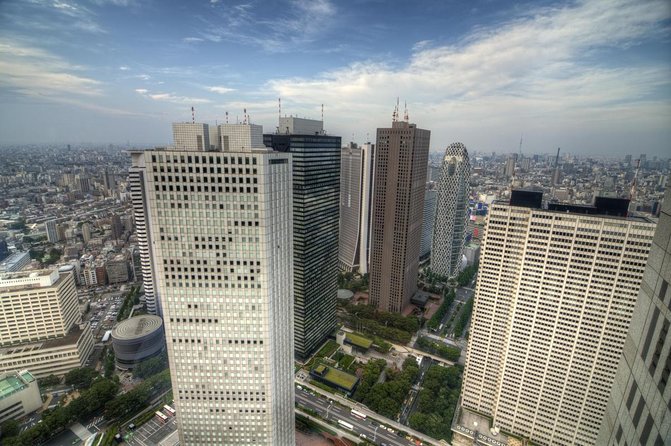
- Located near public transportation: The meeting point is Ushinobi Shinjuku in the NSK Building at 1-chōme-22-1 Hyakuninchō.
- Food restrictions need advance notice: Contact the provider at least one week before the date. Vegan, vegetarian, and gluten-free choices are limited.
Arriving at Ushinobi Shinjuku at 6 p.m.
The experience begins at Ushinobi Shinjuku, a restaurant in the NSK Building in Shinjuku City. You receive the meeting details when booking, and the activity ends at the same place, which simplifies the evening. You do not need to work out a second pickup point after dinner.
The setting is more intimate restaurant than grand dining room. That can be a plus if you enjoy sitting close to the action and talking with the host and other diners. It can also feel cramped. One party of six found the seating tight and tucked away at the back of the bar, so this is not the choice for a spacious, formal steakhouse atmosphere.
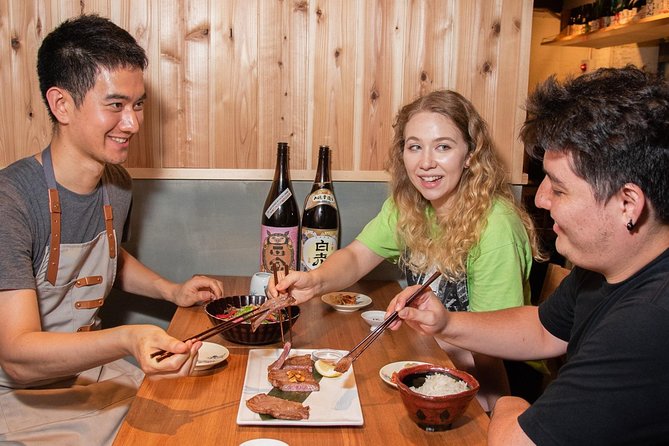
The small-group format helps balance that limitation. With no more than eight people, you have a realistic chance to ask how wagyu grading works, why one sake is served warm, or how to read a Japanese menu. Several hosts have been praised for making the evening easy to follow in English, including Joe, Tadashi, Chi, Andrea, and Miyuki.
More Wagyu and Sake Tours in Tokyo:
- Tokyo Wagyu & Sake Pairing Tasting Experience with Local Flavors
★ 5.0 · 108 reviews - Wagyu Beef and Sake Pairing Foodie Tour in Tokyo
★ 5.0 · 71 reviews - Wagyu & Sake 8 Course Tasting Dinner in Shinjuku
★ 4.9 · 20 reviews
Starting with Japanese drinks and a wagyu lesson
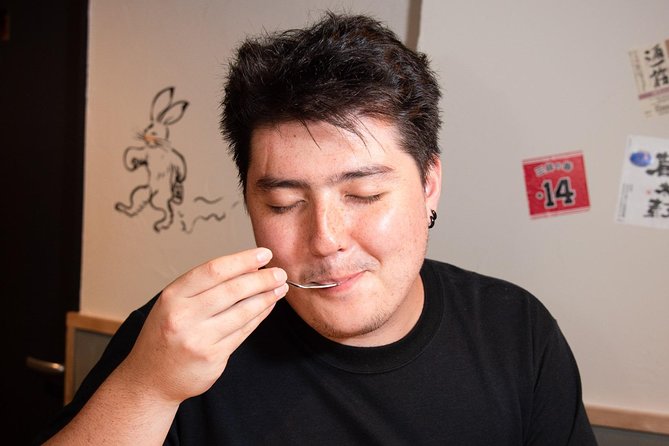
The first stage is an aperitif and an introduction to wagyu and sake. The host explains the background, regional differences, and importance of both products in Japanese food culture. You are not simply handed a plate of beef and a glass of rice wine. The explanations give you a way to compare what arrives later.
This opening is useful if you are new to both subjects. Wagyu is not one single flavor or texture. Different cuts, grades, regions, and preparations change the experience. A lesson on the grading system can help you understand why highly marbled beef costs more, while the tasting format lets you judge how that richness works in small portions.
The sake briefing has a similar purpose. You may encounter several styles during the meal, including warm sake, nigori, unpasteurized sake, and aged or fermented examples. Some drinks are original cocktails made specifically to pair with beef. That range gives you more than the familiar restaurant pour and can help you identify the styles you want to order later in Japan.
Joe has also provided practical buying advice and guides for choosing sake on your own. That is one of the most useful parts of the evening. A tasting is enjoyable, but tips you can use at a shop or restaurant after the tour give the experience a longer life.
Comparing wagyu from tongue to sirloin
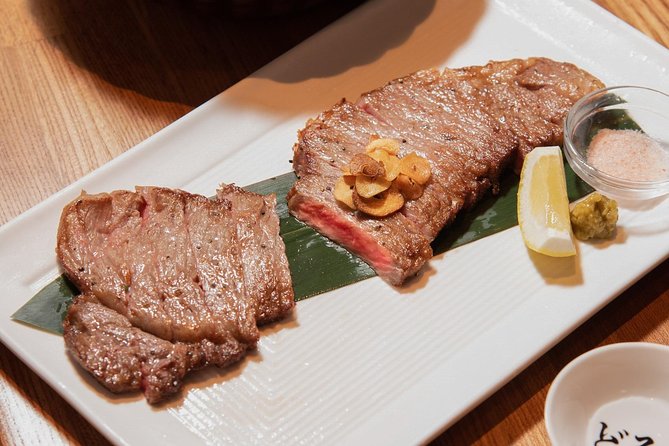
The main meal is built around several wagyu cuts and preparations. The exact beef depends on what is available on the date, since the kitchen sources wagyu from different Japanese regions and serves the best cuts available at that time. This means your menu may not match every sample menu word for word.
A typical progression looks like this:
- Two appetizers
- Grilled wagyu beef tongue with an original sake cocktail
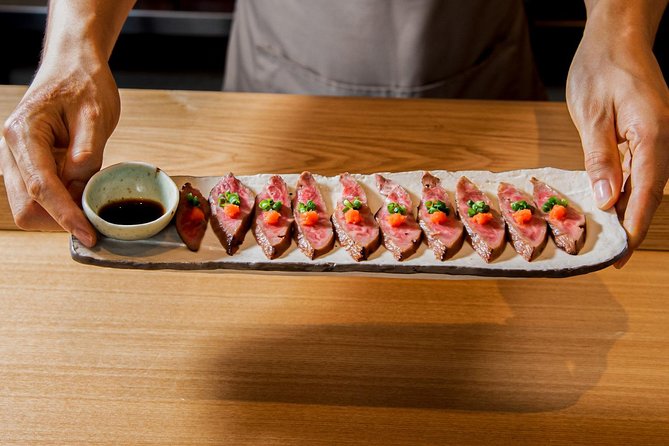
- Wagyu chuck flap tataki with warm sake
- Seasonal salad
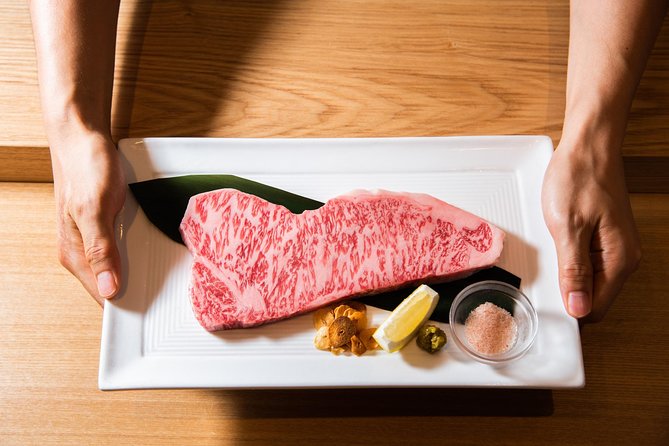
- Wagyu sirloin steak with nigori
- Wagyu chuck hotpot with unpasteurized sake
- Wagyu dashi udon
- Dessert with a surprise sake pairing
The beef tongue is a good early course because grilling brings out a firm, savory bite rather than the soft richness associated with heavily marbled steak. The original cocktail gives you an immediate example of how the host matches the drink to the beef instead of treating sake as an afterthought.
Next comes chuck flap tataki, served with warm sake. Tataki is lightly seared, so this course shows the beef in a different texture from grilled tongue. Warm sake can feel fuller and softer than a chilled pour, making it a sensible match for a more savory preparation.
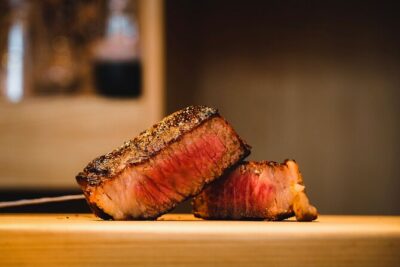
The sirloin is likely to be the centerpiece for diners focused on premium beef. It is served with nigori, an unfiltered style that is cloudy and often creamy in texture. That pairing lets you compare the lush feel of the beef with a sake that has more body than a light, clear pour.
You may also get a hands-on role in preparing or cooking part of the meal. The exact extent depends on the evening, but the experience includes opportunities to take part rather than simply watch plates arrive. That small bit of participation helps explain how each cut is meant to be enjoyed.
Shabu-shabu style hotpot and dashi udon
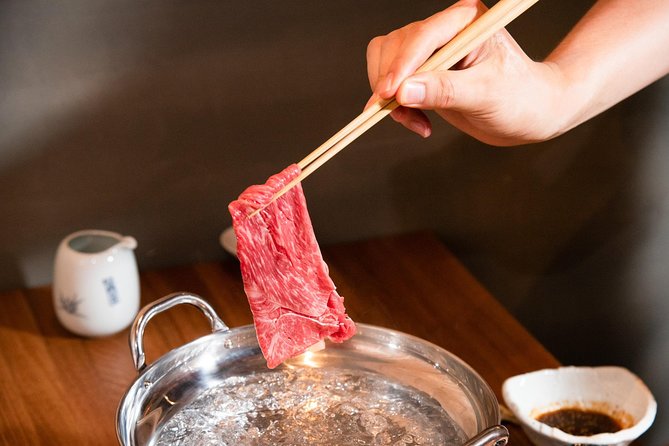
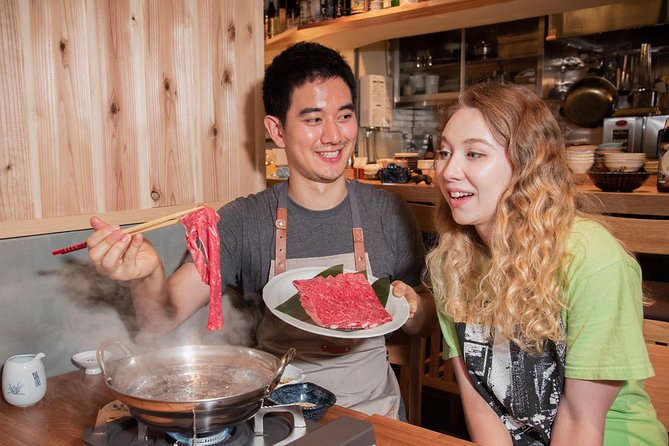
The hotpot course changes the pace. Instead of treating wagyu as a steak alone, the meal shows how thinly sliced beef works in a Japanese hotpot. You cook the chuck in the broth, then taste it with the accompanying flavors. This preparation is less about a browned crust and more about tenderness, broth, and timing.
The paired unpasteurized sake adds another point of comparison. You can notice how the drink changes beside beef cooked in broth rather than beside grilled meat. This is the sort of contrast that makes the meal educational without turning it into a lecture.
After the hotpot, wagyu dashi udon gives the dinner a comforting finish before dessert. The noodles bring the savory broth forward and make clear that the meal is designed as a full course rather than a series of isolated meat samples. Several diners have praised the generous portions, so you should arrive hungry.
Dessert includes a surprise sake pairing. The details are not fixed, and that is part of the fun, but do not expect a separate dessert menu with many choices. The focus remains on showing how sake can work across a whole meal, including the final course.
More Sake and Food Pairings in Tokyo:
- Ramen and Sushi Cooking Class with Sake Pairing Set in Tokyo
★ 5.0 · 291 reviews - Tokyo: Sushi and Ramen Cooking Class with Sake Pairing Set
★ 5.0 · 81 reviews - Cozy Tokyo Class: Ramen, Sushi, Sake Pairing & Cultural Exchange
★ 5.0 · 74 reviews - Tokyo: 7 Kinds of Sake Tasting with Japanese Food Pairings
★ 4.9 · 37 reviews
What the hosts add to the evening
The host can make or break a tasting, and this experience depends heavily on that personal connection. Joe has been praised for being friendly, clear, and easy to understand as a native English speaker. Tadashi has helped explain both meat grading and sake production while giving diners a chance to prepare food.
Chi has been singled out for an engaging approach, especially when presenting aged and fermented sake with A5 wagyu. Andrea has received praise for generous food and drink service, and one party reported that the chef accommodated an allergy. Miyuki has been described as welcoming and personable while explaining wagyu in detail.
These individual touches matter because the meal involves unfamiliar terms and styles. A good host gives you a reason for each course, answers questions without rushing, and helps you connect the food to the rest of your trip. The evening is social, too. Sharing a table with other diners can be a bonus if you enjoy conversation, though it will not suit someone seeking a quiet private dinner.
The tone may vary. One diner found the welcome somewhat cool, so I would not book this expecting a polished luxury-restaurant performance from start to finish. The strongest part is the food and teaching, not ceremony.
Is $148.65 a fair price?
At $148.65 per person, this is not a casual meal. The value depends on what you want from dinner. If you only want to eat one portion of wagyu, ordering independently may cost less. If you want several cuts, multiple cooking styles, a full meal, and a guided sake progression, the price becomes easier to justify.
The sake is a major part of the value. You are not paying only for steak. The program includes different pairings, including specialty styles that can be harder to identify on your own. One diner felt the sake alone made the experience worthwhile, while others praised the amount of food and drink.
The included full-course meal also matters. Appetizers, salad, beef courses, hotpot, udon, and dessert create a substantial dinner. Beer and other drinks are not included, so budget extra if you want something beyond the listed sake pairings.
I see this as good value for a first-time wagyu and sake introduction, especially if you would otherwise spend part of your trip guessing at menus and ordering without context. It is less attractive if you already know Japanese beef and sake well, or if you prefer to choose each dish yourself.
Who will enjoy this Shinjuku dinner?
I would recommend it most strongly to first-time visitors to Japan who want an organized introduction to two major parts of Japanese food culture. You get clear explanations, a range of flavors, and practical advice for later meals and sake purchases.
It also suits couples and solo diners who like small-group food experiences. The maximum of eight people keeps the table manageable, and a group of six has been described as comfortable for conversation. Food-focused visitors will appreciate the variety more than anyone seeking a single grand steak.
You should think twice if you need strict dietary control. Food restrictions must be sent at least a week before the date, and vegan, vegetarian, and gluten-free options are limited. Last-minute requests cannot be accommodated.
The restaurant layout is another consideration. If you want wide spacing, quiet surroundings, and a formal service style, the compact seating may disappoint. If you care more about trying many preparations and learning from an enthusiastic host, the close quarters are easier to accept.
Mobile tickets and a meeting point near public transportation make the evening straightforward. Confirmation arrives at booking, and most people can take part. Free cancellation is available if you cancel at least 24 hours before the 6 p.m. start time. Changes or cancellations inside that window are not refunded.
My take: book it for the range, not just the steak
I would book this if you want to understand why wagyu is different, taste several cuts, and learn how sake changes from course to course. The best reasons are the generous full meal, the range of preparations, and the hosts who turn unfamiliar food into something you can recognize and order again.
I would skip it if your priority is a spacious dining room, a private table, or complete control over the menu. The setting can be tight, and the experience is built around shared conversation and a fixed progression.
For most first-time food-focused visitors, the combination is worth the cost. You leave with a full stomach, a better sense of wagyu grading, and enough sake knowledge to make smarter choices during the rest of your time in Tokyo.
FAQ
Where does the wagyu and sake experience begin?
It begins at Ushinobi Shinjuku, Wagyu & Sake, in the NSK Building, 201, 1-chōme-22-1 Hyakuninchō, Shinjuku City, Tokyo 169-0073, Japan.
What time does the experience start?
The start time is 6:00 p.m.
How long does the experience last?
The activity lasts approximately three hours.
Where does the experience end?
It ends back at the starting point, Ushinobi Shinjuku.
How many people can join?
The maximum group size is eight people.
What food is included?
A full-course wagyu meal is included. A typical menu may include appetizers, beef tongue, wagyu tataki, salad, sirloin steak, chuck hotpot, dashi udon, and dessert.
Are drinks other than sake included?
No. Additional drinks, such as beer, are not included. The listed sake pairings are part of the experience.
Can dietary restrictions be accommodated?
You should send food restriction details at least one week before the date. Vegan, vegetarian, and gluten-free options are limited, and last-minute food requests cannot be accommodated.
Can I cancel for a full refund?
Yes. You can receive a full refund by canceling at least 24 hours before the local start time. Cancellations or changes made less than 24 hours before the experience are not accepted for a refund.
Just added around Tokyo
- Tokyo Sake Tasting Tour with a Sake Expert★ 5.0 · 7 reviews
- Wagyu BBQ & Sukiyaki with Sake Pairing Experience near Ginza★ 5.0 · 2 reviews
- Sake Tasting and Cherry Blossom Fun in Tokyo!★ 5.0 · 4 reviews
- Private Sake Tasting at 300 Years Old Sake Brewery in Tokyo★ 5.0 · 3 reviews
- Tokyo: Serene Sakura & Sake: An Exclusive Brewery Pairing Lunch★ 5.0 · 2 reviews
- Nagano: Snow Monkey and Zenkoji Temple Free Sake Taste Day Tour★ 4.5 · 8 reviews
- Sake Pairing Workshop with Japanese Food in Shinjuku★ 5.0 · 5 reviews
- Cherry blossom & Japanese Sake Tasting in Shinjuku★ 5.0 · 4 reviews
Wagyu & Sake Tours, compared.
Tokyo Wagyu & Sake Pairing Tasting Experience with Local Flavors
Read our review →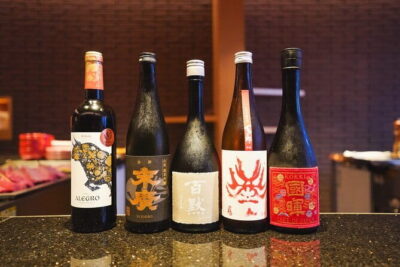
Wagyu Beef and Sake Pairing Foodie Tour in Tokyo
Read our review →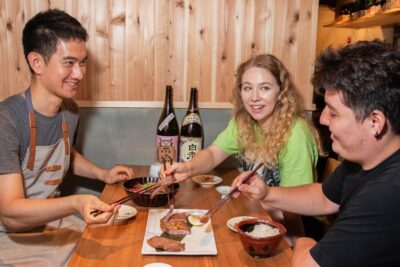
Wagyu & Sake 8 Course Tasting Dinner in Shinjuku
Read our review →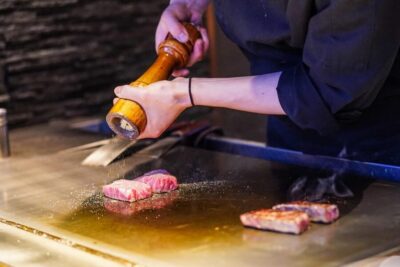
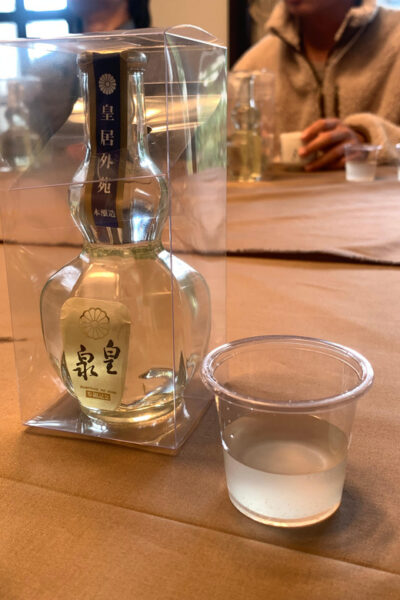
Sake Brewery Tour with Tasting and Kobe Beef Bites
Read our review →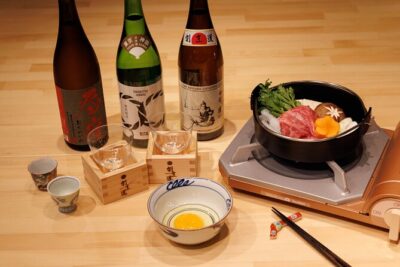
Japanese Sake Tasting & Wagyu Sukiyaki Cooking Class in Tokyo
Read our review →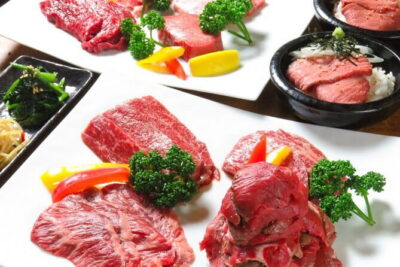
Wagyu BBQ & Sukiyaki with Sake Pairing Experience near Ginza
Read our review →Browse the lists this tour appears in