
REVIEW · OSAKA
3.5h Osaka Night guided Local Bar Hopping, Sake & Karaoke
Osaka gets friendlier after sunset. This 3.5-hour walk through Namba mixes local izakaya food and sake tasting with a small temple visit and karaoke alongside Japanese customers. I like the relaxed social setup, especially the chance to try dishes and drinks you might not order alone. I also like the final karaoke stop, which turns a standard night out into something more personal. The main catch is cost: the $40 tour fee does not cover food or drinks, and your shared bill may add about JPY 7,000 to 10,000 per person.
You meet at 7:00 PM outside Namba Station Exit 14, then walk among Dotonbori’s famous signs before settling into neighborhood drinking spots. Small groups of up to 10 make it easier to talk with the guide and other participants, but some venues allow smoking, so this is not the best pick if you are sensitive to smoke.
Quick reasons to consider this Osaka night tour
- A real taste of Osaka nightlife: Walk from Namba into local izakayas, a sake-focused stop, and a small karaoke bar rather than spending the night in a single tourist venue.
- Sake is treated as more than one drink: You try several recommended varieties with snacks, giving you a better sense of how different sake can taste.
- Hozenji Temple breaks up the drinking: The guide explains the traditional way to pray at this small temple in the middle of the entertainment district.
- Karaoke with local customers: The final bar offers all-you-can-drink beverages and a chance to sing English songs with Japanese patrons.
- Good help for solo visitors and couples: Guides such as Ryoko and Yoko are praised for making people feel comfortable and taking photos during the evening.
- Plan for the full bill: The tour costs $40, but shared food and drinks are extra, and the guide’s drinks are covered by the group.
Why this 210-minute Osaka evening works
I see this experience as a guided introduction to Osaka’s drinking culture, not simply a pub crawl. The guide gives you a route, explains local customs, handles the social awkwardness of entering unfamiliar places, and keeps the evening moving.
That matters in Namba. Dotonbori is easy to find, but the best night often comes after you leave the main sign-lined street. A guide can point out how people order, share dishes, handle kushikatsu, and move between different kinds of bars. You get context along with dinner.
The format is also well suited to a first evening in Osaka. You do not need to research a list of bars or worry about where to go next. The walk, food stops, sake tasting, temple visit, and karaoke are arranged as one compact night.
The tour runs for 210 minutes, beginning at 7:00 PM. That puts the main part of the evening in Osaka’s after-dark hours, when the neighborhood feels most like itself. You return to the same FamilyMart near Namba Station, which gives you a clear end point.
More Nights Out in Japan:
- Casual Japanese SAKE tasting and snack experience in Kabukicho
★ 5.0 · 159 reviews - Casual Japanese sake tasting and snack experience, Kabukicho
★ 4.7 · 31 reviews - Kyoto: Foodie Night Tour in Gion with 9 dishes + 6 Sake
★ 4.4 · 26 reviews
Meeting at Namba Station and entering Dotonbori
Look for the FamilyMart right outside Namba Station Exit 14. Your guide holds a BITEMEOSAKA sign, which is useful in a busy station area where several exits can lead you into very different parts of Namba.
The evening starts with a short walk toward Dotonbori. Expect time for photos at the Glico sign and beside Kuidaore Taro, two of Osaka’s best-known street symbols. This part is not a long sightseeing tour, but it gives you quick bearings and a little background on Osaka’s food-first culture.
I like this opening because it avoids dropping you straight into a restaurant. You first get a sense of the area, take a few photos, and learn how the night will work. If you arrive early, allow time to find Exit 14. Namba has several connected station areas, and arriving at the wrong exit can mean an unnecessary walk.
The first izakaya and Osaka’s shared-table customs
The first restaurant provides a welcome drink and a selection of shared Japanese dishes. The guide explains the basic manners of an izakaya, where small plates are ordered for the table rather than where each person necessarily receives one large entrée.
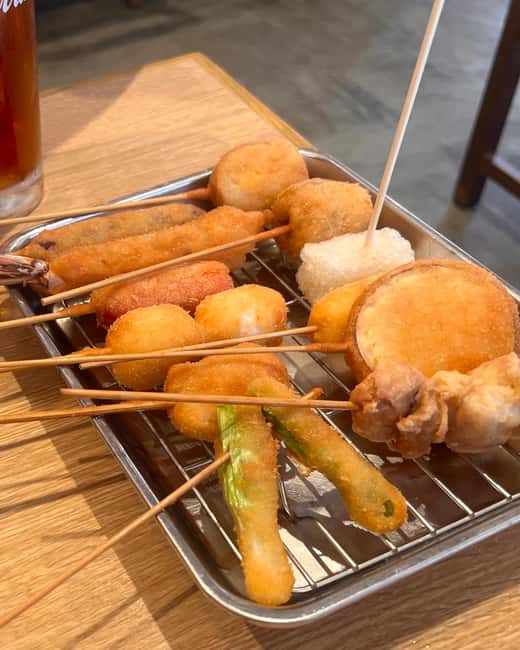
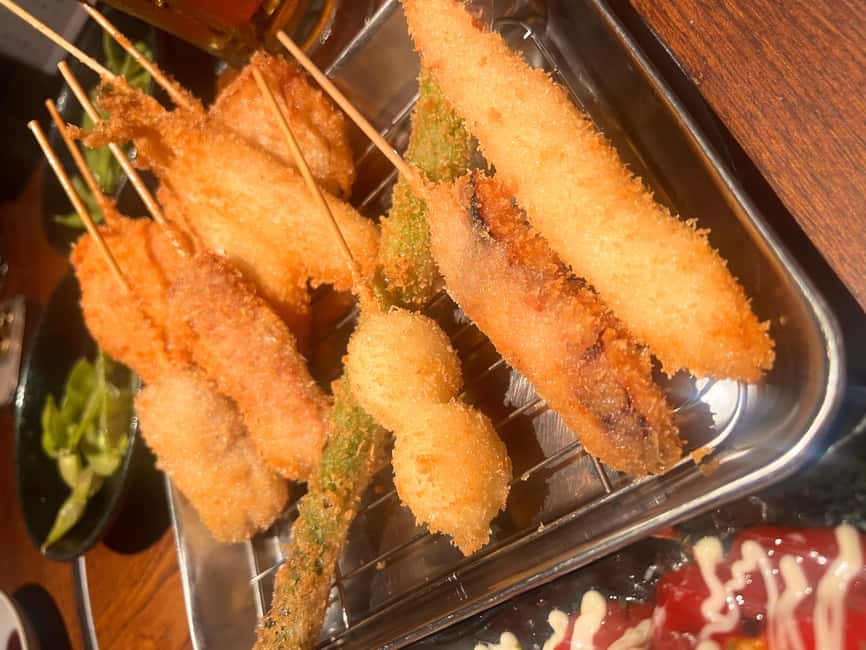
That shared format lets you sample more. You might try recommended Japanese foods, skewers, or kushikatsu-style items, depending on the venue and the evening’s arrangement. The important point is that food is part of the conversation. You are not just eating; you are learning why certain dishes are served together and how locals handle them.
One useful detail from the evening is the no double-dipping rule for kushikatsu. Shared sauce is not dipped into twice, a small custom that is easy to miss if you eat alone. A guide can explain these rules without making the meal feel like a classroom.
The first stop lasts around 45 minutes. That is enough time to eat, have a drink, and talk, but it is not a leisurely full dinner. Food and drinks are shared among the group, so tell the guide about any serious dietary concern before ordering if you have one. The supplied details do not promise special menus or substitutions.
A sake stop with several different flavors
Next comes a smaller venue focused on Japanese sake. You try several recommended varieties with snacks that match the drinks. For many people, this will be the most educational part of the evening.
Sake is often treated by first-time drinkers as one general beverage. A tasting shows why that is too simple. The selections can have noticeably different flavors, and the accompanying snacks help you compare them while the guide explains what you are drinking.
The stop lasts about 45 minutes, so it is more than a quick sample. At the same time, this is not presented as a technical certification course. You are there to taste, ask questions, and find out what you like.
Several people who joined the experience with guides named Ryoko or Yoko singled out the sake tasting as a highlight. Their comments describe surprise at the range of flavors, which is exactly why this stop earns its place in the route.
The practical issue is alcohol. You are moving through several venues in one night, and the sake stop follows a welcome drink and food. Eat as you go, pace yourself, and use the short walking breaks to slow down. The guide’s drinks are also paid for by the participants, so that cost is part of the group bill.
Same place, a different pour:
- 1-Day Snow Monkeys, Zenko-ji Temple & Sake in Nagano
★ 5.0 · 1,020 reviews - 3-Hour Kyoto Insider Sake Brewery Tour with Tastings & Pairings
★ 5.0 · 917 reviews - Nagano: Snow Monkeys, Zenkoji Temple & Sake Day Trip
★ 4.9 · 833 reviews - Kyoto: Insider Sake Brewery Tour with Sake and Food Pairing
★ 5.0 · 704 reviews
Hozenji Temple and a quieter fifteen minutes
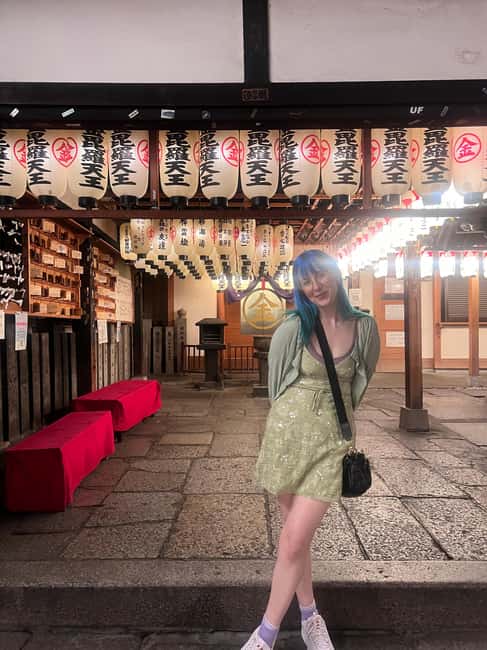
After the sake stop, the group takes a short break and walks to Hozenji Temple. The temple is a useful change of pace from the restaurants and bars, and the guide explains the traditional way to pray there.
The visit lasts about 15 minutes. That is enough for a brief introduction and a respectful stop, not a full temple tour. On the way, you might pick up a sweet or takoyaki from a local stall, depending on timing and what is available.
This is one of the route’s best choices. Osaka nightlife can become a blur of signs, food, and drinks, while Hozenji gives you a glimpse of a different side of the neighborhood. The temple’s location near the entertainment streets also shows how older religious places and modern nightlife share the same city blocks.
Treat this as a cultural pause, not a major sightseeing attraction. If your main goal is temples, you need a separate daytime visit to Osaka’s larger religious sites. Here, the value comes from the contrast and the guide’s explanation.
The final karaoke snack bar
The night finishes at a very local karaoke snack bar. This is not described as a private karaoke room reserved only for your group. You sing with Japanese customers, enjoy all-you-can-drink beverages, and take part in the informal social side of the evening.
For many people, this is the most memorable stop. English songs can help bridge the gap, and the supplied experiences describe Japanese customers singing with international participants. You do not need to be a strong singer, but you should be willing to join in. If you prefer to watch quietly, this part may feel more demanding than the restaurant stops.
The venue is called a snack bar, which in Japan can mean a small, intimate drinking place rather than a typical Western bar. That helps explain why the atmosphere feels personal and why singing with the regulars is part of the appeal.
The final stop lasts about an hour. All-you-can-drink beverages are included at this venue as part of the shared cost, but the exact drink selection is not specified. It is wise to clarify what is covered when the group settles the bill.
The guides also add a thoughtful personal touch. Ryoko and Yoko are praised for taking photos during the night, and one participant received a printed photo souvenir. The standard inclusion is a traditional Japanese souvenir, so you should not assume a printed photo is guaranteed on every departure. Still, the photo-taking helps couples and solo visitors leave with more than a blurry phone snapshot.
What the $40 price really covers
The advertised tour price is $40 per person. That pays for the guide, explanations about Japanese and Osaka culture, photo-taking, and a traditional Japanese souvenir.
It does not pay for the shared food and drinks. The supplied cost guidance gives two slightly different ranges, about JPY 7,000 to 9,000 or JPY 8,000 to 10,000 per person for the three venues. I would budget toward the higher end, especially because the guide’s drinks are also divided among participants.
That makes this a roughly $40 tour plus a substantial evening food and drink bill. The value depends on what you want. If you only want inexpensive drinks, ordering alone in a casual bar will cost less. If you want a guide to choose venues, explain customs, introduce sake, take photos, and help you join a local karaoke setting, the total becomes easier to justify.
The shared payment system also means your cost is not based only on what you personally consume. That is common for a group food experience, but it is worth knowing before you reserve. Ask for clarification about the expected amount if your budget is tight.
Who should book this experience
I would recommend this night to a first-time Osaka visitor who wants help getting past the obvious tourist streets. It is also a strong fit for solo visitors. The small group, guide-led introductions, and shared tables make it easier to meet people without having to walk into a Japanese bar alone.
Couples can enjoy it too. The route gives you dinner, drinks, photos, a temple stop, and karaoke without requiring you to plan several separate activities. The social setting means it is not a private date night, though. You will share food and conversation with other participants.
It also suits anyone curious about Japanese drinking customs. The explanation of izakaya manners, the kushikatsu rule, and the sake tasting add useful context that you will remember when visiting other restaurants.
I would hesitate to recommend it to anyone under 20, since the experience is not suitable for people under that age. It may also be a poor fit if you dislike group dining, do not want to sing, or are sensitive to cigarette smoke. Some restaurants allow smoking, and that is an important drawback for people with smoke sensitivity.
Practical tips for making the evening better
Arrive with enough time to find Exit 14. Namba Station is large, and the meeting point is outside the station rather than inside a restaurant.
Wear comfortable shoes. The walking is not a strenuous hike, but the route connects Dotonbori, restaurants, Hozenji Temple, and the final bar on foot.
Bring room in your appetite. The food is shared across several stops, so eating a large meal just before meeting the group may leave you too full.
Expect conversation. This is built around a small group of up to 10 people, not a silent tasting. You will get more from it if you ask the guide questions and join the table talk.
Plan your alcohol intake. The night includes a welcome drink, sake, and all-you-can-drink beverages at the last venue. You do not need to drink every serving offered.
Keep extra money available for the shared bill. The guide fee is only one part of the price, and the final amount can vary within the stated range.
The cancellation policy is flexible: you can cancel up to 24 hours ahead for a full refund. You can also reserve now and pay later, which helps if your Osaka schedule is still changing.
Should you book the Namba bar-hopping night?
Book it if you want a guided introduction to Osaka after dark, especially if you are traveling solo, visiting for the first time, or curious about sake and local bar customs. The strongest parts are the friendly guide-led introductions, the range of food and drinks, the short Hozenji Temple visit, and the karaoke finale with local customers.
Before booking, accept two conditions: the evening is social rather than private, and the total cost is much higher than the $40 headline price once food and drinks are added. Smoking may also be an issue.
For the right person, this is a lively and useful first step into Namba nightlife. You get enough structure to feel comfortable, but enough local contact to avoid a packaged sightseeing routine.
FAQ
Where does the Osaka bar-hopping tour meet?
The meeting point is in front of the FamilyMart right outside Namba Station Exit 14. Look for the guide holding a BITEMEOSAKA sign.
What time does the tour start?
The tour starts at 7:00 PM.
How long does the experience last?
The total duration is 210 minutes, or three and a half hours.
What languages does the guide speak?
The live guide service is available in English and Japanese.
How large is the group?
The experience is limited to 10 participants.
Are food and drinks included in the $40 price?
No. Shared food and drinks are extra. The expected cost is about JPY 7,000 to 9,000 or JPY 8,000 to 10,000 per person, depending on the final group bill. The guide’s drinks are also covered by participants.
Is the karaoke private?
The final stop is a local karaoke snack bar where you sing with Japanese customers. The provided information does not describe it as a private karaoke room.
Is Hozenji Temple part of the tour?
Yes. The group spends about 15 minutes at Hozenji Temple, where the guide explains the traditional way to pray.
Who cannot join this experience?
People under 20 are not suitable for this tour. Some restaurants also allow smoking, so people sensitive to smoke should take that into account.
Can I cancel for a full refund?
Yes. You can cancel up to 24 hours in advance for a full refund. You can also reserve now and pay later.
More Evening Experiences in Japan
- Kyoto: Gion Evening Walk with Hidden Gems, Geisha & Sake
★ 5.0 · 41 reviews - Bouldering, Sake and Food, Local Gem Hiroshima Evening Tour
★ 5.0 · 4 reviews
Just added around Japan
- Tokyo Sake Tasting Tour with a Sake Expert★ 5.0 · 7 reviews
- Wagyu BBQ & Sukiyaki with Sake Pairing Experience near Ginza★ 5.0 · 2 reviews
- Sake Tasting and Cherry Blossom Fun in Tokyo!★ 5.0 · 4 reviews
- Private Sake Tasting at 300 Years Old Sake Brewery in Tokyo★ 5.0 · 3 reviews
- Tokyo: Serene Sakura & Sake: An Exclusive Brewery Pairing Lunch★ 5.0 · 2 reviews
- Sake Pairing Workshop with Japanese Food in Shinjuku★ 5.0 · 5 reviews
- Nagano: Snow Monkey and Zenkoji Temple Free Sake Taste Day Tour★ 4.5 · 8 reviews
- Cherry blossom & Japanese Sake Tasting in Shinjuku★ 5.0 · 4 reviews
Nightlife, compared.
Casual Japanese SAKE tasting and snack experience in Kabukicho
Read our review →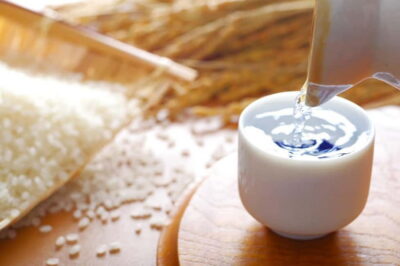
Casual Japanese sake tasting and snack experience, Kabukicho
Read our review →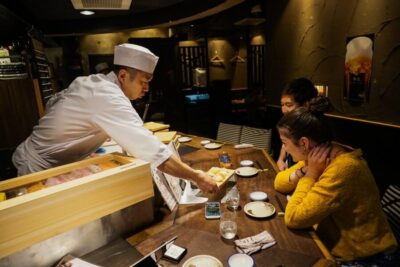
Foodie Night Tour in Gion with 9 dishes + 6 Sake
Read our review →Browse the lists this tour appears in