
REVIEW · KYOTO
Kyoto: Foodie Night Tour in Gion with 9 dishes + 6 Sake
Kyoto tastes better after dark. This three-and-a-half-hour evening pairs nine traditional dishes with six Kyoto sake tastings, while a local guide leads you through Gion and Pontocho. The appeal is the mix of food, old streets, and conversation at small local stops rather than a standard restaurant meal.
I like the chance to try obanzai, oden, and yuba in traditional settings, and I like that the sake is explained instead of simply poured. Guides such as Rika have earned praise for bringing people into easy conversation. The main concern is value: at $361 per person, the meal needs to be consistently good, and one food stop has received sharp criticism.
Key points to know before booking
- Nine dishes and six sake tastings: The evening includes a dinner course, dessert, two drinks, and a tasting of six kinds of sake.
- Gion and Pontocho after dark: You walk between two of Kyoto’s best-known evening districts, with old wooden buildings and narrow lanes along the way.
- Obanzai, oden, and yuba: The first restaurant focuses on simple Kyoto cooking rather than a single showpiece dish.
- A guide-led introduction to sake: Three Kyoto sake varieties are part of the tasting course, with explanations from your guide.
- A small-group evening, not a fully private tour: The experience is described as a private group but also clearly notes that it is not a private tour, so you should expect to share the evening with other people.
- A high price with uneven value: The setting and access to local food may justify the cost for some, but the food quality appears less dependable than the price suggests.
Starting beside the Izumo-no-Okuni statue
The meeting point is in front of the Izumo no Okuni statue outside Exit 5 of Gion Shijo Station. This is a useful starting place because the station is easy to locate, and the statue gives you a clear landmark in a busy part of Kyoto.
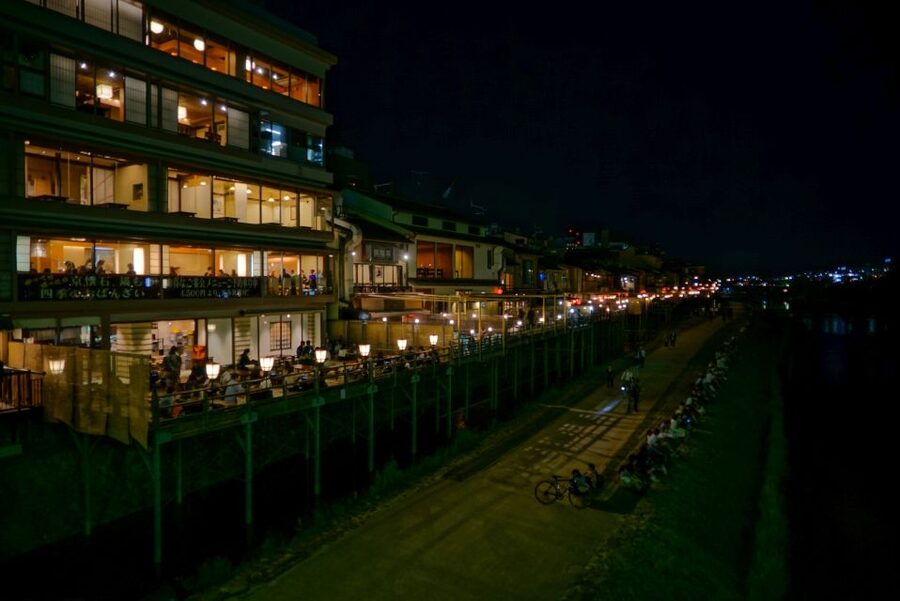
You begin with a walk through Gion, a district known for its traditional Kyoto-style buildings and evening atmosphere. Your English-speaking guide explains how local people enjoy a night out and points out details you could easily miss while walking on your own.
Gion is also the part of the evening where expectations matter. You might see a geisha pass by, but that is luck, not a promised feature. Treat the walk as a look at Kyoto’s old entertainment quarter, not as a geisha-spotting expedition.
Wear comfortable shoes. The tour includes walking through narrow streets and between food stops, and the route includes places that are not suitable for wheelchairs or strollers. It is also not recommended if you have mobility problems.
More Nights Out in Kyoto:
- Casual Japanese SAKE tasting and snack experience in Kabukicho
★ 5.0 · 159 reviews - Casual Japanese sake tasting and snack experience, Kabukicho
★ 4.7 · 31 reviews - 3.5h Osaka Night guided Local Bar Hopping, Sake & Karaoke
★ 5.0 · 27 reviews
The first meal: Kyoto flavors in a tucked-away restaurant
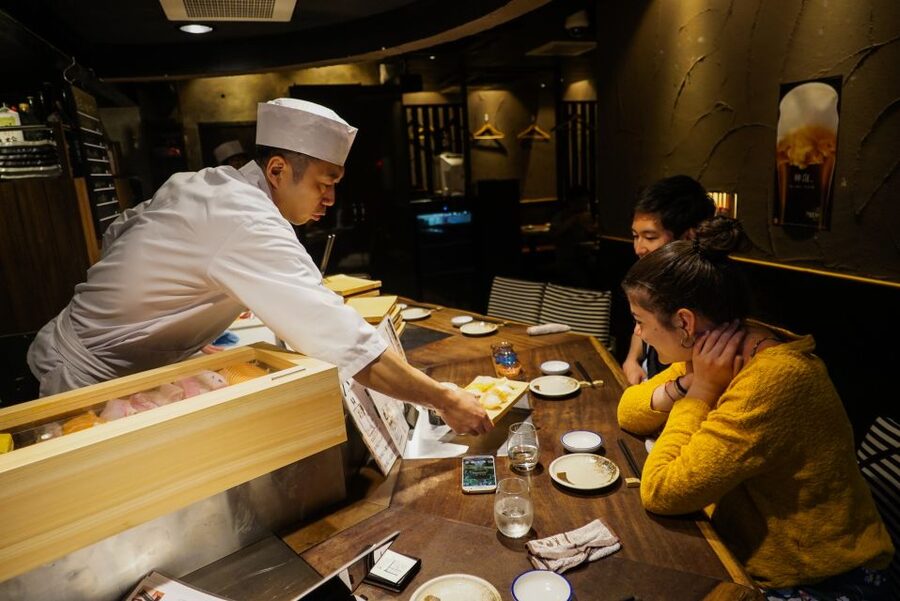
The first food stop is a traditional Japanese restaurant that can be difficult to find without local help. That matters in Gion, where the best-known streets can be crowded with people but the entrances to many small restaurants are easy to miss.
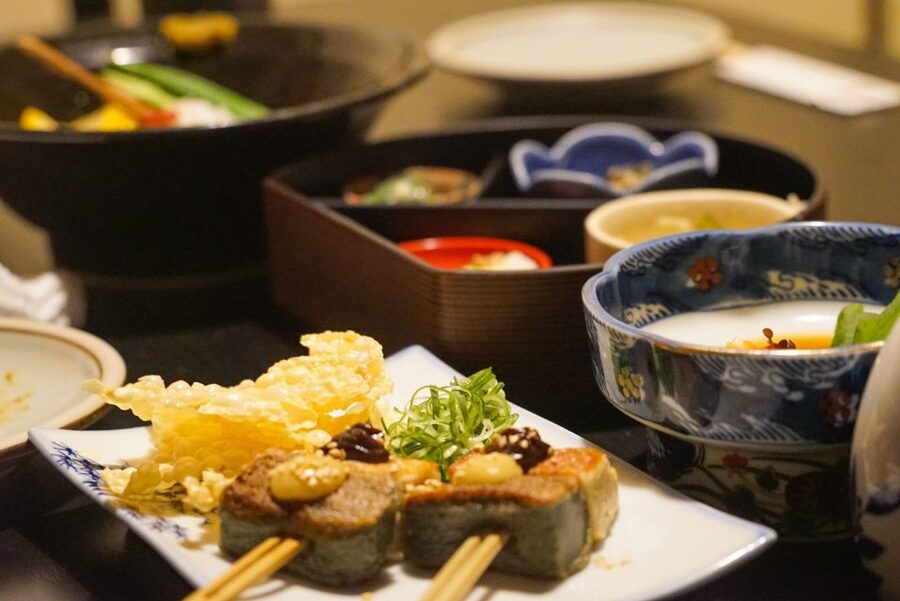
Here you try familiar Kyoto cooking in small portions. The menu may include obanzai, oden, or yuba. Obanzai is home-style Kyoto cooking, usually made with seasonal vegetables and carefully seasoned ingredients. Oden is a warm Japanese stew with items simmered in broth. Yuba, made from the thin skin that forms on heated soy milk, is a Kyoto specialty with a delicate texture.
None of these foods is designed to overwhelm you. The appeal is restraint. Kyoto cooking often depends on clean flavors, careful preparation, and a sense of balance. If you usually judge a food tour by large portions or dramatic dishes, this first stop may feel modest. If you enjoy tasting several local preparations, the format works better.
The setting also adds something that a restaurant reservation alone may not. You sit with your guide and other people, ask questions, and learn how these foods fit into local dining habits. One useful question to ask is how obanzai differs from the dishes served in a formal kaiseki meal. Your guide can help place what you are eating in a wider Kyoto food tradition.
Six sake tastings, with room for comparison
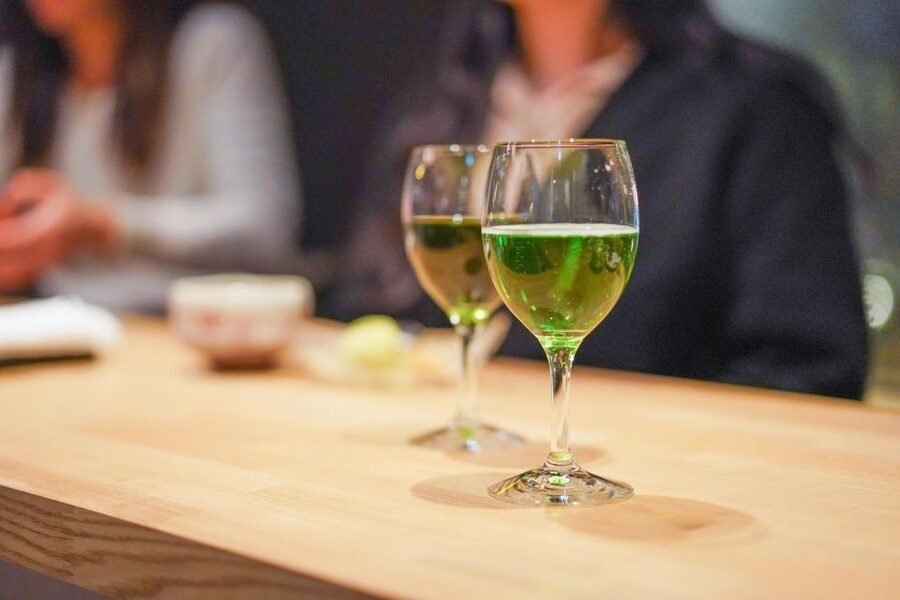
Sake is not one single flavor. Kyoto produces different styles, and the tasting lets you compare six kinds during the evening. The course includes three different Kyoto sake varieties as part of the Kiki sake experience, along with additional sake tastings listed in the overall package.
This is one of the strongest reasons to book the tour. A sake tasting can feel confusing when you are handed a glass without context. Here, the guide explains what you are drinking as you eat, giving you a better chance to notice differences in aroma, sweetness, dryness, and body.
The tour also includes two drinks, with alcoholic and non-alcoholic choices available. Guests must be at least 20 years old to drink alcohol under Japanese law. If you do not drink, you can still take part in the food and conversation, but you should make your preference clear when booking.
Bring cash for drinks, food extras, and anything else you buy along the way. The information for this experience warns that many bars do not accept credit cards. That is a small practical point, but it can save you from an awkward search for an ATM in the middle of the evening.
Walking through Pontocho between dinner stops
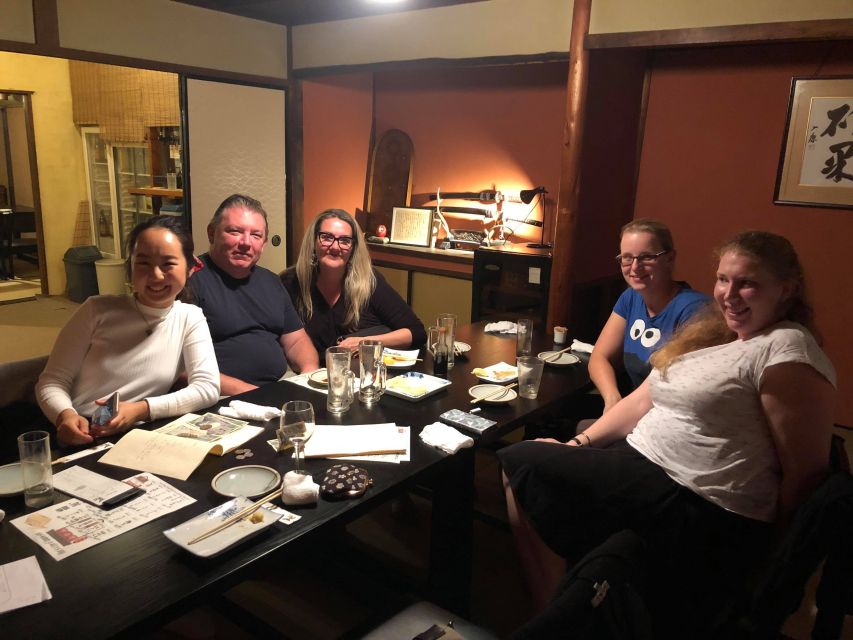
After the first restaurant, the route continues through the Pontocho area. Pontocho is a narrow dining lane near the Kamo River, lined with restaurants and traditional buildings. The walk gives the night a sense of movement instead of keeping you in one dining room for the full three hours.
The itinerary lists two dinner portions in Pontocho, each lasting about an hour. In practice, think of this as a food-focused evening spread across more than one stop, rather than one long formal dinner. That format is helpful if you want variety and want to see how different local places feel.
The drawback is that the exact dishes and restaurant quality may vary. One account praised the first stop but found the second disappointing, while another described the food locations as local and authentic. That difference is important. The tour is not a fixed tasting menu in a single highly controlled restaurant. Some of the value comes from the places you visit, but that also means the meal may not be equally strong at every stop.
Ask your guide to explain the area as you walk. One useful criticism of the experience is that more information about Gion and Pontocho would have improved the evening. The food is the main event, but these districts deserve more than a quick passage between tables.
More Evening Experiences in Kyoto:
- Kyoto: Gion Evening Walk with Hidden Gems, Geisha & Sake
★ 5.0 · 41 reviews - Bouldering, Sake and Food, Local Gem Hiroshima Evening Tour
★ 5.0 · 4 reviews
What the nine dishes really mean
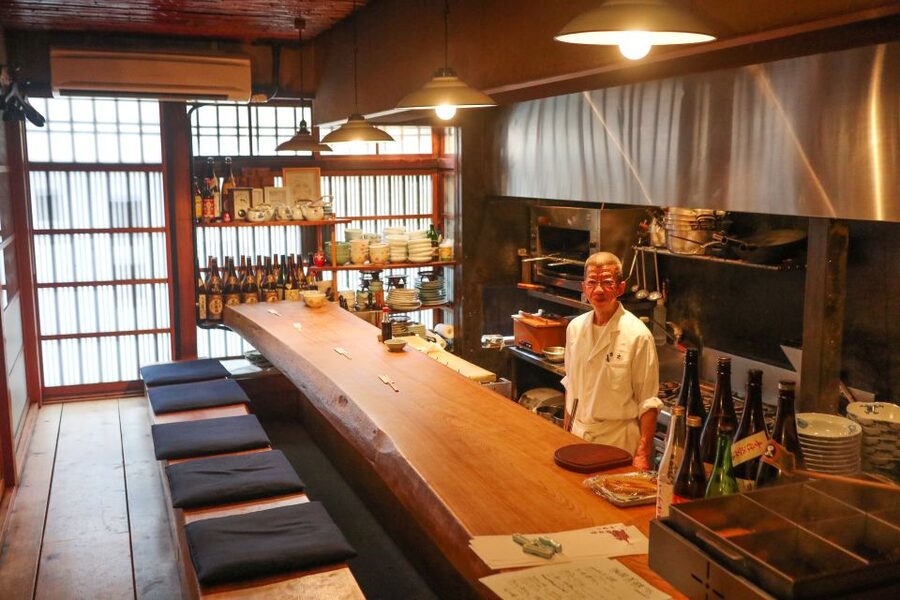
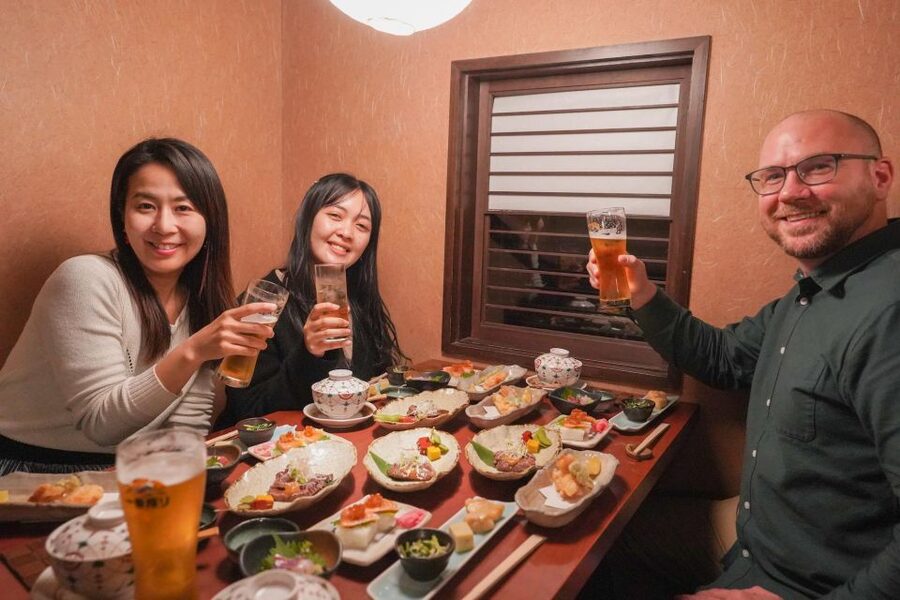
Nine dishes sounds like a lot, but the number includes small traditional preparations and dessert rather than nine large plates. This is good news if you prefer to sample many things. It is less appealing if you expect a substantial, restaurant-sized meal at every stop.
A typical evening may include small portions of Kyoto-style foods, the main meal items, and a local dessert. Because the exact menu is not fully fixed in the information provided, you should view the list as a tasting structure rather than a guarantee of specific dishes beyond the examples of obanzai, oden, and yuba.
The first stop appears to be the most reliable part of the food experience. The second stop is where your expectations should stay flexible. A positive food tour needs more than an attractive neighborhood, and the higher price makes inconsistency more noticeable.
If you have allergies or strict dietary needs, contact the operator by the day before. Same-day requests cannot be accepted. Allergy-free food cannot be guaranteed because the dishes are prepared in kitchens that do not belong to the tour company, and substitutions may not be possible at every stop. The staff will try to make up for limitations at other locations, but you should not book this as a fully controlled dietary experience.
Dessert in a traditional building
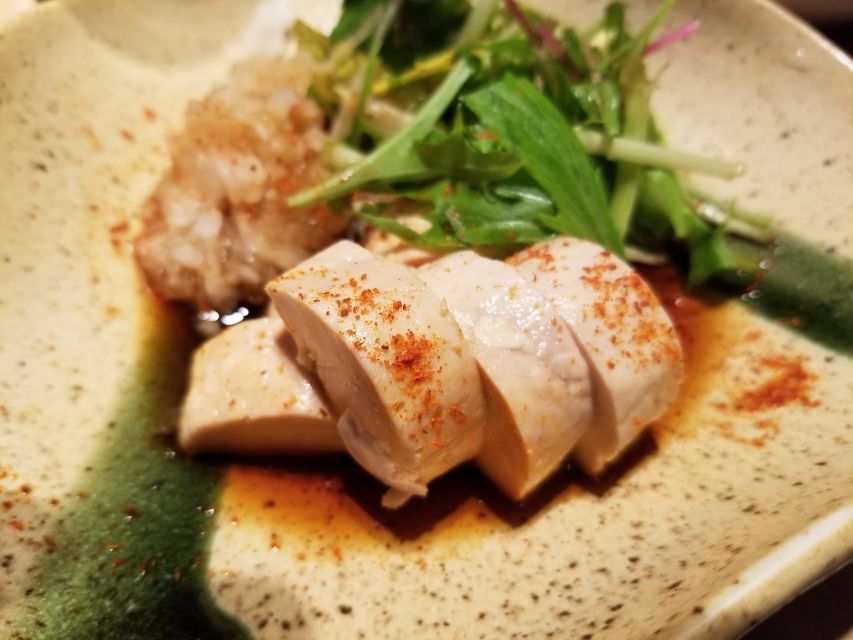
The evening ends at a Kyoto cafe near Pontocho, where you have a local dessert in a traditional building. This is a sensible finish after several savory dishes and sake tastings. Dessert also gives the group time to slow down and talk before returning to the station area.
The dessert is described as a Kyoto specialty, but the exact item is not specified. That means you should expect a local sweet rather than plan around one particular dessert. The traditional building is part of the attraction, especially if you enjoy atmosphere as much as food.
The route then returns to the Izumo no Okuni statue. The full experience lasts about 210 minutes, with roughly an hour assigned to each of the three main food portions. That length gives you enough time to eat at a relaxed pace without turning the evening into an all-night commitment.
Guide quality can shape the whole evening
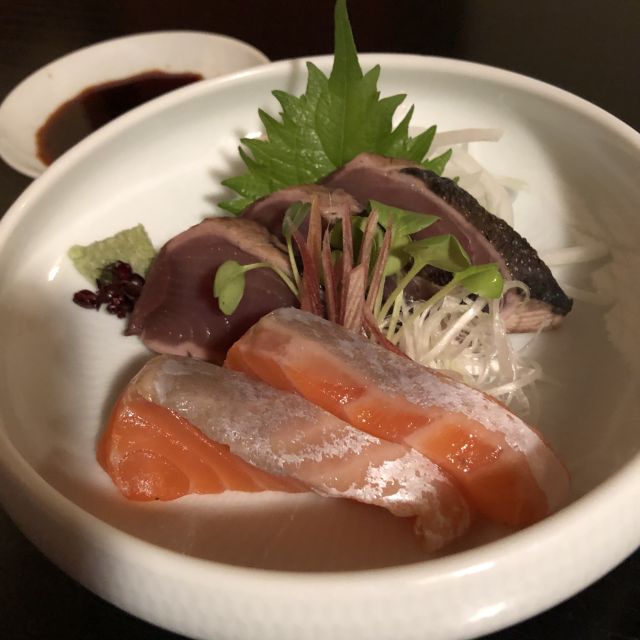
The guide is more than a person who leads you from one address to the next. The best version of this tour depends on the guide explaining the food, managing the group, and helping conversation flow around a shared table.
Rika received especially warm praise for creating good conversation between everyone. That is a meaningful strength for a food tour, since a quiet group can make even a good meal feel flat. A guide who asks questions and explains local customs can turn small dishes into a more memorable evening.
The guide also provides tour photos. That is a pleasant extra, but I would place more weight on the food explanations and local context when judging the price. Photos are useful for remembering the walk, yet they do not make up for a weak dish or a short explanation of the neighborhoods.
English is the listed tour language. If you want detailed background about Kyoto’s food culture, Gion, or Pontocho, ask directly during the walk. The available information suggests that the amount of area history may depend on how much you engage the guide.
Is $361 per person fair?
At $361 per person, this is an expensive night out. The price includes a nine-dish dinner with dessert, two drinks, six sake tastings, a guide, and photos. It also covers the convenience of arranging several food stops and having an English-speaking local handle the route.
That can be worthwhile if you are short on time, nervous about entering small Japanese restaurants, or eager to taste sake with an explanation. You are paying for access, guidance, and structure as much as for the food itself.
The value is harder to defend if you mainly want a large meal. One direct account called the price far too high and found the food below average, including a disappointing wagyu dish. Another person praised the first dinner but found the second stop poor. Those comments do not prove that every evening will be disappointing, but they show why you should not book this expecting luxury dining.
The overall rating is 4.4 from 26 reviews, which suggests that most people find the evening worthwhile, but the spread of opinions matters more than the average alone. The strongest praise centers on the guide, the local feel of the food stops, and the fun of the evening. The sharpest criticism concerns consistency and price.
Who will enjoy this Kyoto food tour?
I would recommend it most strongly to you if you:
- Want a structured introduction to Kyoto food at night
- Enjoy small portions and several different dishes
- Like sake but want help comparing styles
- Prefer local conversation to a formal restaurant meal
- Are comfortable walking through Gion and Pontocho
- Have no serious dietary restrictions
- Value guidance and atmosphere more than the cheapest possible dinner
You may want to skip it if you are seeking a polished luxury meal, need guaranteed allergy-safe food, use a wheelchair or stroller, or dislike group dining. You should also think twice if $361 is a major part of your Kyoto food budget. You can find cheaper meals on your own, though you would lose the guide, the sake explanations, and the carefully arranged route.
Kyoto is a good city for this kind of evening because food, architecture, and local customs sit close together. Still, the tour is best viewed as a guided introduction, not the final word on Kyoto cuisine. If you enjoy the first stop, ask the guide where you should eat next during your time in the city.
Practical details for a smoother evening
The tour is offered in English and lasts 210 minutes. It begins at the Izumo no Okuni statue outside Exit 5 of Gion Shijo Station and returns to the same area.
Dietary requests must be made by the day before. Alcohol is limited by Japanese law to people aged 20 and older. Bring water and wear a hat in summer, when Kyoto can be very hot and humid.
The experience is not fully wheelchair or stroller accessible, and it is not recommended for people with mobility issues. The route includes narrow or otherwise inaccessible locations, so check this carefully before reserving.
Cancellation is free up to 24 hours before the start time, and you can reserve now and pay later. Those terms make it easier to hold a place while your Kyoto plans settle, but they do not change the main question: are the guided food stops and sake tasting worth the high price for you?
Should you book it?
Book this tour if you want an easy, social introduction to Gion and Pontocho, especially if sake, small Kyoto dishes, and local guidance matter more to you than a bargain dinner. The first restaurant, the traditional settings, and a strong guide such as Rika can make the night feel special.
Skip it if you want guaranteed food quality, a fully private experience, or strict control over ingredients. At $361, I would book only when you value the route and the guide as much as the meal. If you do reserve, request dietary information early, bring cash, wear comfortable shoes, and arrive ready to ask questions.
FAQ
Where does the Kyoto food tour meet?
Meet your guide in front of the Izumo no Okuni statue outside Exit 5 of Gion Shijo Station.
How long does the tour last?
The experience lasts 210 minutes, or three and a half hours.
What areas does the tour visit?
The route includes Gion and Pontocho. It begins and ends near the Izumo no Okuni statue at Gion Shijo Station.
How many dishes are included?
The dinner course includes nine dishes and a dessert.
How much sake is included?
The experience includes six kinds of sake tastings. The course also includes two drinks, with alcoholic and non-alcoholic options available.
What foods might I try?
Possible Kyoto dishes include obanzai, oden, and yuba. The exact menu is not fully specified.
Is alcohol available to everyone?
No. Under Japanese law, only people aged 20 and older may drink alcohol.
Can I request a dietary adjustment?
You must make any dietary request by the day before. Same-day requests cannot be accepted, and allergy-free food cannot be guaranteed.
Is the tour wheelchair accessible?
No. Some locations on the route are not accessible by wheelchair or stroller, and the experience is not recommended for people with mobility issues.
Is the tour private?
The experience is described as a private group, but it also states that it is not a private tour. You should expect to share the experience with other people.
Can I pay with a credit card during the tour?
You should bring cash for food, drinks, and extras because many bars do not accept credit cards.
What language is the tour offered in?
The tour is conducted in English by a live English-speaking guide.
Just added around Kyoto
- Nishiki Market, Private Sushi class & Sake Tasting in Townhouse★ 5.0 · 6 reviews
- Kyoto Food and Sake Tour Experience★ 4.0 · 5 reviews
- Experience of pairing sake tasting with snacks in Kyoto★ 5.0 · 4 reviews
- Kyoto Luxury Sake, Whisky and Cocktail Tour★ 5.0 · 4 reviews
- Kyoto: Sake Tasting Journey to Two Iconic Breweries★ 3.0 · 2 reviews
- Fushimi Kyoto Walking Tour with Sake Tasting and Canal Boat Ride★ 4.0 · 5 reviews
- Kyoto: Newly Opened Sake Tasting – Sanjo Chasuian★ 5.0 · 7 reviews
- Kyoto Sake Brewery Tour★ 3.3 · 5 reviews
Nightlife, compared.
Casual Japanese SAKE tasting and snack experience in Kabukicho
Read our review →
Casual Japanese sake tasting and snack experience, Kabukicho
Read our review →
3.5h Osaka Night guided Local Bar Hopping, Sake & Karaoke
Read our review →Browse the lists this tour appears in