
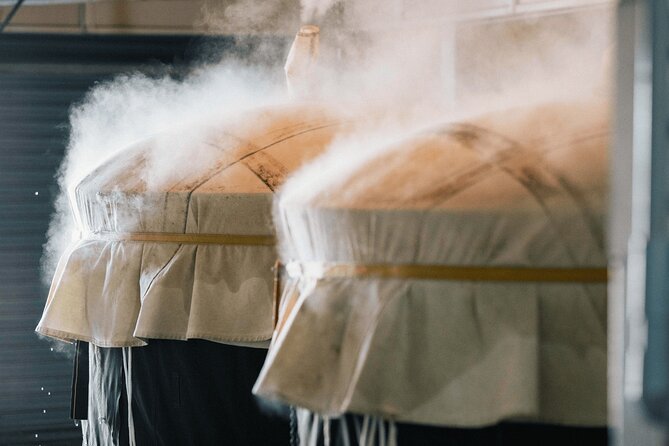
REVIEW · JAPAN
Sake Heritage Nagoya Brewer’s Insights and Tastings tour
Old timber, fresh sake, and a living craft. This three-hour Nagoya outing takes you inside Tōshun Shuzō, a family-run brewery with more than 160 years of sake-making behind it. I like the access to an Edo-period kura storehouse and the chance to hear directly from the tōji, or master brewer. I also like that the tasting is tied to actual brewing methods, not just a quick round of drinks.
The main drawback is the price: $208.11 per person is a serious spend for three hours. Still, the small group, taxi transfers, English-speaking guide, three tastings, and included bottle make the cost easier to justify if sake is a major reason for your Japan trip.
Key points at a glance
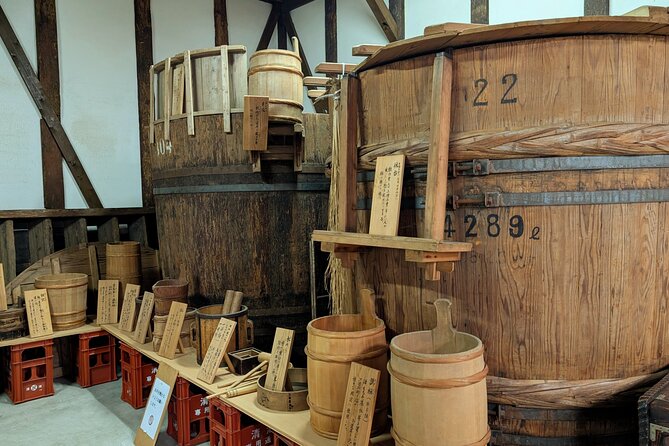
- Enter a storehouse linked to Nagoya Castle: The more than 100-year-old kura uses timbers once reserved for the castle.
- Meet the brewing process up close: The tōji explains how each stage shapes the final flavor.
- Taste three distinct sake varieties: Different methods give you a useful comparison rather than three similar pours.
- See seasonal production: From November through April, brewing may be taking place during your visit.
- Keep a bottle from Tōshun Shuzō: A signature sake bottle is included as your souvenir.
- Travel in a group of no more than 10: The smaller size should leave room for questions and conversation.
Why Tōshun Shuzō makes this Nagoya tour special
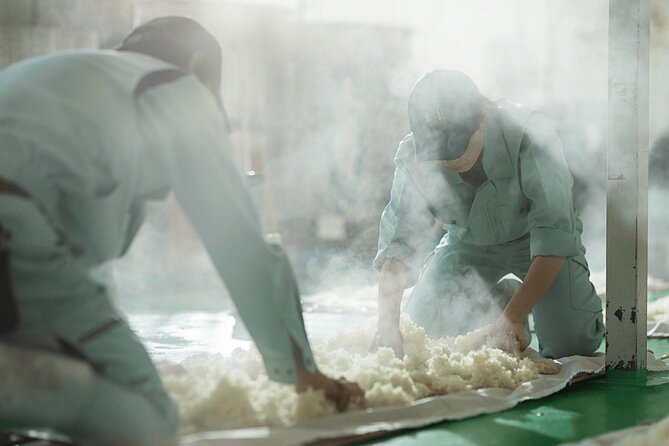
Nagoya is better known for its castle, food, and industrial heritage than for sake tourism. That is part of the appeal here. Tōshun Shuzō gives you a close look at a local craft in a setting that still connects old methods with present-day production.
The brewery has operated for more than 160 years. You are not simply looking at a display built for tourists. The visit includes areas that are usually closed to the public, including the old kura storehouse and the working brewery.
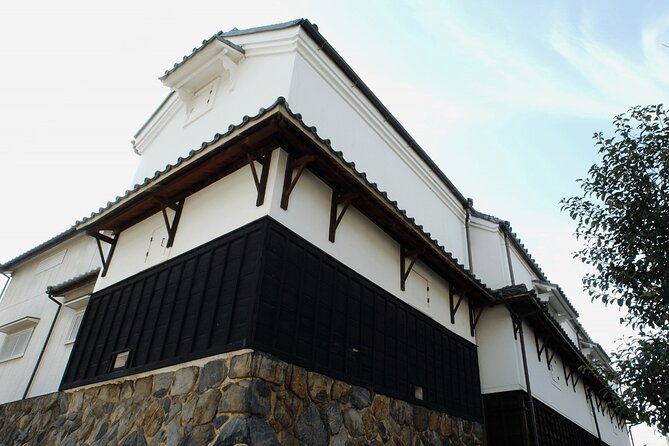
I especially like the way the tour connects architecture with brewing. The storehouse is more than an attractive old building. Its heavy timbers were originally intended for Nagoya Castle, giving the structure a direct link to the city’s past.
You also get a useful contrast between old and new. The kura holds traditional tools and documents, while the modern brewery shows how sake is produced today. That comparison helps you understand that sake is not one fixed recipe. It is a careful set of choices about rice, fermentation, timing, and technique.
More Sake Tastings in Japan:
- 3-Hour Kyoto Insider Sake Brewery Tour with Tastings & Pairings
★ 5.0 · 917 reviews - Kyoto Sake Brewery & Tasting Walking Tour
★ 5.0 · 623 reviews - 1.5-Hour Kyoto Insider Sake Experience with 7 Tastings & Pairings
★ 5.0 · 297 reviews
Starting at Shin-Moriyama Station at 1:30 p.m.
The meeting point is Shin-Moriyama Station in Moriyama Ward, Nagoya. You need to arrange your own transportation to the station, but the taxi ride from there to the brewery is included.
That setup matters. You do not need to work out the final route to an industrial or residential area on your own, and the group travels together. The transfer takes about 15 minutes each way, leaving roughly two and a half hours at the brewery itself.
I would arrive early. The advertised start time is 1:30 p.m., and a station meeting point is not the place to test your ability to find the correct exit at the last minute. Keep your phone charged and have the meeting details available before you arrive.
The tour returns to Shin-Moriyama Station after the brewery visit. This makes the timing fairly easy to plan around, though the total outing will take about three hours once the station transfers are included.
Inside the old kura storehouse
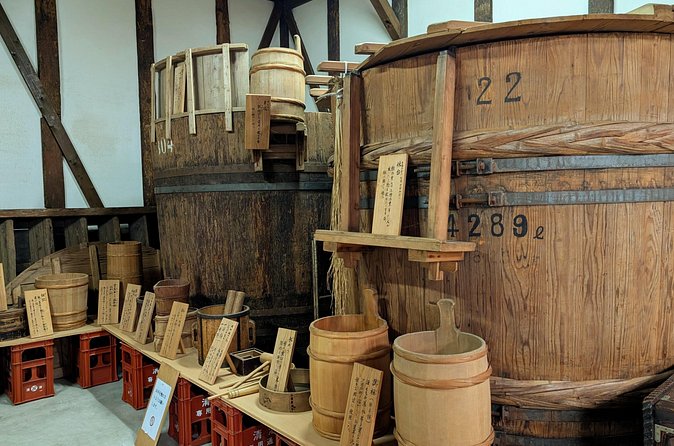
The first major part of the visit takes you into an Edo-period kura, a traditional storehouse. The building is more than 100 years old, and its timbers were reserved for Nagoya Castle before being used here.
Inside, you can expect to see historic brewing tools and documents. The owner explains the brewery’s past and the objects used in earlier production. This section gives the tour a sense of place that a modern tasting room alone could not provide.
I find this kind of access particularly valuable because old sake equipment can look mysterious if nobody explains its purpose. Here, the objects are connected to the work they supported. You can begin to see how much of sake production depended on careful manual labor and close attention to conditions.
The storehouse also helps explain why traditional brewery buildings look the way they do. A kura was built to protect valuable goods and maintain suitable conditions. You do not need prior sake knowledge to appreciate the construction, but a few questions can make the visit much more rewarding.
This is one of the strongest reasons to choose this tour instead of a simple bottle tasting. You are seeing a working institution through both its physical history and its current craft.
The modern brewery and the tōji’s explanation
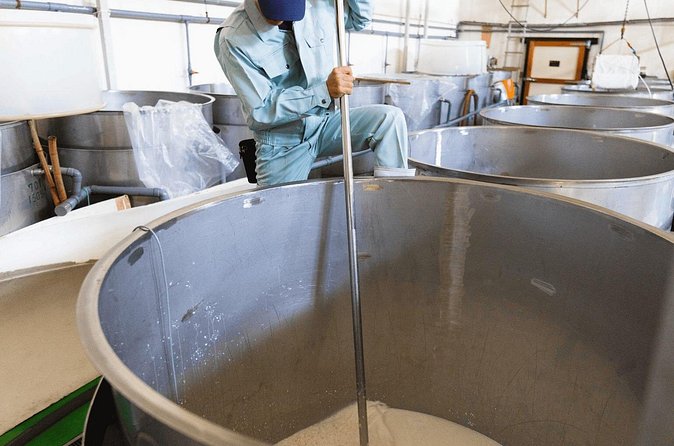
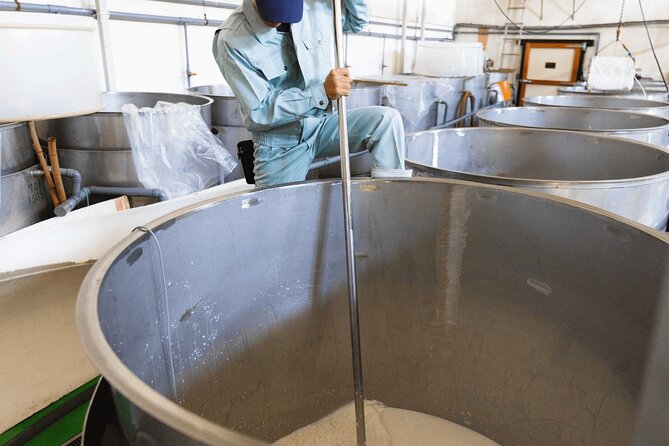
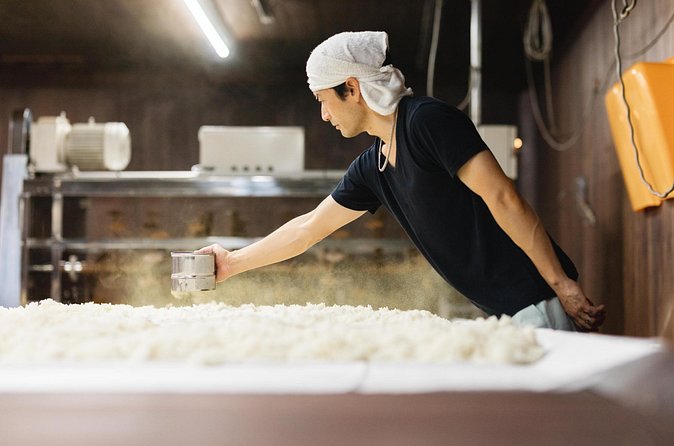
After the old storehouse, the tour moves into the modern brewing area. The tōji, or master brewer, explains the stages of sake production and how different techniques affect the final drink.
The exact production sequence can be hard to understand from a museum label. On this tour, the explanations are tied to the equipment and spaces around you. The brewery staff can show you where the work happens and explain why each stage matters.
The tour covers the history of sake-making through to the modern process. It also gives you the chance to taste different stages of production, according to the information provided for the visit. That is useful because it turns an abstract explanation into something you can notice in the glass.
From November through April, you may see brewing in progress. This is a seasonal possibility, not a guarantee, so you should not book expecting a specific production activity on a particular day. If you visit during those months, though, the brewery may feel especially connected to its working calendar.
The small maximum of 10 people is another advantage here. In a large group, a technical explanation can become a distant demonstration. With fewer people, you have a better chance to hear clearly and ask about details that catch your attention.
The English-speaking guide supports the visit throughout. Mandarin, French, Spanish, German, or Korean support may be available, but you need to contact the supplier in advance to check. Do not assume another language will be provided on the day.
More History Tours in Japan:
- Takayama: Authentic Sake Tasting at a Historic Brewery
★ 5.0 · 65 reviews - Takayama: Authentic Sake Tasting at a Historic Brewery
★ 4.8 · 50 reviews - Historic Kanda Sake Tasting at Tokyo’s Oldest Shop (1596)
★ 4.9 · 33 reviews - Takayama Local Cuisine, Food & Sake Cultural Tour with Government-Licensed Guide
★ 5.0 · 17 reviews
Three sake tastings that actually teach you something
The tasting includes three distinctive sake varieties made with different techniques. That is a much better format than sampling three bottles without context.
I like tastings that give you a comparison. When the methods differ, you can begin to connect production choices with flavor, aroma, and texture. You do not need to know technical sake terms. The guide and brewery staff explain what you are drinking and why the varieties differ.
The visit may also include tastes from different stages of the process. This helps you understand that sake changes as it moves through production. The experience is not only about identifying a favorite bottle. It is about seeing how a drink develops from raw ingredients into the finished product.
The tasting is limited to participants aged 20 and over, and you need to bring valid photo identification showing proof of age. The tour is not suitable for anyone with an alcohol allergy.
There are also a few unusually specific etiquette requests. Avoid strong perfume because it can interfere with tasting aromas. You are asked not to eat natto on the day of the tour because its strong smell may affect the fermentation environment. That may sound fussy, but it reflects the sensitivity of both the brewing process and the tasting itself.
Drink responsibly. The included tasting is part of an educational visit, not an all-you-can-drink stop.
The included bottle adds real value
At the end of the visit, you receive one bottle of Tōshun Shuzō’s signature sake. This is one of the most practical inclusions in the package.
A souvenir bottle gives the experience a life beyond the brewery. You can open it later, share it with friends, or use it to remember the production details you learned during the tasting. It is also more useful than a generic souvenir that has no link to the place.
You may purchase additional bottles or other items at the brewery shop, but those purchases are not included. The included bottle should be treated as a fixed part of the experience, not a credit toward other products.
If you plan to buy more, check how you will carry the bottles for the rest of your trip. The tour details do not specify shipping services or luggage storage, so do not assume the shop will handle those arrangements.
Is $208.11 a fair price?
At $208.11 per person, this is not a casual brewery stop. The price makes sense for someone who wants a private-feeling, guided look at a historic producer rather than a basic tasting.
The package includes:
- A guided visit to the old kura and modern brewery
- An explanation from the tōji
- Tastings of three sake varieties
- One signature bottle
- Taxi transportation from Shin-Moriyama Station to the brewery and back
- An English-speaking professional guide
- Travel insurance
The maximum group size is 10, which helps protect the quality of the explanations. You are also paying for access to spaces that most breweries keep off limits, according to the tour description.
I would not recommend this as a good-value choice if you only want to try sake once. Nagoya offers many less expensive ways to drink sake. I would consider it worthwhile if you care about traditional buildings, working food production, and the link between technique and taste.
The included bottle and taxi transfers soften the cost, but they do not transform it into a bargain. This is a special-interest outing with a premium price.
Who will enjoy this experience most?
I would recommend this tour to a few specific kinds of visitors.
Sake beginners will get a clear introduction without needing to study beforehand. The three styles and brewing explanations give you a useful starting point for ordering sake elsewhere in Japan.
Experienced sake drinkers may value the access more than the tasting itself. Seeing areas normally closed to the public and talking with the brewery staff can add depth to an interest you already have.
History-minded visitors will enjoy the storehouse, old tools, documents, and connection to Nagoya Castle. The architecture is a major part of the experience.
Small groups and couples should appreciate the limited capacity. The setting is more personal than a large commercial attraction.
I would be more cautious about recommending it to anyone who dislikes alcohol, cannot drink for health reasons, or wants a broad sightseeing tour of Nagoya. The visit focuses closely on one brewery, and the sightseeing radius is small.
The activity is intended for people aged 20 and over. Most people can participate, but the supplied information does not describe specific accessibility arrangements, so contact the provider if you need assistance beyond ordinary participation.
Practical advice before you book
Plan your day around the 1:30 p.m. start. You need to reach Shin-Moriyama Station independently, and the tour ends back there after the return taxi.
Wear something comfortable for walking through old and modern brewery areas. The provided details do not specify a dress code, but strong fragrances should be avoided.
Bring photo identification. Without proof of age, you may have trouble taking part in the tasting because participation is restricted to people aged 20 and older.
Book ahead rather than assuming space will be available. Confirmation is sent within 48 hours, subject to availability, and the group is limited to 10 people.
The tour offers free cancellation if you cancel at least 24 hours before the local start time. Changes or cancellations made inside that window are not accepted for a refund. The activity also requires a minimum number of participants, so if the provider cancels because that number is not met, you are offered another date or experience, or a full refund.
Guide gratuities are optional. Additional purchases at the brewery are your responsibility.
Should you book Tōshun Shuzō?
Book it if you want to understand sake through the place where it is made. The old kura, castle-linked timbers, master brewer’s explanation, seasonal chance to see brewing, three-method tasting, and included bottle give this visit more substance than a standard tasting flight.
Skip it if $208.11 feels too high for a three-hour activity, or if you are mainly looking for general Nagoya sightseeing. The tour is focused, and its value depends on your interest in sake and traditional production.
For the right visitor, this is a thoughtful splurge. You leave with a better sense of how sake is made, a bottle from the brewery, and a direct connection to one of Nagoya’s long-running local crafts.
FAQ
Where does the tour begin?
The tour begins at Shin-Moriyama Station in Moriyama Ward, Nagoya, at 1:30 p.m.
How do I get from the station to the brewery?
The group travels by taxi from Shin-Moriyama Station to Tōshun Shuzō. The taxi transfer is included in the tour price.
How long does the experience last?
The full experience lasts about three hours. Each taxi transfer takes about 15 minutes, and the brewery visit lasts about two and a half hours.
Is sake tasting included?
Yes. The tour includes tastings of three distinctive sake varieties made with different techniques. It may also include tastes from different stages of production.
Is the tour available in languages other than English?
The tour is conducted in English. A Mandarin, French, Spanish, German, or Korean-speaking guide may be available, but you must contact the supplier in advance to check.
Can I cancel for a refund?
Yes. You can cancel at least 24 hours before the local start time for a full refund. Cancellations or changes made less than 24 hours before the start are not accepted for a refund.
Just added around Japan
- Tokyo Sake Tasting Tour with a Sake Expert★ 5.0 · 7 reviews
- Wagyu BBQ & Sukiyaki with Sake Pairing Experience near Ginza★ 5.0 · 2 reviews
- Sake Tasting and Cherry Blossom Fun in Tokyo!★ 5.0 · 4 reviews
- Private Sake Tasting at 300 Years Old Sake Brewery in Tokyo★ 5.0 · 3 reviews
- Tokyo: Serene Sakura & Sake: An Exclusive Brewery Pairing Lunch★ 5.0 · 2 reviews
- Nagano: Snow Monkey and Zenkoji Temple Free Sake Taste Day Tour★ 4.5 · 8 reviews
- Sake Pairing Workshop with Japanese Food in Shinjuku★ 5.0 · 5 reviews
- Cherry blossom & Japanese Sake Tasting in Shinjuku★ 5.0 · 4 reviews
Sake Tasting, compared.
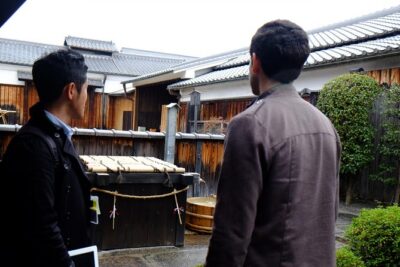
3-Hour Kyoto Insider Sake Brewery Tour with Tastings & Pairings
Read our review →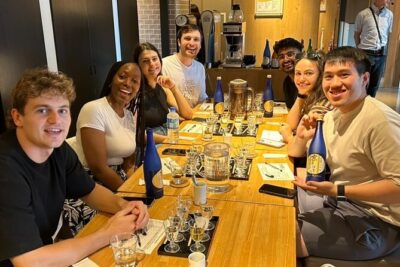
1.5-Hour Kyoto Insider Sake Experience with 7 Tastings & Pairings
Read our review →
Sake Tasting Masterclass in Shinjuku (8+ Varieties with a Pro)
Read our review →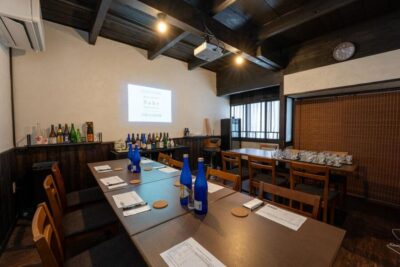
Insider Sake Experience with 7 Tastings and Snacks
Read our review →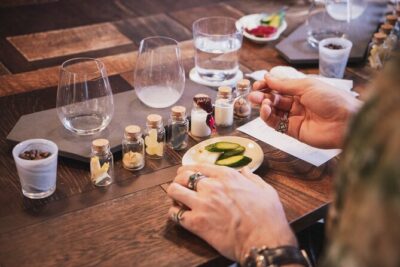
Sake Omakase in Tokyo: Guided Tasting by Certified Sommeliers
Read our review →
Private Tea Ceremony and Sake Tasting in Kyoto Samurai House
Read our review →
Casual Japanese SAKE tasting and snack experience in Kabukicho
Read our review →
Browse the lists this tour appears in